
Americans have favorable view of Pope Leo, negative reaction to Trump’s Jesus post: ABC News/Washington Post/Ipsos poll
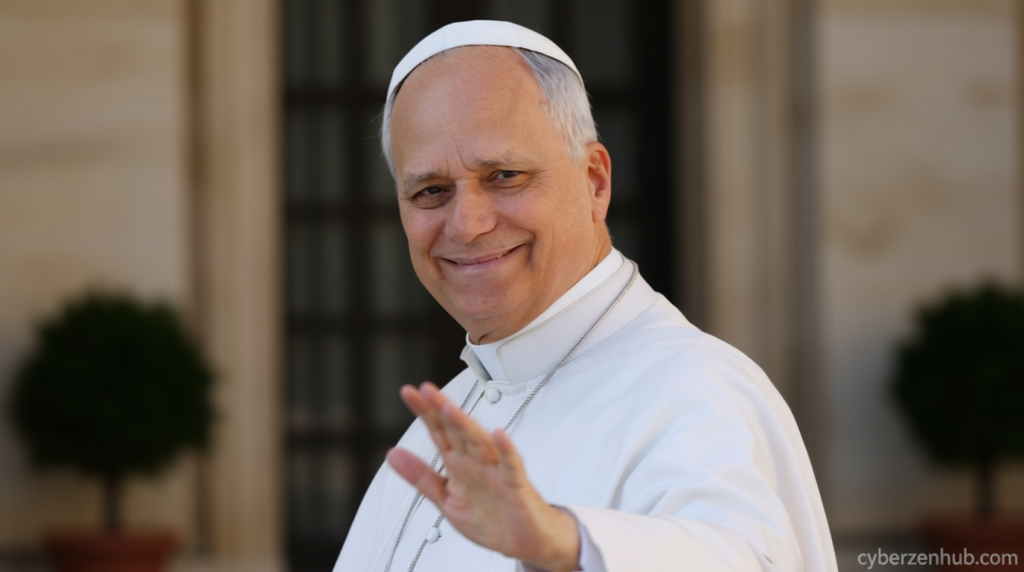
Americans Favor Pope Leo Amid Trump’s Jesus Post Backlash: Poll
Public Opinion Trends Highlight Pope’s Positive Image
Americans have favorable view of Pope – A new ABC News/Washington Post/Ipsos poll reveals that Americans generally maintain a favorable view of Pope Leo, despite mixed reactions to President Donald Trump’s recent statements about the pontiff. Conducted between April 24 and April 28, the survey underscores a growing divergence in how the public perceives the pope versus the political figure. While 41% of respondents expressed approval of Pope Leo, 16% disapproved, and 43% had no strong opinion, Trump’s comments about the pope have sparked significant criticism. This contrast is particularly evident among Catholic citizens, who demonstrate a stronger positive stance toward the pope compared to non-Catholic Americans.
The poll results emphasize that the favorable view of Pope Leo is driven by his advocacy for peace and unity, resonating with a majority of Americans. Key themes include his calls for dialogue and collaboration with Congress to address global tensions. However, Trump’s assertion that Pope Leo criticized Iran’s nuclear ambitions has led to widespread skepticism. Notably, nearly 90% of Protestants, including 68% who strongly disagree, perceive this as an inaccurate representation of the pope’s actual position, indicating a broader disconnect between the president and religious audiences.
Trump’s Social Media Controversy Intensifies
A recent controversy involving Trump’s social media activity has drawn sharp public criticism. In April, the president posted an AI-generated image portraying him as a Christ-like figure, sparking backlash from MAGA supporters. The image depicted Trump healing a patient, which he later claimed was meant to highlight his role as a doctor working with the Red Cross. Despite his defense, the poll shows that 69% of Americans rate the post negatively, with 68% of Protestants strongly disapproving. This reaction extends across religious lines, as 75% of Catholics and 70% of Protestants view the post as a misrepresentation of religious symbolism.
“I did post it, and I thought it was me as the doctor and it had to do with Red Cross,” Trump explained in a statement released after the image’s removal.
The backlash highlights how Trump’s image as a divine figure, which 76% of Americans reject, has become a point of contention. His comments about Pope Leo further amplify this divide, with 57% of Americans expressing negative reactions to his portrayal of the pontiff. The Catholic community, in particular, shows a notable disapproval of Trump’s statements, with 83% of white evangelical Christians opposing his claim that Pope Leo criticized Iran’s nuclear program.
Historical Context of Papal Favorability
Comparing Pope Leo’s current ratings to those of his predecessors reveals a shift in public sentiment. While Pope Francis enjoyed a 55-point net favorable margin among all Americans in 2013, Pope Leo’s net favorable rating stands at 25 points, with a 47-point margin among Catholics. This difference underscores how the favorable view of Pope Leo, though positive, is not as robust as the early enthusiasm for earlier popes. Pope Benedict’s initial net favorable rating of 24 points, and Pope John Paul II’s 43-point margin, indicate that current support for Leo is more moderate.
Despite the pope’s efforts to promote peace, his favorability remains a topic of discussion. The poll suggests that while many Americans appreciate his moral leadership, others question his influence. This nuanced perception reflects a broader trend of public opinion, where the favorable view of Pope Leo is balanced by skepticism toward his political implications. The survey’s findings add context to the ongoing debates about the role of religious figures in contemporary American society.
Religious and Political Divides Emerge
The survey also highlights how religious affiliation influences opinions on both the pope and Trump. Catholics are more likely to support Pope Leo, with 61% expressing approval, compared to 14% who disapprove. Non-Catholics, however, show a more divided response, with 41% approving and 16% disapproving. This divide is mirrored in reactions to Trump, as his image as a divine figure is rejected by 76% of Americans, with 53% strongly opposing it. Such polarization underscores the political weight of religious symbolism in public discourse.
As the favorable view of Pope Leo continues to shape perceptions of religious leadership, Trump’s comments on the pontiff serve as a reminder of the tensions between faith and politics. The poll’s findings suggest that while the pope remains a respected figure, the way his image is framed by political leaders can significantly impact public perception. This dynamic is crucial in understanding the evolving role of religious figures in American political narratives.