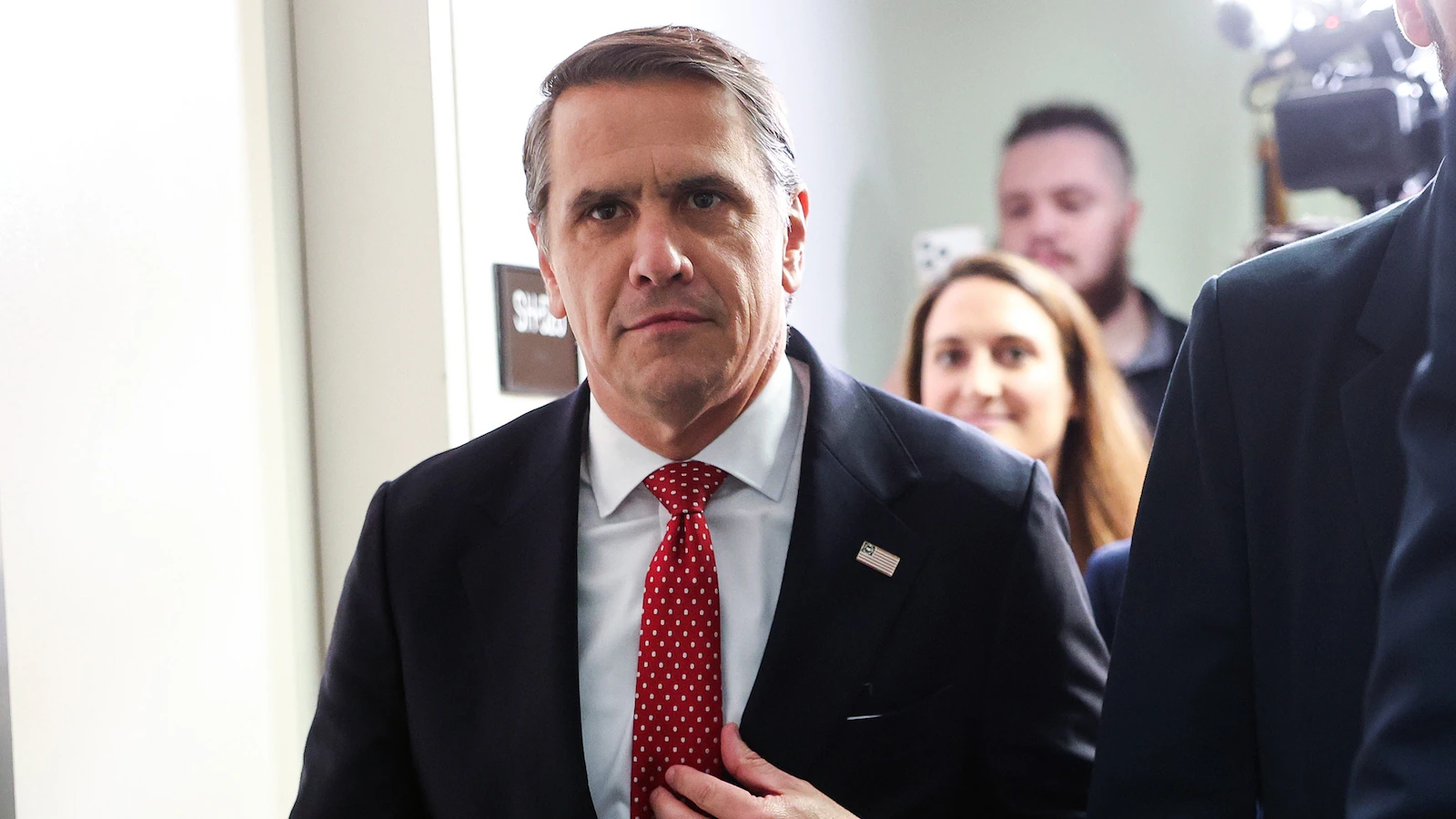
Senate Judiciary Committee Moves Todd Blanche’s Attorney General Nomination Forward Despite Concerns
Cyberzenhub.com – Republican Senator Susan Collins announced Tuesday that she would cast a negative vote on Todd Blanche’s nomination to serve as the permanent head of the Department of Justice. Her decision came shortly after the Senate Judiciary Committee approved the nomination in a 12-10 vote that largely followed party lines, setting the stage for a full Senate consideration later in the week.
Collins, who chairs the Appropriations Committee, explained her reasoning in a formal statement. While acknowledging Blanche’s legal capabilities, she expressed concern about the growing politicization of the Justice Department. She noted that Blanche’s recent actions have contributed to diminishing the agency’s traditional independence, which formed the foundation of her opposition to his confirmation.
The Maine senator finds herself in a competitive reelection contest against Democratic challenger Troy Jackson, adding another layer of political calculation to her decision-making process. Beyond Collins, several other Republican lawmakers have voiced reservations about Blanche’s suitability for the role, including Senators Bill Cassidy and Lisa Murkowski.
Committee Vote and Key Concerns
With Senator Mitch McConnell still absent from congressional proceedings, Blanche faces a narrow path to confirmation. He can afford to lose the support of only one additional Republican senator when the nomination reaches the Senate floor. This tight margin underscores the importance of securing bipartisan or cross-party support within the Republican caucus.
Two Republican senators, John Cornyn and Thom Tillis, ultimately supported advancing Blanche’s nomination after reaching an agreement that addressed several of their primary concerns. The arrangement clarified the parameters of President Donald Trump’s IRS immunity deal and formally eliminated the administration’s controversial $1.8 billion Anti-Weaponization Fund.
“Formally rescinding the fund and clarifying the scope of release of claims has put this issue to bed once and for all,” Committee Chairman Chuck Grassley stated following the vote.
Despite the agreement containing no explicit language preventing the fund’s revival under alternative names or mechanisms, Cornyn expressed confidence in the Justice Department’s commitment to honoring the arrangement. He noted that the department has been consistent in its assertions that the fund is permanently closed and expected them to maintain that position in future legal proceedings.
Republican Support Secured Through Compromise
Tillis echoed Cornyn’s sentiment, explaining that the agreement satisfied his objections. He particularly criticized what he called the “payout pot for punks,” referring to his longstanding opposition to the 1776 fund. Tillis characterized the fund as nonsensical and disrespectful to law enforcement officers and citizens who protected the nation on January 6th. He confirmed that the fund’s rescission brought him to a place of satisfaction.
“I believe that we have addressed the concerns that I have. The first one I called the ‘payout pot for punks.’ I’ve never liked this 1776 fund. It made no sense to me, and I thought it was an insult to the police officers and the people that defended us on January the 6th. It’s done. It’s been rescinded, and I am satisfied,” Tillis said.
Tillis also observed that both political parties struggle with issues of malicious prosecution. He expressed hope that Blanche’s confirmation would help reduce what he described as “the curve of this absurdity” in government actions.
Democratic Opposition Remains Strong
Senator Chris Coons offered a contrasting perspective on the Anti-Weaponization Fund issue. Rather than focusing on the fund’s rescission, Coons argued that Blanche’s initial willingness to support the fund’s creation should disqualify him from the attorney general position. He contended that as acting attorney general, Blanche should have rejected what he characterized as an unethical and corrupt directive from the president.
“In my view, we never should have gotten to this place. As acting attorney general, when asked by the president to do something plainly unethical and corrupt, Mr. Blanche should have simply said no. He did not do that, and I pressed him in his confirmation hearing whether he even tried to talk President Trump out of this widely rejected plan, and he refused to answer,” Coons said.
During the confirmation hearing, Blanche defended his record, asserting that he does not function as a mere “yes man” when providing counsel to the president. He emphasized that trust between attorney general and president does not require automatic agreement on every matter.
The nomination now moves to the full Senate, where Blanche must secure at least 50 votes for confirmation. Given the current composition and the concerns raised by multiple senators, the outcome remains uncertain despite the committee’s approval.
Related Reading
Frequently Asked Questions
What is GOP Sen Collins said she ll vote?
GOP Sen Collins said she ll vote is the main topic of this guide. The article explains the context, practical details, and next steps readers should understand.
Why does GOP Sen Collins said she ll vote matter?
GOP Sen Collins said she ll vote matters because readers are looking for a useful answer, not just a short summary. Good content should match search intent and help them decide what to do next.