
Pentagon abruptly cuts US combat forces in Poland, officials say
Pentagon abruptly cuts US combat forces in Poland, officials say
American military presence in Poland faces sudden reduction
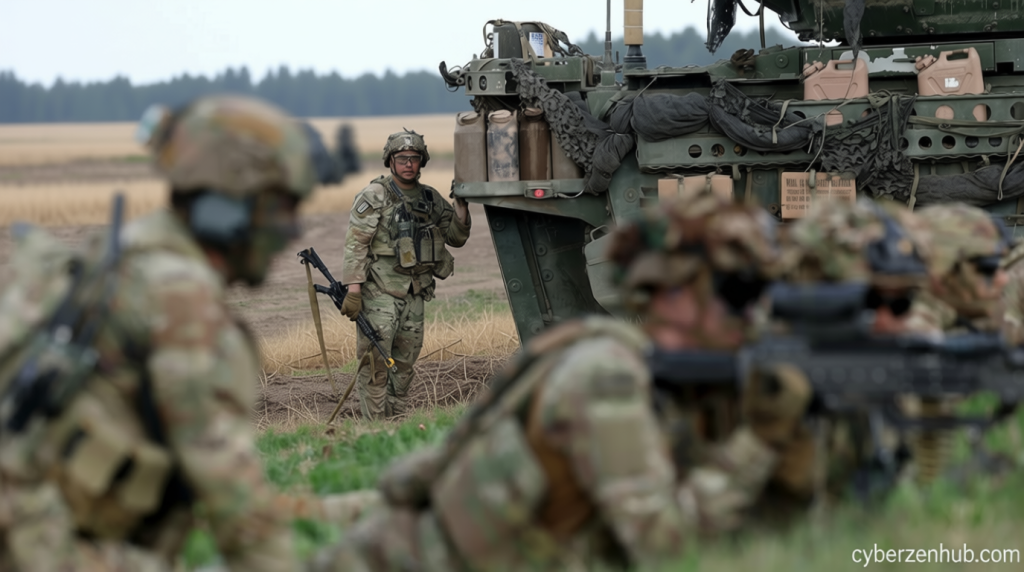
Pentagon abruptly cuts US combat forces – Five U.S. officials confirmed that the Pentagon has canceled plans to deploy a 4,200-troop brigade, a frontline armored unit of the Army, to Poland. This decision would reduce the American combat capability in the country by approximately half. The brigade, part of the 1st Cavalry Division, was set to replace another armored unit from the same division that had been stationed in Poland the previous year. The move has sparked confusion within the unit and among defense analysts, with preparations already underway for the deployment.
Surprise decision disrupts logistical preparations
The cancellation came just days after the unit completed a deployment send-off ceremony, leaving soldiers scrambling to halt their readiness efforts. Officials revealed that the brigade had already begun shipping critical equipment and personnel to Europe, a standard procedure for large-scale military operations. This step typically involves sending advance forces ahead of the main contingent to establish a foothold. The abrupt nature of the change has raised questions about the strategic rationale behind the shift.
Impact on NATO’s eastern flank
The Pentagon’s decision follows a separate announcement two weeks prior, in which it outlined plans to withdraw roughly 5,000 troops from Germany over the next 6 to 12 months. President Donald Trump described these cuts as “going a lot further” in reducing the U.S. military footprint in Europe. The move is linked to the goal of bringing troop levels back to pre-Ukraine invasion levels, as noted by a senior defense official. However, the cancellation of the Poland deployment appears to be a separate action, though its connection to broader force reductions remains unclear.
Polish officials respond to the withdrawal
Polish defense minister Wladyslaw Kosiniak-Kamysz stated on social media that the deployment cancellation “does not concern Poland” and is tied to the previously announced shift in U.S. troop presence across Europe. Another Polish official echoed this sentiment, calling the decision “a surprise.” Despite the uncertainty, Kosiniak-Kamysz emphasized that the change reflects a broader strategy rather than an isolated adjustment. The reduction, however, may still affect the regional balance of power, especially as some 10,000 U.S. troops are currently stationed in Poland.
Army’s budget shortfall complicates plans
The Army’s decision to cut training and personnel rotations aligns with its broader financial challenges, which include a $4- to $6-billion shortfall. This has led to a reevaluation of military operations, with commanders prioritizing cost efficiency. The brigade, which had been expected to depart soon, now faces the possibility of being delayed or restructured. Its equipment includes 87 M1 Abrams tanks, 152 Bradley Fighting Vehicles, and 18 Howitzer artillery systems—assets considered vital for European defense.
Strategic significance of armored units
Sen. Jeanne Shaheen, D-N.H., and the ranking member of the Senate Foreign Relations Committee, expressed concern over the decision, stating that the rationale was “not at all clear.” She noted that having operational bases in Poland provides a strategic advantage, allowing for faster and more economical deployments. “One of the advantages of those bases is that they serve as a launching point for military operations,” Shaheen said in a statement. “That’s not only faster but also cheaper.”
“Make no mistake – our adversaries are paying attention,” Maj. Gen. Tom Feltey, commander of the 1st Cavalry Division, remarked during the deployment send-off. “When an armored brigade combat team deploys forward, it sends a clear and unmistakable signal. The [brigade] is the embodiment of American ground combat power.”
Pentagon’s stance on NATO deterrence
The Pentagon has stated that the reduction in rotational forces, which are temporary deployments rather than permanent bases, will not undermine NATO’s deterrence posture against Russia. A senior NATO official confirmed that the alliance will maintain a strong presence on its eastern flank, highlighting the contributions of Canadian and German troops in the region. This reassurance aims to alleviate concerns about the potential weakening of collective defense capabilities in Europe.
Historical context of military presence in Poland
Following Russia’s 2022 invasion of Ukraine, the Pentagon intensified its efforts to bolster NATO’s frontline strength in Poland. This included deploying units on year-long rotational tours, with armored brigades forming the backbone of these operations. The focus was on training alongside allied forces to enhance readiness and demonstrate commitment to the alliance. Now, with the cancellation of this specific deployment, the U.S. military’s role in Poland is being reassessed.
Broader implications for U.S. strategy
The unexpected withdrawal of the 4,20’s unit raises questions about the U.S. military’s long-term strategy in Europe. While the Pentagon attributes the cuts to a need for fiscal restraint, Polish officials and lawmakers argue that the decision may signal a shift in priorities. The brigade’s equipment, including self-propelled howitzers and advanced armored vehicles, had been viewed as critical to maintaining a strong defensive posture. Its absence could impact the speed and effectiveness of future operations.
Uncertainty over future deployments
With the deployment canceled, the Army now faces the challenge of reallocating resources and adjusting its plans. Some troops previously assigned to the unit may be redirected to other locations, while others could remain in Europe to support ongoing missions. The timing of the decision—shortly after the send-off ceremony—adds to the confusion, as the unit had already invested significant effort in preparation. The Pentagon’s silence on the matter has left many wondering about the underlying reasons for the change.
Legacy of the 1st Cavalry Division
Since the unit’s deployment had been a key part of NATO’s strategy, the cancellation may affect the division’s operational profile. The brigade’s equipment, including the M109 A7 Paladin self-propelled howitzers, had been integral to training exercises in Texas and other regions. Its role in demonstrating American military strength cannot be overstated, as highlighted by Maj. Gen. Feltey’s remarks. The decision to halt the deployment could signal a temporary pause in the U.S. commitment to the eastern flank, though the long-term implications remain under scrutiny.
As the Pentagon continues to refine its European strategy, the abrupt reduction in forces in Poland underscores the dynamic nature of military planning. With the Army navigating budget constraints and geopolitical shifts, the focus on rotational deployments versus permanent bases may reshape the U.S. military’s presence in the region for years to come.