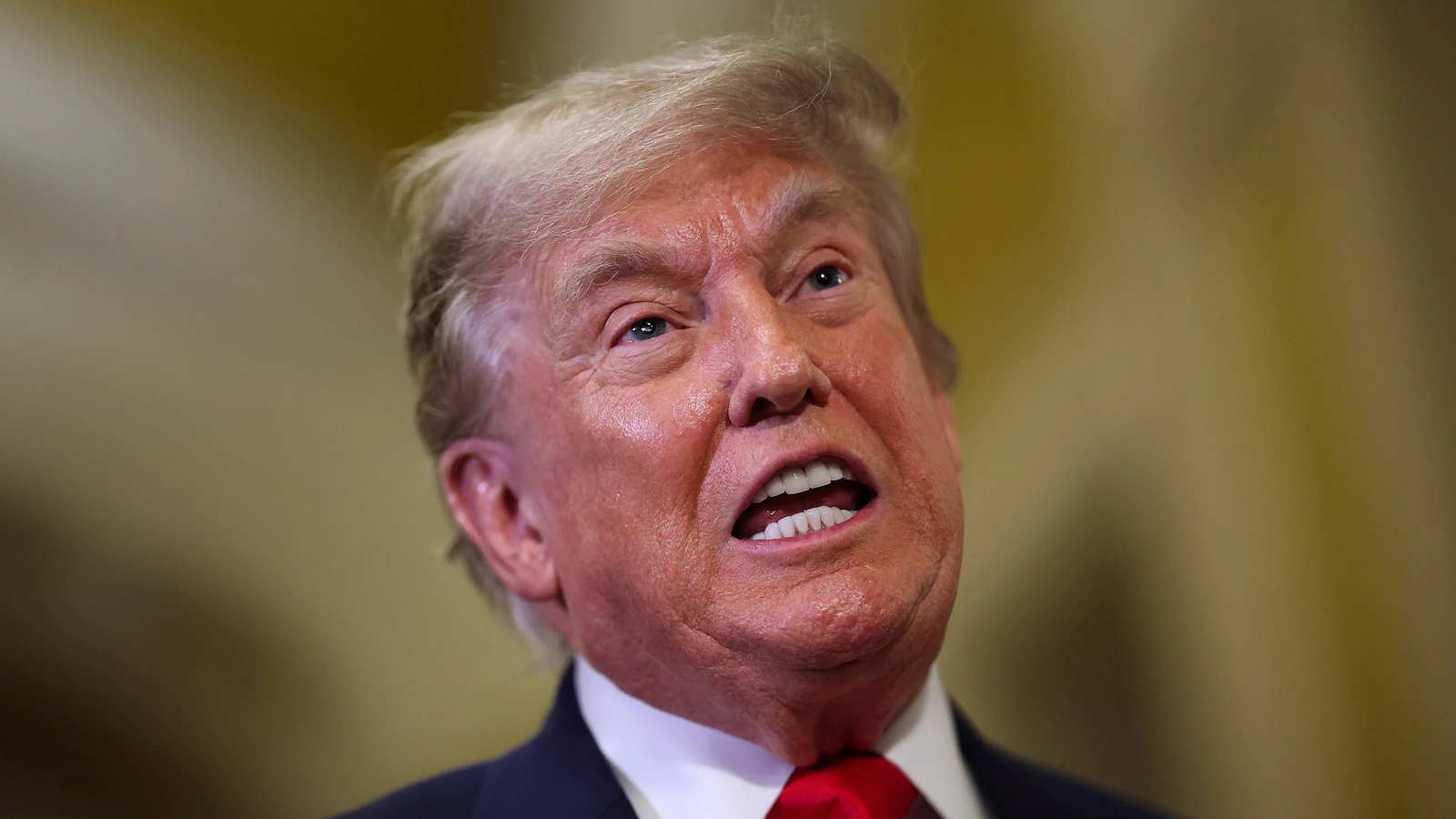
Trump and Cassidy Clash Over War Powers Vote in Republican Senators’ Meeting
Cyberzenhub.com – During a pivotal session with Republican senators on June 24, 2026, President Donald Trump found himself at odds with Louisiana Senator Bill Cassidy. According to multiple sources, the exchange between the two figures became heated, culminating in a verbal confrontation that some described as a “shouting match.” The disagreement centered on a Senate vote earlier that week, where a war powers resolution was approved—a rare moment of bipartisan dissent against Trump’s policies in the Middle East.
Resolution Aims to Limit Executive Authority in Iran
The resolution, which passed with a narrow 50-48 margin, seeks to curtail the U.S. president’s ability to unilaterally deploy military forces in Iran without congressional approval. While it does not hold legal force, it serves as a symbolic rebuke of Trump’s approach to the conflict, highlighting concerns over executive overreach. Cassidy, one of four Republican senators who supported the measure, emphasized its importance in ensuring transparency and accountability. His vote came alongside two other GOP senators who were absent, allowing the resolution to cross the threshold needed for passage.
“I think we had a really great meeting, and we’re very proud of the party. We like our leader, we like everybody really in the room,” Trump said, addressing reporters after the closed-door discussion. His remarks underscored a broader effort to frame the gathering as a success, despite the internal disagreements.
Though Trump praised the meeting overall, he expressed frustration over the four Republicans who aligned with Democrats. “I don’t like a few people, but that’s OK,” he added, hinting at personal tensions. The president also noted that the absence of two senators further complicated the process, suggesting that their support could have swayed the outcome. However, he stopped short of criticizing the resolution directly, instead focusing on the unity of his party.
Heated Exchange Reflects Growing Divide
The clash between Trump and Cassidy revealed deeper rifts within the Republican Party. Sources indicated that Trump, during the meeting, accused Cassidy of being a “lunatic,” a term that Cassidy did not dispute when questioned by ABC News. The confrontation was said to escalate when Trump questioned the rationale behind the resolution, prompting Cassidy to respond with a sharp retort. “He asked why would anybody vote for the War Powers Act?” Cassidy recalled in an interview, explaining how the debate unfolded.
“As he continued, I said, ‘is that a rhetorical question, or would you like to really know?’ He said, ‘I’d like to know.’ I stood and said, ‘You have not told the American people what’s going on. It was supposed to last four weeks. It’s lasted four months. Our original objectives have not been achieved, and I want to know what’s going on,'” Cassidy detailed, illustrating the growing impatience among senators regarding the prolonged military engagement in Iran.
Cassidy described the meeting as an intense debate, where his frustration with the administration’s handling of the conflict reached a peak. “But that’s kind of what I’ve been saying all along,” he added, noting that his vote was contingent on receiving adequate information. The senator claimed that Trump raised his voice during the argument, which in turn led to a reciprocal increase in volume. “It went back and forth,” Cassidy said, describing the back-and-forth nature of their exchange.
Leadership Efforts to De-escalate Tensions
Senate Majority Leader John Thune attempted to mediate the situation, stepping in to ease the rising tempers. Other senators also joined the effort, recognizing the need to avoid a full-blown disagreement that could undermine the party’s cohesion. Despite these interventions, the resolution’s passage marked a significant moment, as it represented a rare instance where Republicans joined Democrats to challenge Trump’s executive authority.
Cassidy’s remarks in a social media post on Wednesday night provided further insight into the meeting. He stated that he had received a “thorough briefing” from Vice President JD Vance and Special Envoy Steve Witkoff, which he credited for his decision to support the resolution. “I appreciate the quick invitation to the White House to address many of my concerns,” he wrote, reflecting on the administration’s efforts to inform lawmakers about the situation in Iran.
Commitment to Transparency
When asked if he regretted the meeting’s intensity, Cassidy remained resolute. “No, I’m not going to be bullied when I’m trying to get information for the American people,” he said, emphasizing that the debate was about accountability, not personal conflict. “This is not about me, it’s not about the president, it’s about the American people knowing what’s going on,” he added, highlighting the core issue at stake.
Trump, while acknowledging the four Republicans’ support, also noted the two absences as a point of contention. “Right now there’s just like it seems like we’re being told different things by different people,” Cassidy remarked, pointing to the perceived lack of clarity surrounding the administration’s strategy in Iran. This sentiment was echoed by other senators, who criticized the White House for not providing sufficient details about the war powers resolution’s implications.
Broader Implications for the GOP
The meeting underscored the internal dynamics of the Republican Party, where loyalty to the president often clashed with personal convictions. Cassidy’s decision to support the resolution reflected a growing faction within the party that prioritizes congressional oversight over executive discretion. While Trump framed the situation as a test of party unity, Cassidy framed it as a necessary step to ensure transparency in foreign policy decisions.
Trump’s response to Cassidy’s criticism was lighthearted but pointed. When asked if he considered Cassidy a “lunatic,” the president did not deny the label, instead using it to highlight the senator’s dissent. “I think you know who they are,” he said, implying that the four Republicans who voted with Democrats were outliers within the party. This statement, however, did little to quell the controversy, as it framed the resolution as a partisan attack rather than a policy discussion.
Related Developments
Amid the tensions over the war powers resolution, other political developments gained traction. A ransom note sent to a Tucson television station was linked to the recent abduction of Nancy Guthrie, raising concerns about the safety of journalists. Meanwhile, the Pentagon sought an additional $67.1 billion in funding, partly to cover the costs of the Iran conflict. These stories, while separate, contributed to a broader narrative of national security and political accountability.
Cassidy also took the opportunity to clarify his relationship with Trump, stating that he had referred to the president as “brother” during the meeting. However, Trump corrected this, asserting that he was not Cassidy’s sibling. This moment, though seemingly minor, highlighted the personal stakes involved in the debate, as senators balanced their roles as lawmakers with their personal ties to the administration.
The meeting with Republican senators marked a turning point in the ongoing discussion about the War Powers Act. While Trump sought to maintain control over the policy, Cassidy and his allies pushed for greater congressional involvement. As the debate continued, the focus remained on ensuring that the American public was fully informed about the nation’s military actions in Iran—a goal that both leaders claimed to share, albeit with differing methods of achieving it.
Conclusion: A Battle of Principles
In the end, the meeting was as much about preserving party unity as it was about policy. Trump’s assertion that the party was “really well unified” contrasted with Cassidy’s insistence that the resolution was a necessary check on executive power. The clash between the two figures encapsulated the broader ideological struggle within the GOP, where loyalty to the leader sometimes clashed with the need for transparency and oversight.
Cassidy’s decision to challenge the administration’s narrative was met with both support and criticism. While some Republicans viewed his actions as a courageous stand for accountability, others saw them as a disruption to the party’s cohesion. As the Senate moves forward, the resolution’s legacy will likely depend on its ability to influence future military decisions and the degree to which it unites or divides the Republican ranks.