Trump Delivers Speech After Storms Disrupt July Fourth Celebration in Washington
Cyberzenhub.com –
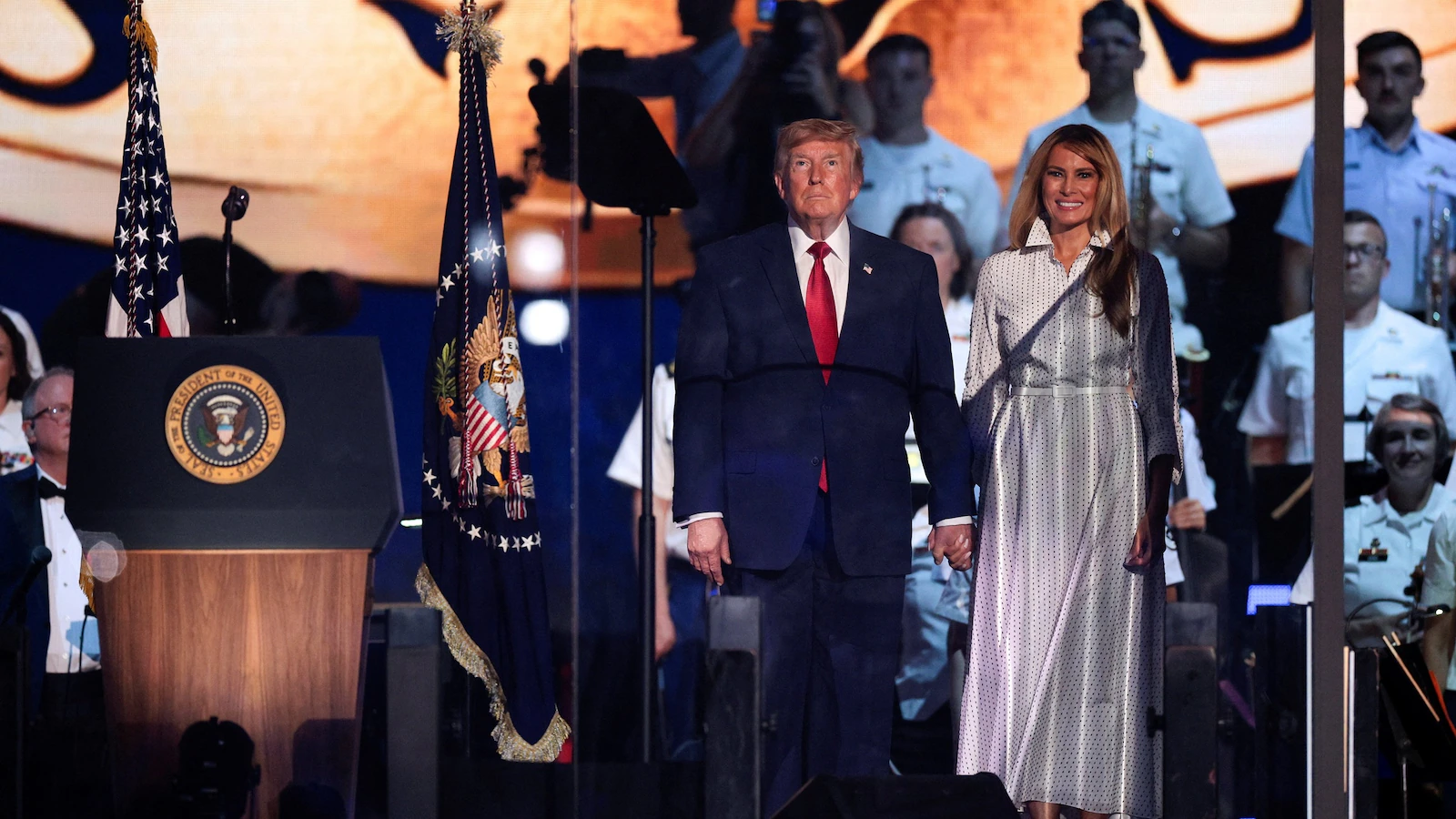
President Donald Trump took to the podium at the National Mall in Washington, D.C., on July 4, 2026, to address the crowd during the “Salute to America” Independence Day event, which had been postponed due to severe weather. The ceremony, intended to commemorate the 250th anniversary of the U.S. Declaration of Independence, faced last-minute challenges when thunderstorms forced an evacuation earlier in the evening. Despite the delay, Trump remained resolute in his commitment to speak, emphasizing his readiness to engage with the audience regardless of the time.
Weather Challenges and Evacuation Orders
The original event was scheduled to begin at 7 p.m. Saturday, but organizers called off the program after temperatures soared to nearly 100 degrees and lightning threatened the area. Attendees were urged to vacate the National Mall as a precaution, with some expressing confusion over the sudden change. The U.S. Secret Service mandated the evacuation, and loudspeakers were used to guide crowds to safer locations.
As the storm clouds gathered, a noticeable shift in the atmosphere occurred. “Due to approaching severe weather, we are temporarily pausing the event for your safety,” a voice over the speakers declared. The decision to evacuate created a ripple effect, with some individuals lingering to capture the moment or simply resist the move. Military flyovers, a key highlight of the celebration, continued despite the chaos, drawing admiration from those who stayed to witness the spectacle.
Trump’s Determination Amid Delays
Trump, who had already faced delays, vowed to make his speech even as the event was pushed back. “We will wait it out, I don’t care if it’s 2:00 O’Clock in the morning, or in one hour from now,” he stated in a social media post, showcasing his trademark confidence. This sentiment was echoed in a later message, where he expressed enthusiasm for the extended festivities. “It’s Saturday night, LETS HAVE SOME FUN, even if we are out late tonight. They say 11:00 O’Clock for the speech. Who cares??” he wrote, highlighting his dismissive attitude toward the scheduled time.
His determination to deliver the speech was underscored by the fact that the program had been delayed by several hours. While the initial delay was due to the heatwave, the threat of thunderstorms added urgency to the evacuation. “Storms bring luck to whatever the occasion,” Trump remarked in a quoted statement, suggesting that the weather had an unexpected positive impact. “They also make events a little bit more exciting,” he added, capturing the public’s attention with his characteristic flair.
Even as the National Mall buzzed with activity, the president’s words resonated with the crowd. His ability to adapt to the unforeseen circumstances demonstrated a blend of resilience and showmanship, traits that had become central to his public persona. The speeches, which took place under the flickering lights of the evening, were followed by a series of announcements that kept the audience informed of the evolving situation.
Impact of the Weather on the Celebration
The severe weather not only disrupted the timing of the event but also led to the cancellation of several performances. Among the affected activities were military flyovers, which had been scheduled to begin shortly after the evacuation. Although some flyovers were called off due to safety concerns, others proceeded, leaving a mixed reaction among attendees. “USA!” chants broke out as some viewers chose to stay and watch the aerial displays, undeterred by the weather.
The evacuation process itself became a focal point for the event. As the crowd dispersed, photographers and journalists captured the scene, highlighting both the chaos and the determination of the attendees. “Lightning flashes near the National Mall, as thunderstorms in the area affect Fourth of July celebrations marking the 250th anniversary of U.S. independence,” noted a Reuters image caption, underscoring the dramatic backdrop to the proceedings.
While the immediate focus was on the president’s address, the broader context of the day’s events painted a picture of resilience. The National Mall, a historic site that has hosted numerous milestones, served as the stage for this unique celebration. “The White House is seen in the distance as people evacuate the area after being told of incoming storms that will delay the program at a Salute to America Independence Day event,” one AP Photo caption described, capturing the moment as a symbol of national unity.
Historical Significance and Public Reaction
The 250th anniversary of the Declaration of Independence was a significant occasion, drawing attention to the founding principles of the nation. Despite the weather-related interruptions, the event remained a major highlight for many. “Americans are celebrating the nation’s 250th anniversary amidst an extreme heat wave bringing dangerous triple-digit temperatures to much of the eastern United States,” noted another Getty Images caption, emphasizing the unique challenges of the day.
Some attendees appeared frustrated by the delays, with a few voicing their discontent. “They say 11:00 O’Clock for the speech. Who cares??” Trump’s message was met with both support and skepticism. While some members of the crowd remained seated, others stood in admiration of the president’s resolve. The event’s dual nature—part celebration, part crisis—highlighted the dynamic interplay between planned festivities and unexpected weather.
As the fireworks eventually began, the crowd’s mood shifted from apprehension to excitement. The delay had turned the event into a test of endurance, and the president’s ability to rally people under these conditions reinforced his image as a leader who thrives on challenges. The speeches, combined with the ongoing flyovers and the thunderstorms, created a memorable blend of tradition and modernity.
Related Events and Broader Context
Meanwhile, other events across the nation also faced disruptions. The “Freedom 250 State Fair,” another component of the July Fourth celebrations, was similarly evacuated due to the severe weather. This widespread impact underscored the challenges posed by the heatwave, which had gripped much of the eastern United States.
Trump’s remarks on the weather were not isolated. Earlier in the day, he had downplayed the intensity of the heat, stating, “Despite the heat, which isn’t as bad as predicted, the crowds in D.C. are INCREDIBLE,” in a social media post. This sentiment reflected his broader strategy of framing the situation as an opportunity rather than a setback.
The day’s events also highlighted the importance of public engagement in national celebrations. While the physical conditions were tough, the spirit of the occasion remained strong. “The preliminary high temperature in Washington, D.C., Saturday was 102 — making it the hottest July Fourth on record for the city,” noted the article, adding to the historical context.
As the fireworks lit up the sky, the crowd’s enthusiasm was palpable. The decision to delay the program had transformed the event into a shared experience, with people reflecting on the significance of the day despite the setbacks. The combination of thunderstorms, heat, and the president’s determination created a narrative that was as much about the celebration of independence as it was about overcoming adversity.
The aftermath of the event saw a mix of reactions. While some praised the president for his perseverance, others questioned the decision to proceed in such conditions. Nonetheless, the day’s activities served as a reminder of the nation’s ability to adapt and continue celebrating its heritage, even in the face of unpredictable challenges. The “Salute to America” event, though delayed, managed to leave a lasting impression on those who attended.