
Trump-Xi summit Day 1 takeaways: ANALYSIS
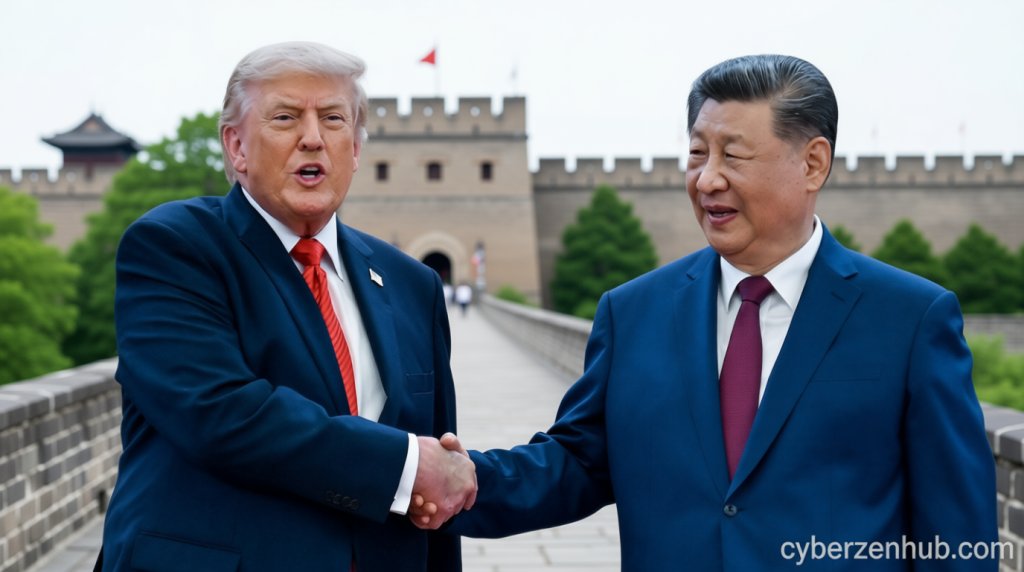
Trump-Xi Summit Day 1 Takeaways: Analysis
Welcome Ceremony and Initial Remarks
Trump Xi summit Day 1 takeaways – On the opening day of the high-profile Trump-Xi summit in Beijing, the Chinese leadership extended a warm welcome to President Donald Trump, ensuring the event reflected the gravity of the meeting. The leaders were presented with a grand spectacle, including a military parade and ceremonial greetings that underscored their mutual recognition of the summit’s significance. Trump, who has often expressed a fondness for opulent displays, appeared visibly pleased, describing the moment as a “great honor.” He emphasized his appreciation for President Xi Jinping’s leadership, calling him a “great leader” and expressing optimism about their collaboration. A White House representative noted that the initial dialogue between the two leaders was described as “constructive,” setting a positive tone for the discussions ahead.
During the state dinner, which took place in the Great Hall of the People, both leaders highlighted the enduring partnership between the United States and China. Trump spoke of the shared history of cooperation, while Xi Jinping reiterated China’s commitment to fostering global alliances. The event served as a backdrop for broader geopolitical considerations, as the summit aimed to address critical issues ranging from trade to international security. Despite the ceremonial overtones, the meeting was framed as a pivotal moment in shaping the future of U.S.-China relations.
Taiwan as a Point of Tension
Beneath the surface of the diplomatic charm, tensions over Taiwan remained a central focus. Xi Jinping delivered a pointed message, warning that “improper handling” of the issue could lead to “conflict.” This statement signaled China’s determination to maintain its claim over the island, which it views as a breakaway province under a separatist government. The U.S. has historically supported Taiwan’s status quo, advocating for a balance where China does not push for full independence, and the U.S. does not formally recognize Taiwan as a sovereign state.
The U.S. position on Taiwan has been a recurring point of negotiation with Beijing. During the summit, analysts suggested that China may leverage its relationship with Trump to secure concessions on other matters, such as trade or regional security. Some in the national security community expressed concerns that Xi could press for reduced American arms sales to Taiwan or seek explicit Washington support for China’s stance on unification. The summit’s outcome in this area could have far-reaching implications, influencing the delicate balance of power in the Asia-Pacific region.
“It’s in their interest to resolve this. We hope to convince them to play a more active role in getting Iran to walk away from what they’re doing now and trying to do now in the Persian Gulf,” Secretary of State Marco Rubio said in a pre-taped interview on Fox News.
Iran and the Strait of Hormuz
The discussion on Iran emerged as a key topic during the summit, with the Trump administration seeking Beijing’s cooperation in de-escalating tensions. U.S. officials highlighted the importance of keeping the Strait of Hormuz open, a vital artery for global oil supply, and urged China to use its influence over Tehran to achieve this goal. The White House readout of the meeting stated that both leaders agreed on the necessity of maintaining open shipping lanes and preventing Iran from acquiring nuclear weapons.
However, the Chinese side’s public statements appeared more cautious. While acknowledging the Middle East as a subject of dialogue, they did not explicitly mention Iran’s nuclear program or the strait. This discrepancy has led to speculation about Beijing’s priorities. Experts noted that China may be reluctant to commit to direct action in the Persian Gulf, viewing the conflict as primarily an American concern. The omission of specific commitments could reflect a strategy to avoid overextending China’s involvement in the crisis while maintaining diplomatic flexibility.
Economic Agreements and Trade Initiatives
Amid the geopolitical discussions, economic cooperation remained a cornerstone of the summit. The White House emphasized progress on trade, including efforts to boost U.S. agricultural exports to China and expand business opportunities for American companies. Treasury Secretary Scott Bessent outlined plans to establish joint committees focused on managing bilateral trade and investment in non-sensitive sectors. These initiatives aim to strengthen economic ties and address concerns over trade imbalances.
Artificial intelligence also featured prominently in the agenda. Bessent noted that the U.S. and China, the world’s two leading AI powers, would collaborate to develop protocols for responsible innovation. The goal, he said, is to prevent non-state actors from exploiting AI technologies, ensuring they align with shared global standards. This focus on AI collaboration highlights the potential for mutual benefit in a field where both nations are investing heavily. However, the challenge lies in balancing technological cooperation with competitive interests.
Additionally, the summit addressed the issue of fentanyl trafficking, with both leaders agreeing to intensify efforts to curb the illegal flow of the drug. This point of consensus underscores the shared concern over opioid addiction, which has affected communities in both countries. While these agreements provide a framework for cooperation, their implementation will be critical in determining the summit’s long-term success.
Strategic Implications and Outlook
The summit’s first day revealed a dual narrative: one of unity and partnership, and another of strategic maneuvering. Beijing has positioned itself as a peer to the United States, asserting its role in global leadership. Chinese state media has already hailed the visit as a major diplomatic achievement, suggesting that the event has bolstered China’s image on the international stage. Some analysts in China argue that the summit demonstrates Trump’s reliance on Beijing, highlighting how the U.S. president’s focus on the Iran conflict has weakened his leverage in other areas.
Despite the progress made on certain issues, challenges remain. The U.S. and China continue to navigate complex negotiations, balancing their interests in trade, security, and regional influence. The summit’s success will depend on whether both sides can translate early optimism into concrete agreements. As the discussions unfold, the world will be watching closely for signs of a new era of cooperation or the emergence of deeper divisions between the two superpowers.