Trump’s Triumphal Arch Construction Schedule Revealed: 20-Hour Workdays Over Two to Three Years
Cyberzenhub.com – Plans for Donald Trump’s “Triumphal Arch,” a monumental addition to Washington, D.C.’s skyline, have been detailed in newly released documents from the Department of the Interior. According to the National Park Service (NPS), the structure will require an intense construction schedule, with work expected to continue for two to three years. The schedule includes a commitment to operate construction equipment for 20 hours each day, a plan that has drawn attention due to its potential impact on local traffic and infrastructure.
Ambitious Timeline and Material Choices
The project’s planning documents outline a multi-stage construction process, with each phase requiring specific resources and timeframes. The arch, designed to symbolize the 250th anniversary of American independence, is described as a towering structure in the latest reports. One key point emphasized by the NPS is the arch’s intended height, which is stated to be a critical element of its symbolic significance. “Because the arch is intended to celebrate 250 years of American independence,” a report notes, “smaller heights were not considered representative of this milestone, unlike the 250-foot arch proposed in the undertaking.”
“Career safety experts found no adverse impacts to operations at DCA. Their review determined the only requirement would be the top of the structure would need to be lit with red obstruction lights — a common safety tool,” an FAA spokesperson said in a statement.
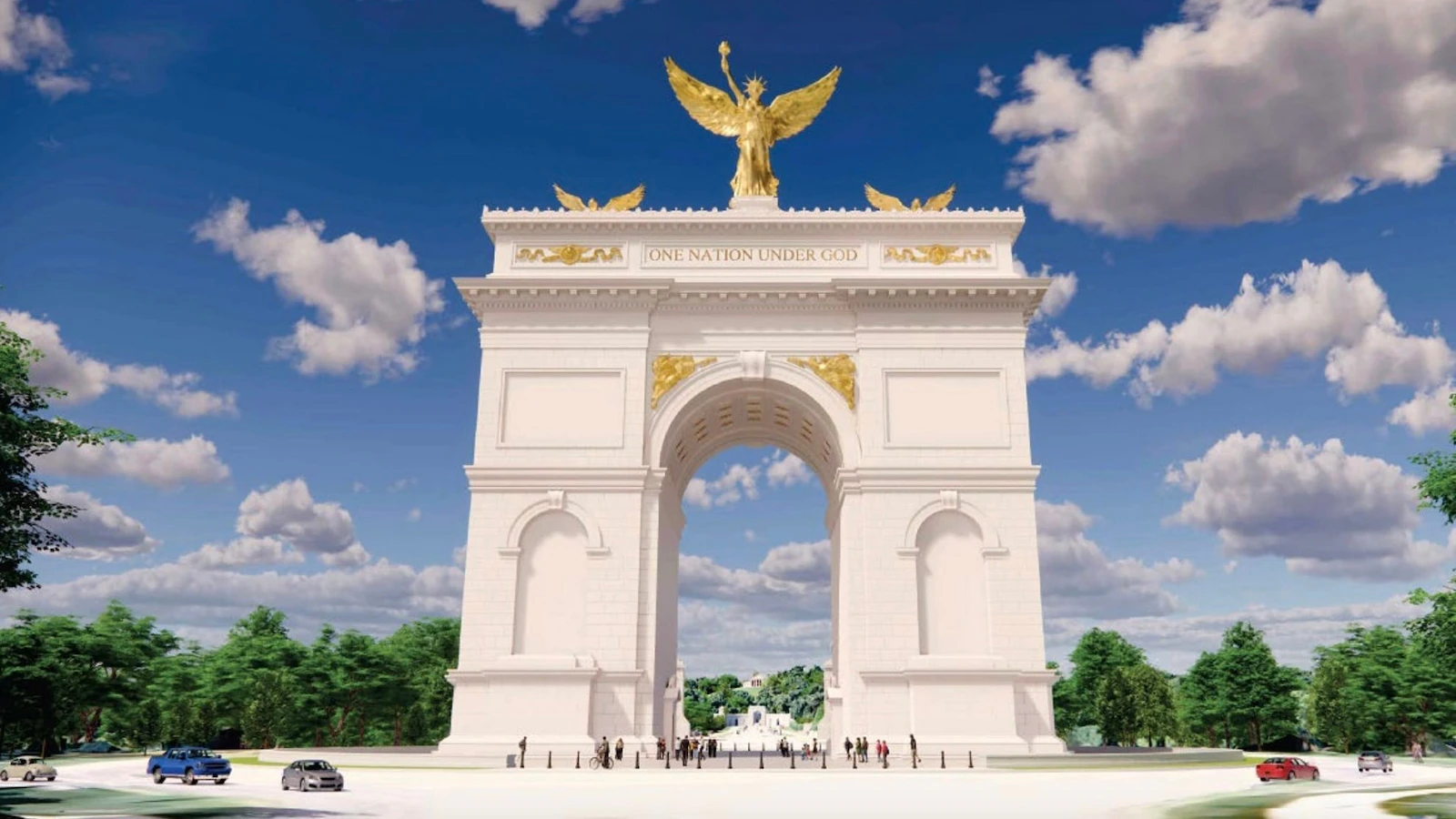
The National Capital Planning Commission (NCPC) has been involved in reviewing the project, with recent submissions including detailed designs, renderings, and environmental assessments. These materials were released to solicit public feedback on the controversial structure, which has sparked debate about its design, location, and potential disruptions to the city’s historic landmarks. One rendering highlights a street-level perspective of the arch, showcasing its imposing scale against the backdrop of Arlington Memorial Cemetery. Another image provides a view from the Lincoln Memorial, illustrating how the structure might integrate into the city’s iconic architecture.
Construction Challenges and Legal Battles
Despite its ambitious scope, the Triumphal Arch has faced legal challenges. Several lawsuits have been filed against the project, targeting not only the arch itself but also other developments linked to Trump’s administration, such as the White House Ballroom, golf course renovations, and the repainting of the Lincoln Memorial Reflecting Pool. So far, these legal efforts have not succeeded in halting construction, with the NPS continuing its work on the site. The project’s timeline is set against the backdrop of ongoing litigation, highlighting its political and cultural importance.
The NPS’s planning documents reveal that the construction will proceed in seven distinct phases. The initial phase involves excavation and the establishment of a deep foundation system, which will extend approximately 75 feet into bedrock. This process is expected to take five months of continuous heavy equipment operations. The report estimates that this stage will require 30 trucks to transport 100 loads of soil per day for several months, underscoring the logistical scale of the project.
Technical and Environmental Considerations
Given the arch’s proximity to Ronald Reagan Washington National Airport (DCA), planners have incorporated aviation safety measures into its design. The FAA conducted a feasibility study, concluding that the structure would not significantly interfere with airspace or flight procedures. “No significant adverse effect on airspace and visual/instrument procedures” was noted in the study, which also found that the arch would require only red obstruction lights at the top of the structure. These lights, described as a “least intrusive technology available,” are intended to minimize light pollution while ensuring safety for air traffic.
The construction will also involve advanced machinery, including cranes exceeding 320 feet in height — taller than the U.S. Capitol building. Other equipment such as concrete pumps, forklifts, and skid steers will be essential to complete the project’s complex tasks. The NPS has emphasized the need for these tools to manage the massive scale of the arch, which will be built with concrete as its core and U.S.-sourced granite for its outer shell. This material choice marks a departure from traditional D.C. monuments, which often use marble or limestone.
Phased Construction and Future Steps
Once the foundation is in place, the next phase will focus on building the primary concrete structure of the arch. This stage is projected to last around 10 months, followed by the installation of granite panels. The final phase involves assembling the inner framework, which includes stairs, elevators, roofing systems, plumbing, and electrical work. These elements will be integrated into the structure to ensure functionality and durability.
The NPS has also warned that the construction could lead to significant traffic disruptions around the Arlington Memorial Bridge. With heavy equipment and materials moving through the area, local commuters may experience delays as the project progresses. The National Capital Planning Commission is yet to approve the final design, which has been under review following recent hearings. Critics argue that the arch’s placement near the bridge and its potential impact on the city’s historic landscape require further scrutiny.
As the project moves forward, the NPS and FAA will continue to collaborate