Bill Gates’ Testimony on Jeffrey Epstein’s Blackmail Attempts
Cyberzenhub.com – Microsoft co-founder Bill Gates provided insights into his interactions with Jeffrey Epstein during a recent House Oversight Committee session, revealing that the convicted sex offender sought to manipulate him with information about his personal life. The closed-door meeting, which took place on June 10, 2026, was part of a broader investigation into how government agencies handled Epstein’s cases. A transcript of the session, released on Tuesday, highlighted Gates’ account of Epstein’s efforts to reestablish contact after their relationship had ended. According to Gates, Epstein used strategic methods to pressure him, though the financier never directly threatened him. The testimony offers a glimpse into the tactics Epstein allegedly employed to influence a high-profile figure in the public eye.
Epstein’s Strategy to Influence Gates
Gates described how Epstein leveraged compromising details about his extramarital affairs to regain access to his life. He stated that the financier, through an intermediary, sent “veiled” messages that suggested a potential blackmail scheme. Gates further indicated that Epstein might have guided his adviser on how to use this information effectively, blending fact with fiction to create leverage. While Gates insisted he was not blackmailed, he acknowledged that the materials from Epstein’s files seemed to point toward such an intent. “It appears that in many cases he, at least in emails to himself, was sort of rehearsing how either he or he coaching someone else might choose to blackmail me,” Gates said in the transcript. “But none of those messages were ever sent to me.”
“I was not blackmailed, but, you know, as you look at these emails, you know, it looks like Mr. Epstein’s brainstorming was going in that direction,” Gates remarked during the session.
The testimony underscores Epstein’s alleged approach to using personal information as a tool for control. Gates mentioned that Epstein’s methods involved subtle psychological tactics, aiming to create an impression of impending harm without overt confrontation. This strategy, he suggested, was part of a broader pattern of manipulation, where Epstein sought to position himself as a key player in Gates’ professional and personal circles.
Gates’ Personal Acknowledgments
During the hearing, Gates candidly admitted to having at least three extramarital affairs. However, he clarified that Epstein was not involved with any of the women and only became aware of these relationships after their ties were severed. “Epstein only learned about them after we had cut ties,” Gates stated, emphasizing the separation between their personal lives. The admission highlights Gates’ willingness to address his own conduct while framing Epstein as the instigator in the situation.
Epstein’s alleged attempts to use Gates’ affairs against him were part of a larger narrative of influence. Gates noted that the financier’s approach involved a mix of facts and assumptions, designed to pressure him into reconsidering their relationship. This included coaching his adviser on how to present the information in a way that would appeal to Gates’ vulnerabilities. “He talked about Wall Street billionaires, he talked about Middle East billionaires,” Gates said, explaining how Epstein framed his connections to create an aura of authority.
Government Investigation and DOJ Findings
The House Oversight Committee’s inquiry into Epstein’s case has been examining the role of high-profile individuals in his network. Gates’ testimony adds to this exploration, illustrating how Epstein might have exploited his relationships for personal gain. The Department of Justice had previously stated that it found no credible evidence of Epstein blackmailing prominent figures, but Gates’ account suggests that the financier was actively preparing for such a scenario. “I have never victimized anyone,” Gates told lawmakers, though he acknowledged that Epstein may have sought to create a perception of vulnerability.
Gates also described his interactions with Epstein as primarily business-oriented. He claimed that he never witnessed the financier commit a crime and did not initially suspect that the women associated with him were victims of sex trafficking. However, he admitted that the situation became more complex once he learned about the full extent of Epstein’s activities. “I was so focused on the possibility of raising funds for global health that I allowed that goal to override my better judgment,” Gates said, reflecting on his decision to continue the relationship despite knowing Epstein’s criminal history.
Epstein’s Influence on Gates’ Judgment
Gates revealed that his initial meetings with Epstein began in 2011, driven by the hope that the financier’s connections could benefit the Gates Foundation’s global health initiatives. He recognized Epstein’s “bad reputation stemming from his criminal conviction” but continued their association, believing in his ability to facilitate partnerships. “I was aware that he had a criminal conviction,” Gates said, “but I didn’t fully grasp the specifics of it until later.” The Microsoft co-founder admitted that his understanding of Epstein’s crimes was limited at first, which may have contributed to his continued engagement with the individual.
The Miami Herald’s investigative reporting in 2018 played a pivotal role in exposing the breadth of Epstein’s dealings. Gates cited this as the moment he became fully aware of the extent of the financier’s criminal activities, which he had previously underestimated. “If the time I spent with Epstein lent him credibility, I am deeply sorry,” he said, expressing regret for the role his relationship might have played in shaping public perception of Epstein’s legitimacy.
Gates also described how Epstein presented himself to others, emphasizing his role as a “dilettante” with a superficial grasp of science and academia. According to the transcript, Epstein suggested that he offered advice to various billionaires, positioning himself as a valuable intermediary. “He made it sound very extensive,” Gates said, “maybe for me to have a good impression of him.” This narrative, Gates implied, helped Epstein maintain his influence, even as his personal conduct came under scrutiny.
Legacy of the Relationship
Reflecting on his time with Epstein, Gates acknowledged the emotional and professional toll of the relationship. He stated that his meetings with the financier were initially framed as beneficial, but the prolonged association may have obscured the risks. “I thought the other high-profile individuals with whom Epstein socialized helped create an ‘image of legitimacy,’ ” Gates said. “My own relationship with him likely bolstered that image.” This insight highlights the potential for personal connections to shape public opinion, even in the face of criminal behavior.
Despite his regret, Gates emphasized that he had learned a “significant lesson” from the experience. He pledged to be more vigilant about the people he engages with, even in limited capacities. “I’ve learned a significant lesson and am now far more careful about who I engage with,” he said, underscoring a shift in his approach to partnerships and influence. The testimony not only provides a detailed account of Gates’ perspective but also serves as a case study in how powerful figures can be drawn into complex networks of trust and manipulation.
Epstein’s alleged attempts to leverage Gates’ personal life underscore the multifaceted nature of his interactions. While Gates maintained that he was never directly threatened, the financier’s methods suggest a calculated effort to use both personal and professional relationships to his advantage. The hearing’s focus on these dynamics offers a rare opportunity to examine how Epstein’s connections with influential individuals might have shaped the perception of his character and activities.
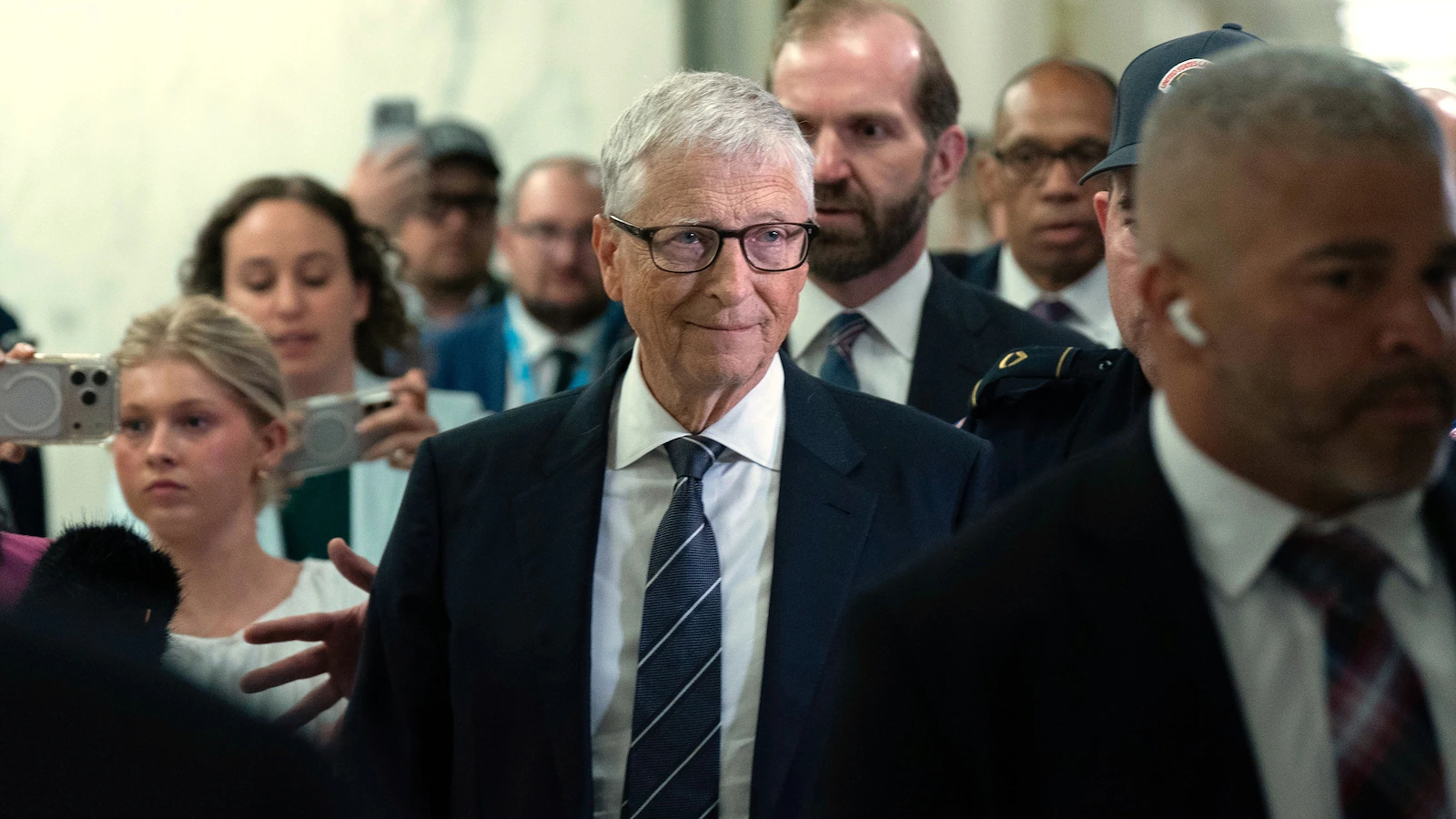
Bill Gates, co-founder of Microsoft, left the Capitol Hill meeting after sharing his perspective on the events. The session included a photo caption from Jose Luis Magana/AP Photo, noting the moment Gates departed following the closed-door interview. This image symbolizes the culmination of his testimony, which has since become part of the public record. As the investigation continues, Gates’ account provides a critical piece of the puzzle in understanding how Epstein’s network operated and the extent of his influence on those who collaborated with him.
In summary, Gates’ testimony reveals a narrative of strategic manipulation, where Epstein attempted to use personal information as a tool to regain access to Gates’ life. While Gates maintains that he was not blackmailed, his admissions about the affair and Epstein’s coaching of his adviser illustrate the complexity of their relationship. The hearing has shed light on the intersection of personal and professional trust, offering a glimpse into how such dynamics can shape the actions of even the most prominent figures in the public sphere.