CBP Pauses Big Bend National Park Construction
Cyberzenhub.com – CBP pauses Big Bend National Park construction after Commissioner Rodney Scott announced a temporary freeze on all building activity inside the Texas wilderness area. Speaking through a post on X on Monday, Scott said he would travel to the site personally to evaluate conditions before any further work resumes. The decision lands amid multiple federal court filings and bipartisan political pressure from Texas officials who have challenged the project’s scope and environmental impact.
A Scaled-Down Barrier, Not the Original Wall
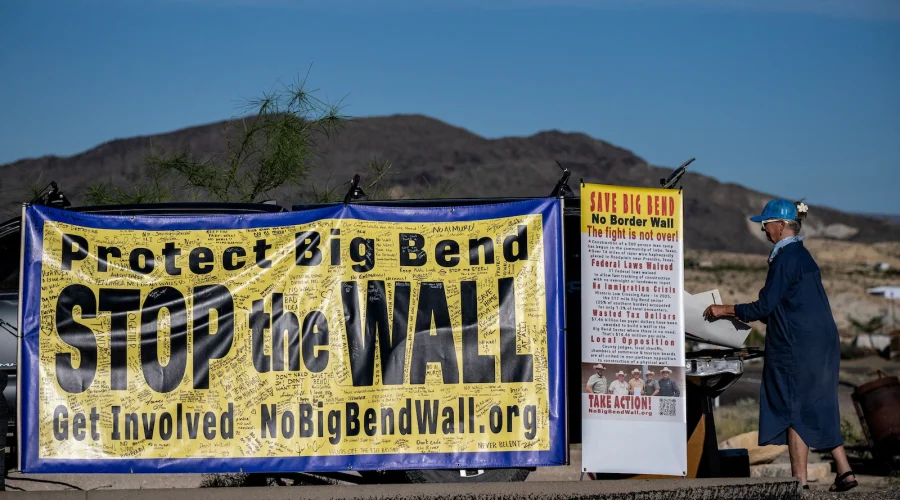
The structure crews had been assembling was described internally as a “limited” barrier — a reduced alternative to the 30-foot concrete-and-steel wall that had been the administration’s initial blueprint for the stretch. Even the scaled-back design drew immediate opposition from residents, tribal representatives, conservation organizations, and elected officials who argued that any permanent barrier would alter a landscape that has drawn visitors for generations.
Scott framed the halt not as a retreat but as a due-diligence step. In his post he wrote:
“CBP is pausing all construction activity in Big Bend National Park while I visit and conduct a personal, on-the-ground evaluation. CBP is firmly committed to protecting America, and that includes our national treasures like Big Bend National Park (BBNP). We know the current and predictable national security threats, and they are real.”
The language threads a needle between border-security messaging and stewardship of federal parkland — a balance that has proven politically difficult throughout the current administration’s infrastructure agenda.
Legal Challenges and Bipartisan Pushback
The construction entered the park under statutory waivers exercised by former Secretary of Homeland Security Kristi Noem, which cleared certain environmental and land-use restrictions. That waiver decision became a focal point for challengers who argued the authority was applied too broadly.
Texas State Senator Roland Gutierrez, a Democrat representing a district adjacent to the park, filed a federal lawsuit seeking to block the proposed barriers. On television last week he described the project as endangering sacred Indigenous land, archaeological sites, and natural resources within the park boundary. He stated that crews had already clear-cut roughly two miles of forested terrain and questioned why a remote, low-traffic sector warranted any permanent structure. He characterized the expenditure as a misuse of taxpayer funds and insisted that existing statutes protecting national parkland must be followed before any barrier goes in the ground.
On the legislative side, U.S. Senator John Cornyn, a Republican from Texas, sent a letter in early August to Secretary of Homeland Security Markwayne Mullin urging a review. Cornyn noted that a bipartisan coalition — including border sheriffs, county judges, private landowners, and advocates for the Big Bend parks — had raised “significant concerns” about the planned barriers in both Big Bend National Park and the neighboring Big Bend Ranch State Park. He highlighted worries that a wall would scar the landscape, threaten Native American cultural sites, disrupt wildlife migration corridors, and damage the tourism-dependent local economy.
Local Voices: Relief and Caution
Terrell County Sheriff Thaddeus Cleveland, a Republican who served as a Border Patrol agent before winning election to the sheriff’s office, welcomed the decision. Cleveland said he had been urging the commissioner to visit the area for months, believing from the outset that the original plan was poorly suited to the terrain and community.
“I’m glad Commissioner Scott is finally coming out to the Big Bend. I’ve been encouraging him to visit for months because I’ve believed from the first announcement that the original plan was flawed,” Cleveland said.
Cleveland went further, suggesting the commissioner use the visit as an opportunity to reassess other border sectors where construction is underway. He argued that a uniform wall strategy does not account for the varied geography, traffic patterns, and community needs along different stretches of the border.
“There is still an opportunity to make this plan better and to tailor it to the realities of this part of the border,” he said.
What Comes Next
The pause is temporary by design. Scott’s stated plan is to complete an on-the-ground evaluation, consult with local stakeholders, and then determine whether, where, and in what form any barrier proceeds. Until that assessment is finished, no new ground work will begin inside the park boundary. Litigation filed by Gutierrez and other challengers continues in parallel, meaning the project could face a judicial stay even after the commissioner returns from his site visit.
Frequently Asked Questions
Why did CBP pause Big Bend National Park construction?
Commissioner Rodney Scott ordered a temporary halt so he could personally visit the site and conduct an on-the-ground evaluation before deciding whether further work proceeds. The pause also allows time for ongoing federal lawsuits to be briefed.
Was the structure being built the original border wall?
No. Crews were assembling a “limited” barrier — a scaled-down alternative to the 30-foot concrete-and-steel wall originally proposed for the stretch.
Who filed the lawsuit challenging the project?
Texas State Senator Roland Gutierrez (D) filed a federal suit seeking to block the barriers, arguing the statutory waivers used to enter the park were applied too broadly and that existing parkland protections were bypassed.
How long will the pause last?
No fixed end date has been announced. Scott indicated the freeze will remain in effect until his personal site evaluation is complete and any follow-up consultations with local stakeholders are finished.