Trump Directs Major Cutback to U.S.-South Korea War Games, Citing Seoul’s Refusal on Iran
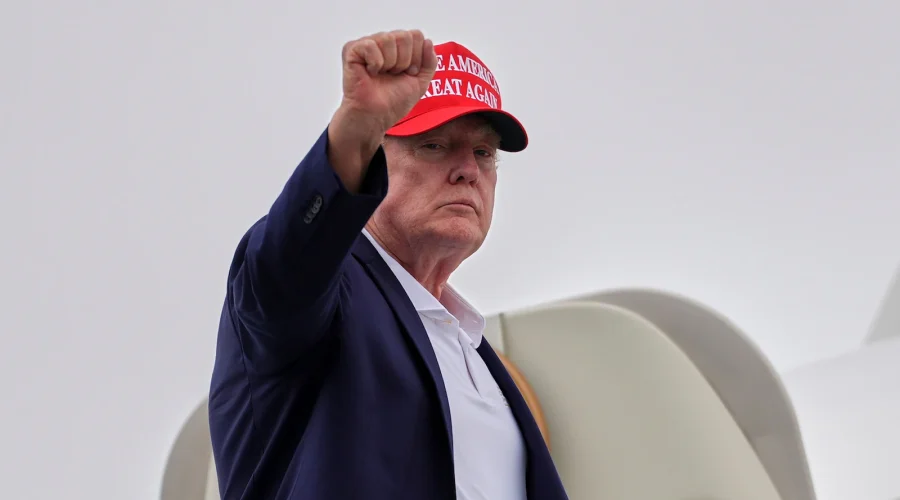
Cyberzenhub.com – In a move that reshapes the calculus of deterrence on the Korean Peninsula, President Donald Trump directed the Department of Defense on Sunday to sharply reduce the scope of planned joint military drills with South Korea. The order, delivered through a social media post, tied the scaling back of the exercises to two factors: Seoul’s refusal to participate in American efforts aimed at denuclearizing Iran, and what Trump characterized as a warm personal rapport with North Korean leader Kim Jong Un.
The announcement lands at a particularly tense moment. The drills in question — the annual Ulchi Freedom Shield rotation — were scheduled to commence that very week, involving roughly 18,000 South Korean troops across an 11-day period. Their stated purpose is to sharpen combined readiness against potential North Korean aggression. By ordering a substantial reduction so close to the start date, Trump effectively upended months of planning on both sides of the alliance.
The President’s Stated Rationale
Trump framed the decision as both a cost-saving measure and a diplomatic signal. In his post, he described the upcoming exercises as expensive and, more pointedly, as sending a message to Pyongyang that he considered counterproductive.
“send a signal that is totally inappropriate and hostile”
He added that North Korea, under his watch, “has been unthreatening and respectful,” and concluded with a direct instruction to his defense chief:
“Therefore, and based on the fact that it is too late to cancel, I have instructed Secretary of War, Pete Hegseth, to substantially reduce the Joint Military Exercises!”
The Iran angle proved equally central. Trump recounted asking South Korea’s president to join Washington in pressuring Tehran toward denuclearization and receiving a flat refusal.
“and they said, ‘No thanks!'”
That rebuff, in the president’s telling, factored into his decision to pull back from the drills — a linkage between East Asian alliance posture and Middle East diplomacy that has no clear precedent in recent U.S. foreign-policy practice.
Pyongyang’s Reaction and the Broader Security Picture
North Korea had already moved to ratchet up pressure before Trump’s post. On Friday, the regime warned of unspecified “stern steps” against both Washington and Seoul, branding the scheduled drills
“a rehearsal for an aggressive war”
that it claimed were destabilizing the region. Analysts note that such rhetoric is a familiar prelude to major bilateral exercises, but the timing here is sharper than usual. Days earlier, South Korea, the United States, and Japan detected a short-range ballistic missile launch from the North — its first ballistic weapons test since late June and a clear violation of United Nations resolutions that ban such activity. The projectile splashed down in waters off North Korea’s east coast.
Since the collapse of Kim’s high-stakes diplomacy with Trump in 2019, Pyongyang has accelerated expansion of its nuclear and missile stockpiles. Experts assess that Kim views a larger arsenal as leverage to extract greater concessions from Washington in any future talks. The resumed testing underscores that calculus.
What the Exercises Were Meant to Achieve
The U.S. military outlined the planned training as encompassing complex joint-operations scenarios: a live-fire exercise testing combined precision targeting and maneuver, a wet-gap crossing operation, and the distribution of prepositioned military equipment across the peninsula. The summertime Ulchi Freedom Shield cycle, the Pentagon has long maintained, reinforces
“the role of the alliance as the linchpin for regional peace and security”
and reaffirms
“the ironclad commitment between the United States and the Republic of Korea to defend their homelands.”
Reducing those elements mid-cycle raises practical questions about force readiness, logistics already committed, and the message sent to both allies and adversaries about the durability of the U.S. security guarantee.
A Pattern From the First Term
This is not the first instance of Trump seeking to curtail the exercises. During his first term, following his 2018 summit with Kim in Singapore, he announced a surprise halt to the war games, calling them “provocative” and promising fiscal savings.
“We will be stopping the war games, which will save us a tremendous amount of money, unless and until we see the future negotiation is not going along like it should.”
That pause ultimately lasted only a short time before drills resumed. Trump met Kim three times during his first term to discuss the North’s nuclear program, the most recent encounter occurring in 2019. Since returning to the White House, he has signaled interest in reviving those bilateral discussions.
The day before the exercise-reduction order, Trump posted a photograph of himself standing beside Kim, captioning the image with the observation that the two leaders get along well
“despite the unfriendly look on this particular picture.”
The sequence — a friendly photo, followed by a directive to shrink the very exercises designed to deter the regime in that photo — encapsulates the tension at the heart of his approach: personal rapport with Kim treated as a substitute for institutionalized deterrence, and alliance obligations weighed against the president’s own diplomatic instincts.
Implications for the Alliance and the Region
For South Korea, the order arrives amid an already fragile security environment: a neighbor resuming banned missile tests, a U.S. president publicly questioning the value of combined drills, and a new diplomatic quid pro quo linking Korean Peninsula posture to Iran policy. For Japan and other regional stakeholders, any perceived softening of the U.S. commitment to the peninsula invites recalibration of their own defense planning. And for North Korea, the reduction — however partial — may be read as validation of its long-standing demand that large-scale exercises be scaled down or suspended, a demand it has pressed since the 2018 inter-Korean and U.S.-DPRK summits.
The coming weeks will reveal how far the cutback actually goes, whether Seoul accepts the Iran-linked rationale, and whether Kim’s regime interprets the move as an opening for renewed talks or simply as another opportunity to test weapons while its rivals look away.
Related Reading
Frequently Asked Questions
What is Trump orders Pentagon to scale back?
Trump orders Pentagon to scale back is the main topic of this guide. The article explains the context, practical details, and next steps readers should understand.
Why does Trump orders Pentagon to scale back matter?
Trump orders Pentagon to scale back matters because readers are looking for a useful answer, not just a short summary. Good content should match search intent and help them decide what to do next.