Horrific: At least 117 Dead Dogs Found at California ‘No-Kill’ Shelter
Cyberzenhub.com – Fortuna, California, has become the center of a disturbing investigation after authorities uncovered the remains of at least 117 dogs at Miranda’s Rescue Animal Sanctuary, a facility labeled as a “no-kill” shelter. Many of the animals showed signs of gunshot wounds, prompting officials to describe the scene as “horrific.” The Humboldt County Sheriff’s Office confirmed the discovery on Friday, revealing that the search also uncovered 21 canine skulls, hundreds of bones, and other remains scattered across the 50-acre (20-hectare) property. This finding has raised serious questions about the shelter’s operations and its alignment with the “no-kill” philosophy it promotes.
Authorities Describe the Discovery
The investigation, which began in April, was triggered by “credible information” regarding allegations of animal abuse, cruelty, fraud, and conspiracy. According to the sheriff’s office, search teams identified an area within a barn where they suspect dogs were likely killed. This location, combined with the discovery of over 600 dog collars nearby, has provided critical clues about the scale of the incident. Sheriff William Honsal emphasized the gravity of the situation, calling the scene “devastating” and highlighting the need for further inquiry.
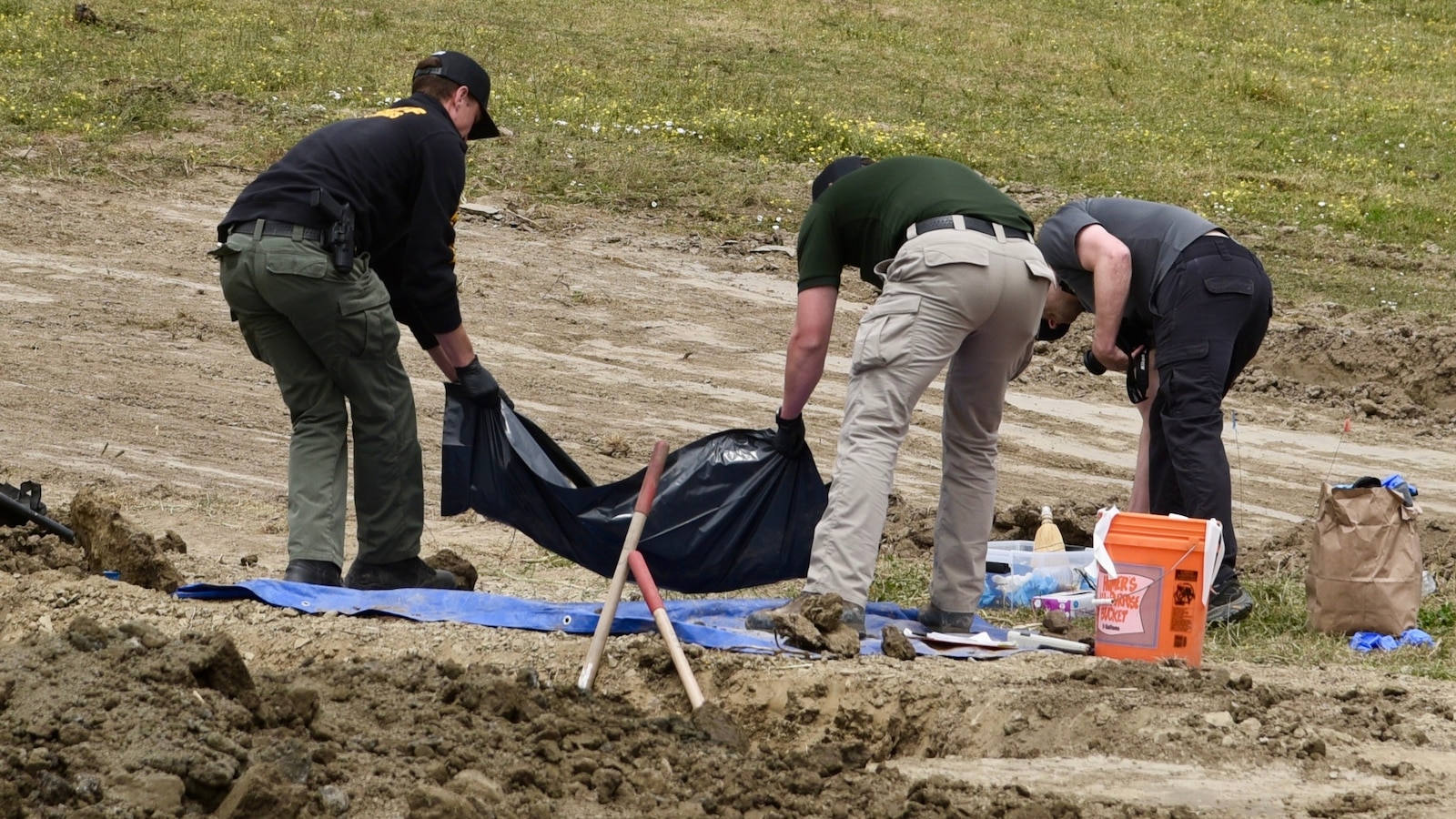
During the examination, investigators used ground-penetrating radar to locate 117 intact remains buried in an open field. Some of these bodies were in varying stages of decomposition, while others were more recently interred. X-rays conducted on-site revealed bullet fragments in many of the remains, strongly indicating that the animals were shot. The sheriff’s office also noted additional remains in advanced stages of decay, suggesting a prolonged period of activity at the site.
Shannon Miranda’s Response
“Recent media coverage and online commentary have presented an incomplete and, in some cases, inaccurate picture of our work,” stated Shannon Miranda in a June 18 message on her shelter’s website. Miranda, the founder of Miranda’s Rescue, defended the organization’s mission, which she described as “saving as many animals as we safely can.” She emphasized that the shelter balances compassion for animals with the responsibility to protect families, children, and the public.
Miranda clarified that while the shelter is dedicated to “no-kill” principles, euthanasia may be necessary in rare circumstances. These include situations where an animal suffers from a terminal condition or poses a significant threat to people or other pets. “In those cases, we make the most humane and responsible decision possible,” she said, adding that public safety and animal welfare remain central to their operations.
The sheriff’s office shared that its investigation was informed by a pair of animal advocates who had previously monitored the property. One of these advocates owns land adjacent to the shelter and used trail cameras to track activity near an alleged burial site. According to an affidavit, they later entered the property and unearthed dog remains, prompting the sheriff’s office to take action. These advocates, who remain unnamed, provided crucial evidence that led to the current inquiry.
Fees and Funding
Miranda’s Rescue operates by collecting fees from shelter transfers and relying on donations to cover expenses. The organization claims these funds support food, housing, veterinary care, medications, facility maintenance, and staffing. While this financial model is common in shelters, the recent discovery has cast doubt on whether it was being used ethically. Officials have not yet confirmed if the funds were misused or if the shelter’s practices align with its stated mission.
The sheriff’s office also noted that hundreds of dogs had been transferred or surrendered to Miranda’s Rescue by private citizens and other shelters. This influx of animals, combined with the current findings, has intensified scrutiny of the facility’s management. Miranda’s statement, however, asserts that the shelter’s focus remains on rescue rather than disposal, though the circumstances surrounding the 117 deaths challenge this narrative.
Investigation Continues
As the investigation unfolds, officials have stated that the process is far from complete. “There is a tremendous amount of data to process, witnesses to interview, and evidence to examine,” said Honsal in a recent statement. The sheriff’s office has not yet filed charges, but the findings suggest potential violations of animal welfare laws. Investigators are working to determine the timeline of events, the methods used to kill the dogs, and whether any deliberate cover-ups were involved.
The case has sparked a broader conversation about the transparency of “no-kill” shelters. While Miranda’s Rescue has long been praised for its efforts to save animals, the discovery of 117 deceased dogs—many with gunshot wounds—has exposed possible lapses in care. Some critics argue that the shelter’s commitment to saving animals may have been compromised by financial pressures or operational challenges. Others highlight the importance of understanding the context, such as the alleged terminal conditions or threats that justified euthanasia.
Community and Public Reaction
Local residents and animal lovers have expressed shock and concern over the findings. Many questioned how a facility labeled as “no-kill” could become a site of such cruelty. Meanwhile, supporters of Miranda’s Rescue defended its work, citing its long history of rescuing animals and its efforts to provide care for those in need. “We do not euthanize animals simply to make space,” Miranda reiterated, underscoring her organization’s dedication to animal welfare.
The sheriff’s office has pledged to continue its probe, with plans to interview witnesses and analyze the evidence thoroughly. This includes reviewing the records of animals that passed through the shelter and assessing the conditions in which they were kept. The use of ground-penetrating radar and X-rays has already provided significant insight, but further examination is needed to piece together the full story.
As the investigation progresses, the community awaits answers about the fate of the 117 dogs and the role of Miranda’s Rescue in the incident. The case serves as a reminder of the importance of accountability in animal welfare organizations, even those that claim to prioritize the lives of all animals. With no charges filed yet, the outcome of this inquiry could redefine the perception of the shelter and its founder for years to come.