
Republicans say they will defer to Trump on Iran war despite arrival of 60-day deadline
Republicans Defer to Trump on Iran War Despite 60-Day Deadline
Republicans say they will defer to Trump – WASHINGTON — As the 60-day congressional deadline for U.S. military action in the Iran conflict approaches, Republican lawmakers have signaled their willingness to defer to President Donald Trump’s decisions. Despite growing pressure from lawmakers and public concerns over the war’s escalating costs, the GOP remains aligned with the administration’s strategy. This commitment to deference has raised questions about the balance of power in Washington, with some observers suggesting that the president’s leadership has taken precedence over legislative oversight.
War Powers Resolution and Its Challenges
The 1973 War Powers Resolution requires the president to either withdraw troops or seek congressional approval within 60 days of initiating hostilities. This framework was designed to ensure Congress plays a critical role in authorizing military engagements. However, the Trump administration has argued that the deadline no longer applies, citing the April ceasefire as proof that the conflict has effectively concluded. Critics, including some Republican lawmakers, question this interpretation, emphasizing that the resolution’s intent remains a key constitutional check on executive power.
Senate Majority Leader John Thune, a Republican from South Dakota, recently stated that his party has no plan to challenge Trump’s leadership on the issue. “I’m closely examining what our conference members are discussing, but I don’t see an immediate need for action,” Thune said, reflecting a broader GOP consensus. His comments highlight how many Republicans have chosen to support the president’s decisions without opposing them, even as the deadline passes. This reluctance to act has been seen as a strategic move to maintain unity within the party.
Lawmakers Weigh In on Deferment
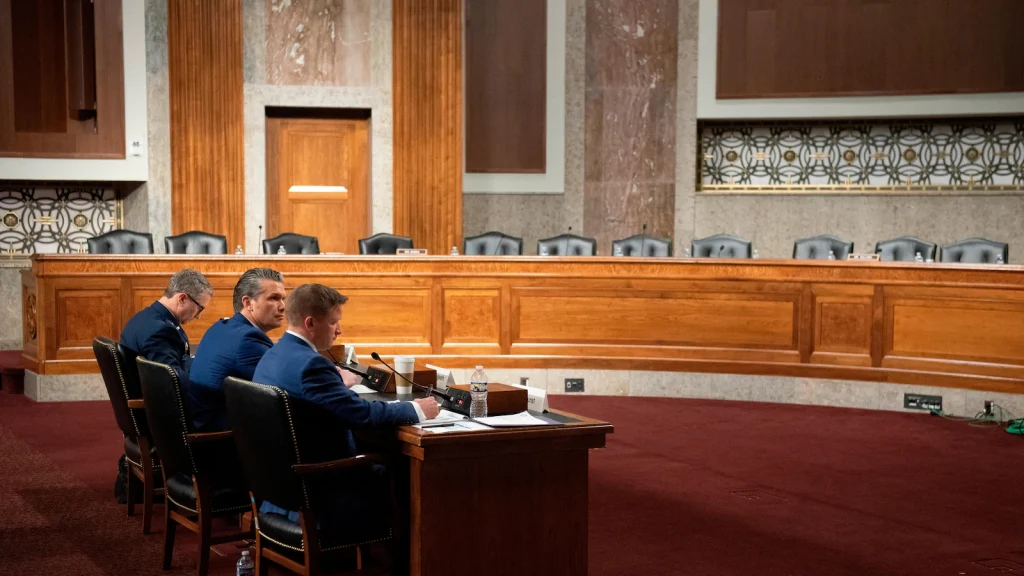
Defense Secretary Pete Hegseth, during a congressional hearing, claimed that the ceasefire has paused the 60-day clock. “We are in a ceasefire, which means the 60-day period has stopped,” he said, defending the administration’s position. While this argument has gained traction among some lawmakers, others remain skeptical. For instance, Senator Kevin Cramer of North Dakota expressed openness to backing a war resolution if Trump requested it. “Republicans say they will defer to Trump’s authority on this matter,” Cramer added, underscoring the party’s alignment with the executive branch.
Meanwhile, Alaska Senator Lisa Murkowski has hinted at introducing a limited authorization of force. “I believe Congress must have a role in defining the scope of our military involvement,” she said, indicating a cautious push for oversight. Murkowski’s stance suggests a growing divide within the Republican Party, with some members advocating for legislative input while others prioritize deference to the White House. Susan Collins of Maine, who has consistently supported the war, criticized the administration’s delay, stating, “The 60-day deadline is not just a formality — it’s a constitutional obligation.”
Strategic Rationale for Deferment
The GOP’s decision to defer to Trump is driven by political considerations. With the war affecting energy prices and drawing bipartisan scrutiny, Republicans fear that opposing the administration could jeopardize their electoral prospects. “We’re in a fragile ceasefire, and the president has been clear about his goals,” said one GOP aide, emphasizing the importance of maintaining party unity. This strategy reflects a calculated effort to avoid internal strife and preserve the administration’s agenda.
Yet, the deferment to Trump has also sparked debates over accountability. While the White House has not formally requested congressional approval, some lawmakers argue that the 60-day clock should still be enforced. “Republicans say they will defer to Trump’s leadership, but they cannot ignore the need for transparency,” noted a political analyst. The situation underscores a tension between executive dominance and legislative authority, a theme that has defined recent U.S. military actions. As the conflict continues, the GOP’s stance will be closely watched for any shifts in their approach to the war powers debate.
“I don’t see a need for immediate action,” said Senate Majority Leader John Thune, highlighting the Republican Party’s current alignment with Trump’s decisions.