Minnesota Takes Texas to Federal Court Over Detained ICE Agent
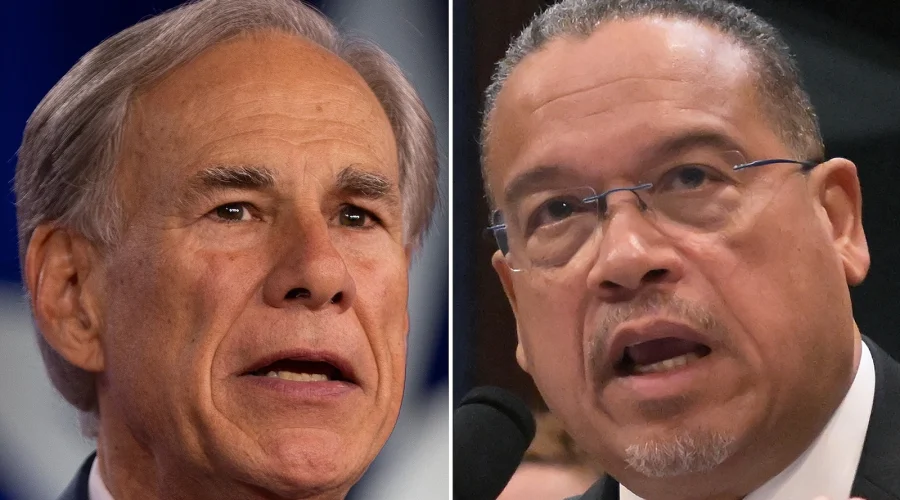
Cyberzenhub.com – A constitutional standoff between two states has escalated into a federal lawsuit after Minnesota’s top prosecutor sued Texas Governor Greg Abbott, demanding that the state hand over a detained Immigration and Customs Enforcement officer for trial. The legal action, filed by Attorney General Keith Ellison, centers on Christian Castro, an ICE agent accused of shooting a Venezuelan immigrant in Minneapolis and then misrepresenting what happened. At the heart of the dispute is a simple question of interstate law: whether one governor can indefinitely withhold a person another state has formally requested for prosecution.
The Shooting and the Charges
The incident took place on January 14 during Operation Metro Surge, a federal immigration enforcement sweep conducted in the Minneapolis area. Prosecutors allege that Castro discharged a firearm aimed at the front door of a residence that was occupied at the time. A Venezuelan man inside the home was struck in the leg. The shooting did not prove fatal, but prosecutors say Castro subsequently provided a false account of the circumstances surrounding the discharge.
In May, a Hennepin County District Court judge reviewed the evidence and determined that probable cause existed for the allegations. The judge issued a nationwide arrest warrant. Castro faces four counts of second-degree assault along with one count of falsely reporting a crime. The combination of charges means the state is pursuing both the physical act of shooting and the alleged cover-up that followed.
Arrest in Texas and the Extradition Standoff
On May 29, Texas Rangers tracked down and took Castro into custody. A judge in Cameron County, Texas, ordered that he be held in detention while extradition proceedings moved forward. Four days later, Minnesota Governor Tim Walz transmitted a formal extradition request to Abbott, asking that Texas authorities transfer Castro back to Minnesota so the state could proceed with its prosecution.
That request has gone unanswered. Ellison’s office states that Abbott has “withheld a rendition warrant,” the specific legal instrument that directs law enforcement officers to physically transport a detainee to the requesting state. Without that warrant, Castro remains locked in a Texas county jail, unable to face the Hennepin County court that issued the original warrant.
The Lawsuit and Its Defendants
Ellison’s federal complaint names two defendants: Governor Abbott and Manuel Trevino, the sheriff of Cameron County, Texas. The suit alleges that Trevino has failed to make Castro available for the extradition process, effectively keeping the agent in local custody beyond what the law requires. In addition to seeking a court order compelling the transfer, Ellison’s office is requesting a temporary restraining order that would bar the Cameron County Sheriff’s Office from releasing Castro at all, closing what the Minnesota side views as a potential loophole.
The Cameron County sheriff’s office declined to comment on the filing. The Texas governor’s office also did not respond to requests for comment.
Ellison’s Public Case
In a statement issued Tuesday, Ellison framed the dispute as a matter of constitutional principle rather than mere intergovernmental friction.
“Now, Governor Abbott is trying to shield Castro from being held accountable for these serious charges by refuting to extradite him to Minnesota.”
“Abbott’s refusal to extradite Castro is unconstitutional and violates federal law and Texas law. I will not stand for that, so I’m taking Abbott to court. Christian Castro will stand trial in Minnesota.”
Why the Dispute Matters
Interstate extradition is governed by the U.S. Constitution’s Extradition Clause and by federal statute, which together require that a governor who receives a valid request from another state’s chief executive issue a rendition warrant. The process is designed to be ministerial — a mechanical step, not a policy decision. When a governor declines to act, the requesting state’s usual remedy is precisely what Minnesota has now pursued: a federal court action to compel compliance.
The stakes here are sharpened by the fact that the detainee is a federal agent acting under the authority of a federal agency. Critics of the Texas position argue that allowing a state governor to block the prosecution of a federal officer for state-level crimes would create a de facto immunity shield, undermining both state sovereignty and the rule of law. Supporters of Abbott’s approach, while not publicly elaborated in this instance, might point to disputes over the scope of federal immigration operations in Minnesota and question whether state courts have jurisdiction over acts performed in the course of federal duties.
Operation Metro Surge itself has drawn sustained scrutiny since January, with multiple incidents reported across the Minneapolis–Saint Paul metro area. The shooting of a Venezuelan resident, combined with allegations of post-incident misreporting, has made the case a focal point for advocates who argue that federal immigration enforcement agents should be subject to the same state criminal process as any other person who fires a weapon at a private home.
What Happens Next
The federal court will now decide whether to issue an order compelling Abbott to sign the rendition warrant and whether to grant the requested restraining order against the Cameron County Sheriff’s Office. If the court sides with Minnesota, Texas authorities would be directed to transport Castro to Hennepin County, where the four assault counts and the false-reporting count await trial. If the court denies relief, the standoff would persist, potentially pushing the question into appellate courts and deepening the constitutional tension between state prosecutorial authority and executive discretion over interstate transfers.
For now, Castro remains in a Texas county jail, the warrant from Hennepin County sits unexecuted, and two state governments are locked in a legal contest that will test how far a governor may go in withholding a person another state has lawfully demanded.
Related Reading
Frequently Asked Questions
What is Minnesota sues Texas governor to compel?
Minnesota sues Texas governor to compel is the main topic of this guide. The article explains the context, practical details, and next steps readers should understand.
Why does Minnesota sues Texas governor to compel matter?
Minnesota sues Texas governor to compel matters because readers are looking for a useful answer, not just a short summary. Good content should match search intent and help them decide what to do next.