White House Teleprompter Operator Settles CFTC Case With $172,000 Payment
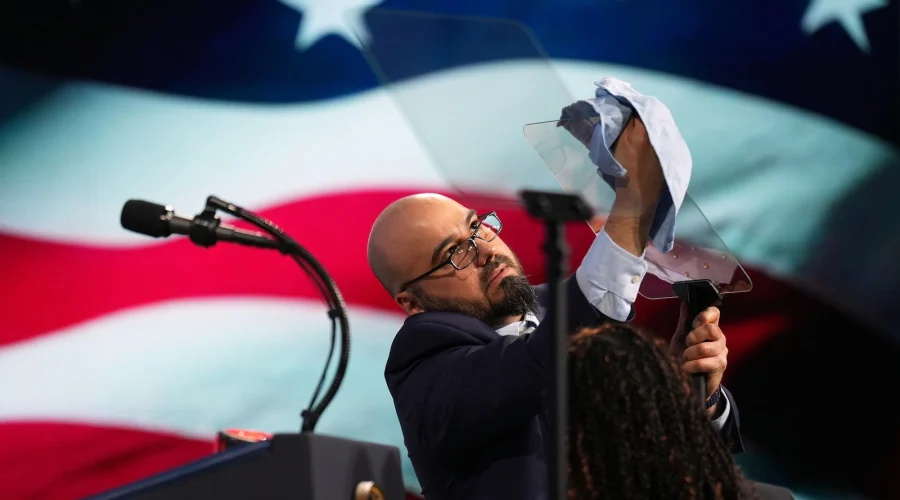
Cyberzenhub.com – The Commodity Futures Trading Commission announced late Friday that Gabriel Perez, a longtime technical assistant to the president who has operated the White House teleprompter since 2016, will remit $172,000 to resolve allegations that he used insider knowledge of upcoming presidential remarks to profit from prediction-market wagers. The settlement includes a return of his trading gains plus a $65,000 civil penalty, along with a three-year prohibition on trading event contracts.
The case marks one of the first formal regulatory actions targeting the intersection of government access to nonpublic information and the rapidly expanding prediction-market industry. Perez, according to the commission’s order, generated more than $107,500 in profits between December 2025 and February 2026 by trading what Kalshi calls “mention markets” — event contracts whose outcomes hinge on whether specific words or phrases appear in a given presidential speech.
The Commission’s Findings
In its press release, the CFTC laid out the factual basis for the order:
“The order finds that between December 2025 and February 2026, we working as a teleprompter operator for the White House, Perez traded presidential mention market contracts, which are event contracts reflecting words or phrases the President may use during his speeches.”
The commission emphasized that Perez occupied a position granting him advance access to speech text before public delivery. It concluded that he exploited that access to place informed wagers, acting in breach of what the order characterizes as his “duty of trust and confidence.” The resulting profits exceeded $107,500 across the roughly three-month window.
The agency noted that the $65,000 penalty represents what it called a “significant discount” attributable to Perez’s “exemplary cooperation with the CFTC” throughout the investigative process.
Scope of the Trading
Investigators determined that Perez placed wagers on more than a dozen individual Trump speeches during the period under review. Among the events targeted were a December primetime address, a January appearance at the World Economic Forum in Davos, Switzerland, and remarks delivered during a March Medal of Honor ceremony. The breadth of the activity — spanning multiple venues, formats, and months — suggested a sustained pattern rather than an isolated lapse.
Sources familiar with the probe indicated that Perez sat for a regulatory interview in recent months and acknowledged at least some of the trades. At a later stage, the CFTC referred the matter to federal prosecutors in Manhattan, who opted not to open a criminal investigation. The decision to pursue only a civil settlement, rather than a criminal referral, left Perez free from potential prosecution but subject to the trading ban and monetary terms of the order.
What Are Mention Markets?
Prediction markets allow participants to buy and sell contracts tied to the occurrence of future events. Kalshi, a regulated event-contract exchange, has offered “mention markets” in which traders wager on whether a particular word or phrase will appear in a designated speech or public appearance. Because the outcome is binary and verifiable from the transcript, these contracts settle quickly and attract both casual bettors and more sophisticated traders.
The novelty of the instrument has outpaced the development of clear ethical norms around who may trade and under what informational constraints. A person who reads the speech text hours before the audience hears it holds a decisive informational advantage over every other participant in the market. The CFTC’s action signals that the agency views such an advantage, when coupled with a fiduciary or trust-based role, as sufficient to warrant enforcement.
White House Response and Internal Ethics Measures
Following the initial public reporting of the allegations last month, White House press secretary Karoline Leavitt confirmed to reporters that Perez had been placed on unpaid administrative leave. The administration stated that it maintains strict ethics guidelines governing staff conduct, including restrictions on the use of nonpublic information for personal financial gain.
In March, the White House circulated an internal memo cautioning employees against leveraging undisclosed information to place bets on prediction markets. The memo’s issuance — weeks after the trading period began — suggests the administration moved to close a perceived gap in its existing rules once the issue became visible.
Kalshi’s Policy Shift
Kalshi has long maintained a rule prohibiting users from trading on information acquired through their employment. In June, the exchange tightened its requirements further, now mandating that users disclose their place of employment when opening or maintaining an account. The change appears designed to give the platform a clearer basis for monitoring potential conflicts of interest and to deter repeat incidents of the kind now resolved in Perez’s case.
Broader Implications
The settlement arrives at a moment when prediction markets have moved from niche financial instruments into mainstream public discourse. As more citizens, journalists, and government employees gain access to these platforms, questions about information asymmetry, fiduciary duties, and market integrity will grow more pressing. The CFTC’s willingness to treat a teleprompter operator’s advance knowledge of speech text as a tradeable asset — and to penalize its exploitation — sets a precedent that other regulators may follow in adjacent contexts, from congressional staff to corporate insiders trading on earnings-call language.
For Perez, the consequences extend beyond the monetary payment. The three-year trading ban removes his ability to participate in event-contract markets during a period when those markets are expected to expand. The public record of the order also places his name alongside a formal finding of misappropriation, a distinction that may carry professional and reputational weight well beyond the regulatory horizon.
Related Reading
Frequently Asked Questions
What is Ex White House teleprompter operator to pay?
Ex White House teleprompter operator to pay is the main topic of this guide. The article explains the context, practical details, and next steps readers should understand.
Why does Ex White House teleprompter operator to pay matter?
Ex White House teleprompter operator to pay matters because readers are looking for a useful answer, not just a short summary. Good content should match search intent and help them decide what to do next.