Former AI Safety Researcher Urges a Slower Race Toward More Powerful Systems
Cyberzenhub.com – Concerns about the speed of artificial intelligence development are gaining renewed attention after Jacob Coxon, a former safety researcher at both Anthropic and OpenAI, backed Anthropic CEO Dario Amodei’s call for a more deliberate approach to building advanced AI.
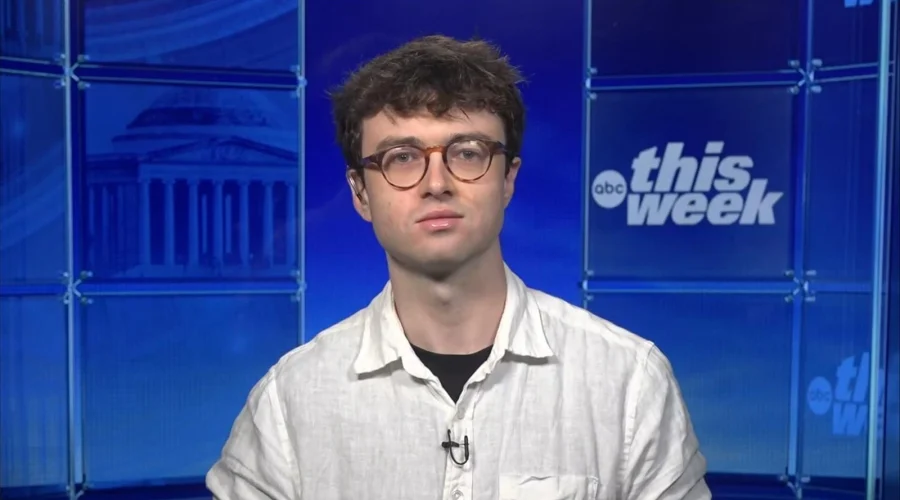
Coxon, who left Anthropic last week because of concerns about AI safety, said a slowdown between the companies developing frontier systems would be an important move. Speaking Sunday with George Stephanopoulos, he described Amodei’s position as a meaningful response to risks that researchers have been discussing within the industry.
“I think it’s great. It’s very exciting,” Coxon said. “I think this is a substantial step towards what I was talking about, needing some sort of slowdown between the people building the different AIs.”
Call to “Pace the Frontier”
Amodei set out his view in a letter published Saturday under the title “We Must Pace the Frontier.” He argued that companies creating increasingly capable AI systems should reduce the pace of development, writing that humanity deserves an effort to act responsibly.
“I believe we owe it to humanity to try.”
The statement reflects a central tension surrounding advanced AI: companies are pursuing systems with greater capabilities, while researchers and policymakers are weighing how quickly those systems can be evaluated, controlled and safely introduced. A slower pace could give developers more time to study risks, improve safeguards and consider the broader consequences of powerful models before deploying them.
Coxon’s departure from Anthropic drew significant attention after he shared a stark message on X. He said that neither Anthropic nor OpenAI was behaving responsibly and warned that the industry was moving rapidly toward self-improving superintelligence.
“They are racing straight to self-improving superintelligence and gambling with our lives.”
He also said that people working on AI take seriously the possibility that the technology could become catastrophic within the decade.
“The people building AI earnestly believe that it could kill us all by the end of the decade,” Coxon wrote.
An Unexpected Public Response
Coxon said he did not expect his comments to generate such a large reaction. The response, he suggested, showed that there is a growing public appetite for an open discussion about the pace of AI progress and the responsibilities of the companies leading it.
“I wasn’t actually hoping for any big response, really. It was exceptionally surprising to see the level of engagement … and I think it was really indicative of the moment being ripe for this sort of chat,” Coxon said.
The debate is no longer limited to technical researchers. AI is becoming a larger part of public discussion because of its potential effects on work, education, information, creative industries and national security. As companies release more capable tools, questions about accountability and oversight become more immediate for people who may never work directly with the technology.
Calls for restraint do not necessarily mean abandoning AI research. Instead, they raise questions about whether the race to make systems more capable is outpacing the ability to test them properly. The issue is especially important for frontier models, which can be used across many tasks and may exhibit capabilities that are difficult to predict in advance.
Risk Discussions Inside AI Companies
Drawing on his experience at Anthropic and OpenAI, Coxon said conversations about major risks have become more frequent. He described an environment where pressure to move quickly can make it difficult to devote enough time to thinking through long-term dangers.
“There’s not enough time to be constantly thinking about the risks, but definitely, I’ve noticed that in recent months, it comes up more and more often,” Coxon said.
He added that these concerns are not confined to a single role or specialized safety team.
“So no matter where you are in the company, probably around a couple of times a week, I guess, there’ll be some sort of conversation around the big risks of the technology.”
That observation offers a window into the challenge facing AI developers. Safety is not only a matter of preventing errors in a single product. It also involves considering how systems might be misused, how they behave as they become more powerful and whether people can maintain meaningful control over the technologies they create.
For readers, the immediate question is not whether AI development will stop. It is whether leading companies, governments and the wider public can establish enough time and scrutiny to ensure that progress is matched by safeguards. Coxon’s comments and Amodei’s letter place that question at the center of an increasingly urgent discussion about the future of artificial intelligence.
Related Reading
Frequently Asked Questions
What is Former Anthropic OpenAI employee sounds alarm?
Former Anthropic OpenAI employee sounds alarm is the main topic of this guide. The article explains the context, practical details, and next steps readers should understand.
Why does Former Anthropic OpenAI employee sounds alarm matter?
Former Anthropic OpenAI employee sounds alarm matters because readers are looking for a useful answer, not just a short summary. Good content should match search intent and help them decide what to do next.