Trump’s Call for Irish Unity Draws Sharp Response During Dublin Visit
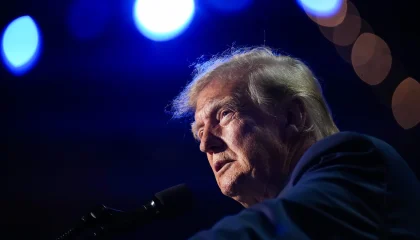
Cyberzenhub.com – Donald Trump’s visit to Dublin quickly became entangled in one of the island’s most sensitive political questions after the U.S. president said he would welcome a future in which Northern Ireland and the Republic of Ireland were united.
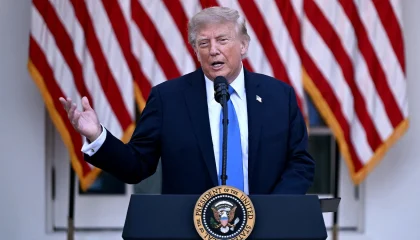
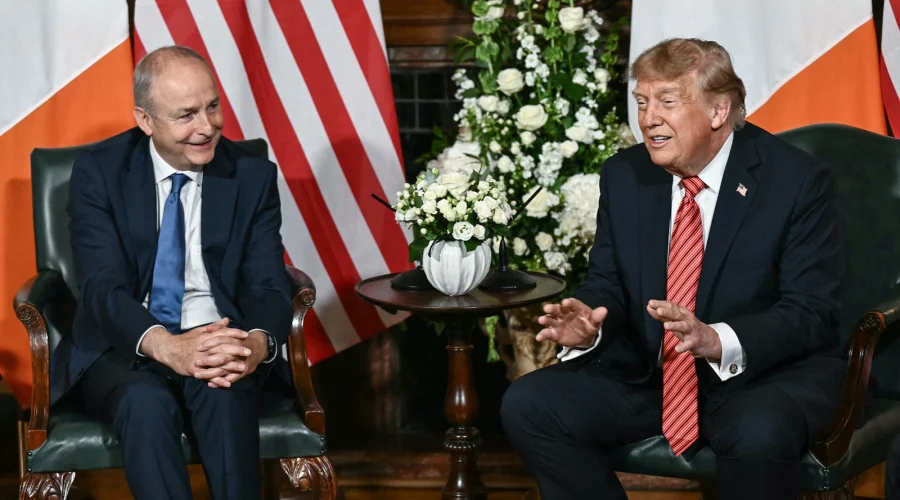
Trump made the comments Saturday following a private meeting with Irish President Catherine Connolly and later talks with Taoiseach Micheál Martin. Speaking alongside Martin, Trump described Irish reunification as an outcome he would like to see and suggested it could eventually happen.
“I think it would be a great feather in everybody’s cap if that happened. You know what? The way I look at it, it’s going to happen eventually. It may as well happen now.”
He also called the prospect “fantastic,” placing an international spotlight on an issue governed by the carefully negotiated constitutional arrangements of the Good Friday Agreement.
Unionist Leaders Stress Northern Ireland’s Right to Decide
The remarks prompted immediate objections from political figures in Northern Ireland who support the territory remaining within the United Kingdom. Gavin Robinson, leader of the Democratic Unionist Party, said the constitutional question could not be settled by outside commentary.
“Northern Ireland’s constitutional future will be decided by the people of Northern Ireland, not by commentary in London, Dublin or Washington.”
Robinson added that Northern Ireland is part of the United Kingdom because this reflects the democratic preference of its people. His response referred to the core principle that any change in Northern Ireland’s constitutional status must rest on consent.
Jon Burrows, leader of the Ulster Unionist Party, made a similar point, rejecting the idea that foreign leaders should influence the debate.
“Northern Ireland not a pawn in Trump’s fall out with the UK. Our constitutional future does not depend on him or any other foreign dignitary.”
Britain’s prime minister, Andy Burnham, had said earlier this year that a referendum on unity was not under consideration. A spokesperson said Saturday that his stance had not changed and that he remained fully committed to the Good Friday Agreement.
Why the Question Remains So Sensitive
Ireland was partitioned in 1921, leaving Northern Ireland under United Kingdom rule while the rest of the island became the Irish state. Northern Ireland had a substantial Protestant and unionist population, while the Republic of Ireland was predominantly Catholic. The division followed centuries of conflict involving Britain and Ireland and created political tensions that endured for generations.
Those tensions intensified in the late 1960s in the conflict commonly known as the Troubles. The period involved republican and loyalist paramilitary groups, British security forces and deeply divided communities. Violence continued for decades before the 1998 Good Friday Agreement helped establish a political settlement.
The agreement brought constitutional changes, supported the disarmament of paramilitary organizations and created institutions intended to share power in Northern Ireland. It also established the conditions under which a referendum on Irish unity could take place.
Under that framework, Northern Ireland remains in the United Kingdom unless a majority of its voters choose otherwise in a referendum. The Republic of Ireland would also need to approve reunification through its own vote. That consent-based approach is central to the agreement and is why unionist figures reacted strongly to Trump’s intervention.
A Diplomatic Visit Meets Domestic Politics
Trump’s meetings in Dublin came during a two-day Irish trip that also included a golf tournament at one of his resorts. His arrival drew protests in the capital, where demonstrators objected to his visit and policies.
Later Saturday, Trump revisited the controversy during an event at the U.S. Embassy attended by embassy employees and business leaders. While acknowledging that his earlier comments had attracted attention, he did not retreat from them.
“I gave a nice answer, I think. We’ll worry about it tomorrow.”
The exchange illustrates how quickly the subject of Irish unity can move from historical background to an immediate diplomatic issue. For many people on the island, the question carries personal, political and community significance shaped by the legacy of partition and the conflict that followed.
For the Irish government, British government and Northern Ireland’s parties, the Good Friday Agreement remains the agreed mechanism for handling the issue. It provides a route for constitutional change, but it also places the decision with voters rather than foreign governments or visiting leaders.
Trump’s comments may have been framed as support for a future possibility, but the response from unionist leaders made clear that the timing and authority behind any such decision remain at the heart of the debate. Whatever views are expressed in Dublin, London or Washington, Northern Ireland’s status continues to rest on the democratic provisions established by the 1998 peace accord.
Related Reading
Frequently Asked Questions
What is Irish leaders react after Trump says?
Irish leaders react after Trump says is the main topic of this guide. The article explains the context, practical details, and next steps readers should understand.
Why does Irish leaders react after Trump says matter?
Irish leaders react after Trump says matters because readers are looking for a useful answer, not just a short summary. Good content should match search intent and help them decide what to do next.