Taxpayer-Funded Pro-Trump Advertisement Draws Ethics Questions
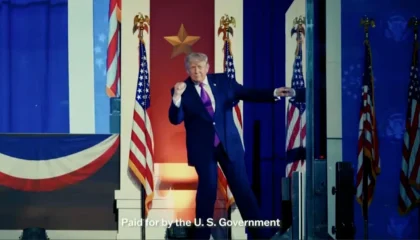
Cyberzenhub.com – A 30-second television advertisement promoting President Donald Trump has appeared repeatedly on Fox News and Newsmax, carrying a disclosure that it was paid for by the U.S. government. The spot features Trump highlighting his agenda and declaring that the nation will not embrace communism.
The commercial aired across several media markets during the week and cost about $14,000, based on tracking by AdImpact. Its placement and message have prompted Democratic criticism over whether public money can be used for material that resembles campaign-style promotion.
White House Calls Spot Educational
The White House has characterized the video as a public service announcement rather than political advertising. A spokesperson said its purpose is to encourage civic pride and explain why the country should be defended in the United States, at the border, and overseas.
“These public service announcements are about reminding Americans to love their country and understand what makes it worth defending, at home, at our borders, and abroad. The ad is educational and unapologetically patriotic. We should be proud of our country.”
A White House official also argued that the advertisements are not political because Trump is not a candidate on the ballot and the video does not direct viewers to take electoral action.
“The PSAs are clearly not political. The President is not on the ballot and the ads don’t have a call to action.”
The version broadcast on cable television appears to match a video posted to the White House YouTube account on Sept. 13 under the title “America Will Never Be a Communist Country.” The online version did not carry the same paid-government identification shown during the television airings.
Message Emphasizes Trump’s Record
Trump’s voice is heard in the commercial making a pledge that frames the administration’s political message around opposition to communism, socialism, and Marxism.
“Together we will defeat communism, socialism and Marxism in America. America will never be a communist country.”
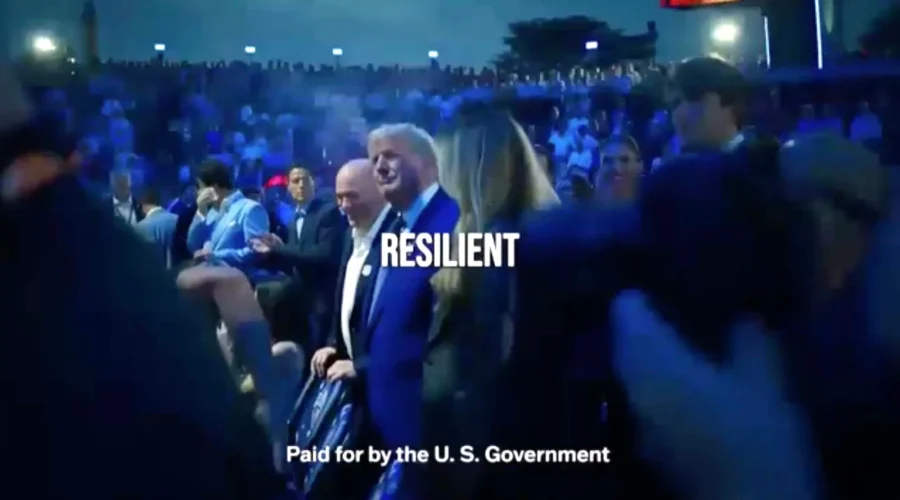
Rapid images of Trump accompany bold red on-screen claims, including “LARGEST TAX CUTS IN HISTORY,” “REIGNITING AMERICAN MANUFACTURING,” and “DEFEND LAW AND ORDER AND POLICE.” The video also uses footage of UFC CEO Dana White praising Trump during the Republican National Convention.
“The toughest, most resilient person I’ve ever met.”
That mix of presidential imagery, issue messaging, and outside praise is central to the dispute. Supporters can view it as a patriotic government message about national values. Critics see a taxpayer-funded presentation that promotes one political figure and his record in a manner more commonly associated with election advertising.
Democrats Raise Hatch Act and Spending Concerns
Rep. Jamie Raskin, the leading Democrat on the House Judiciary Committee, sharply criticized the advertisement on X. Raskin could play a prominent role in congressional oversight if Democrats regain control of the House in the fall.
“This may be felony criminal theft and conversion of government property for political campaign purposes.”
He further argued that government employees involved in producing or placing the spot could face Hatch Act concerns, and called the use of government resources for political purposes unethical under federal standards.
“It is a Hatch Act violation for any government employees who worked on it or used government resources to make it. It is blatantly unethical under numerous federal ethics provisions proscribing the use of government resources for political campaigns.”
The Hatch Act limits certain political activity by federal workers. It also reaches some state, District of Columbia, and local employees whose work involves federally funded programs. Its application can depend on the employee’s role, the activity involved, and whether official government resources were used for electoral purposes.
Separate limits govern the use of appropriated funds for public communications. Congressional spending measures commonly prohibit expenditures for unauthorized publicity or propaganda. These restrictions are intended to distinguish legitimate public information campaigns from communications designed chiefly to build political support.
Oversight Is Spread Across Government
There is no single federal agency assigned overall responsibility for monitoring department advertising budgets. That fragmented structure can make disputes over government-sponsored media difficult to resolve quickly, particularly when the central question is whether a message is informational, patriotic, policy-oriented, or political.
Kevin Kosar, who wrote a 2014 Congressional Research Service report on the subject and is now a senior fellow at the American Enterprise Institute, described the new advertisement as “puffery.” The characterization reflects the broader concern that government communications can cross from explaining policy into celebrating an administration or officeholder.
The controversy also follows criticism of a Department of Homeland Security campaign that featured then-Secretary Kristi Noem urging migrants to “self-deport.” That effort drew attention because of its $220 million taxpayer-funded price tag. In March, Trump said he had not been pleased with that campaign’s cost.
“I wasn’t thrilled with it. I spent less money than that to become president.”
The latest ad places the same fundamental issue before lawmakers and watchdogs: when a government-funded message presents a president’s achievements and political themes, what standards should separate public education from taxpayer-supported political promotion? The answer may shape not only this commercial, but future use of federal resources for high-profile media campaigns.
Related Reading
Frequently Asked Questions
What is Administration s pro Trump TV ad is?
Administration s pro Trump TV ad is is the main topic of this guide. The article explains the context, practical details, and next steps readers should understand.
Why does Administration s pro Trump TV ad is matter?
Administration s pro Trump TV ad is matters because readers are looking for a useful answer, not just a short summary. Good content should match search intent and help them decide what to do next.