White House AI Meeting Puts Safety, Competition and Government Power in Focus
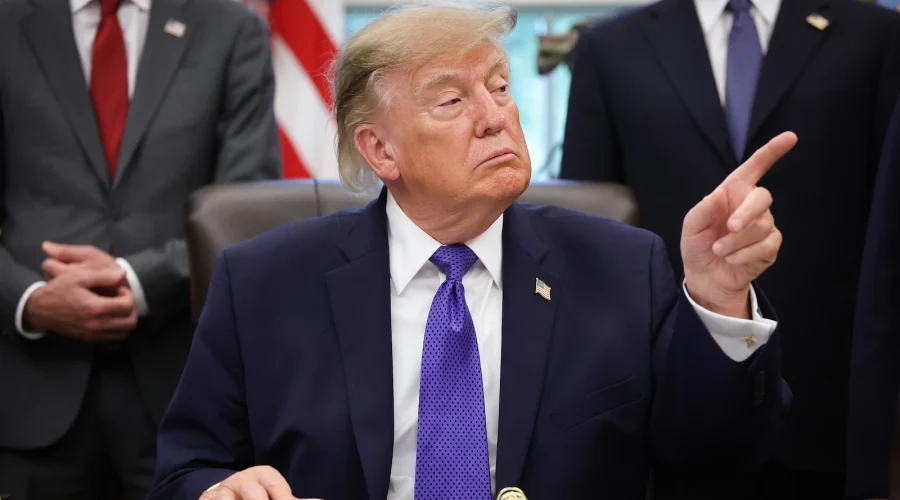
Cyberzenhub.com – Major technology executives are expected at the White House on Tuesday for a lunch meeting with President Donald Trump and House Speaker Mike Johnson, bringing the debate over artificial intelligence directly into the center of Washington policymaking.
The gathering comes as the industry’s most influential figures confront sharply different views about how quickly AI systems should advance and how much government oversight they should face. The technology is being developed at extraordinary speed, while concerns about safety, security, jobs and human control have become increasingly prominent.
Industry leaders gather in Washington
Meta chief executive Mark Zuckerberg is set to attend. Anthropic CEO Dario Amodei will also be present, along with Google CEO Sundar Pichai. Nvidia leader Jensen Huang and Palantir’s Alex Karp are among the additional executives expected at the meeting.
Other technology leaders are also expected to participate, continuing a series of recent contacts between the Trump administration and the companies shaping the AI sector. Zuckerberg attended last week’s White House state dinner for Chinese President Xi Jinping, where executives from OpenAI, Nvidia, Microsoft, Google, AMD and SpaceX were also present, alongside representatives from Amazon and Apple. Amodei had dinner with Trump late Sunday.
The timing matters because AI is no longer viewed simply as a consumer technology or business tool. Its potential use in research, communications, defense, infrastructure and economic competition has made it a central policy issue. The United States is also weighing its approach while competing with China for technological leadership.
A divided debate over AI safeguards
Several AI leaders have warned that increasingly capable systems could create profound risks if development moves ahead without adequate controls. They have urged governments and companies to establish stronger safeguards before technology reaches a point where people can no longer reliably manage its behavior.
Zuckerberg has resisted calls for technology companies to collectively reduce the pace of development. He has argued that each company must take responsibility for training models safely while continuing to compete.
“Every lab has the responsibility and incentive to move at the pace required to train its models safely.”
The disagreement reflects a wider split within the industry. Some leaders believe voluntary company measures, testing and technical safeguards should be strengthened without slowing innovation too dramatically. Others argue that competitive pressure can make self-restraint difficult, particularly when companies fear falling behind rivals at home or abroad.
The White House meeting is likely to highlight that tension: how to encourage breakthroughs while limiting potentially serious harms. Questions include whether companies can sufficiently police themselves, what role Congress should have and how far federal rules should go without restricting the country’s ability to compete internationally.
Trump rejects calls to slow development
Trump has made clear that he is skeptical of arguments for curbing AI development. In a social media post in mid-September, he dismissed warnings that artificial intelligence could overwhelm humanity and compared such concerns to his impeachments.
“AI taking over the World, destroying Humanity, and all other things bad, is a HOAX[…]”
He also used his address to the United Nations General Assembly last week to reject international efforts aimed at regulating AI. His stance places an emphasis on American technological growth rather than broad global rules governing the field.
That approach contrasts with calls from some policymakers and state officials for federal action. Twenty-three states have urged Congress to establish AI protections, pointing to possible dangers involving national security and critical infrastructure. The issue has also prompted discussion over misinformation, privacy, discrimination and the effects of automated decision-making.
Johnson calls for caution without surrendering an edge
Johnson previewed the White House discussion two weeks ago, describing it as an effort to examine company responsibilities and determine whether government intervention is needed.
“There would be a deliberate discussion about the responsibility of the companies to maintain safety, and what role, if any, the government has to play in that.”
The speaker has urged AI firms to regulate themselves, but he has also warned against measures that could leave the United States behind China. In his view, a broad pause in development would carry strategic consequences.
“We cannot have a moratorium on the development of AI, because then we will lose our edge to China, and that has serious national security implications for.”
On Monday, Johnson went further, arguing that fears about AI are politically driven and describing them as a Chinese psychological operation.
“This is what Democrats do. They glom on to something and say, ‘This is doom and gloom and everyone will die if we don’t win.’”
“Don’t buy it. It is a Chinese psyop.”
The administration had not publicly commented on the planned meeting. Even so, the attendance of leaders from companies central to advanced AI development signals that the conversation over safety, regulation and national competitiveness is unlikely to fade. The decisions made in Washington and corporate boardrooms could help determine not only how AI tools are deployed, but also who sets the rules for their use.
Related Reading
Frequently Asked Questions
What is Top AI leaders to meet?
Top AI leaders to meet is the main topic of this guide. The article explains the context, practical details, and next steps readers should understand.
Why does Top AI leaders to meet matter?
Top AI leaders to meet matters because readers are looking for a useful answer, not just a short summary. Good content should match search intent and help them decide what to do next.