
Trump’s attempt to remake the Kennedy Center faces key legal test
Trump’s Attempt to Remake the Kennedy Center Faces Key Legal Test
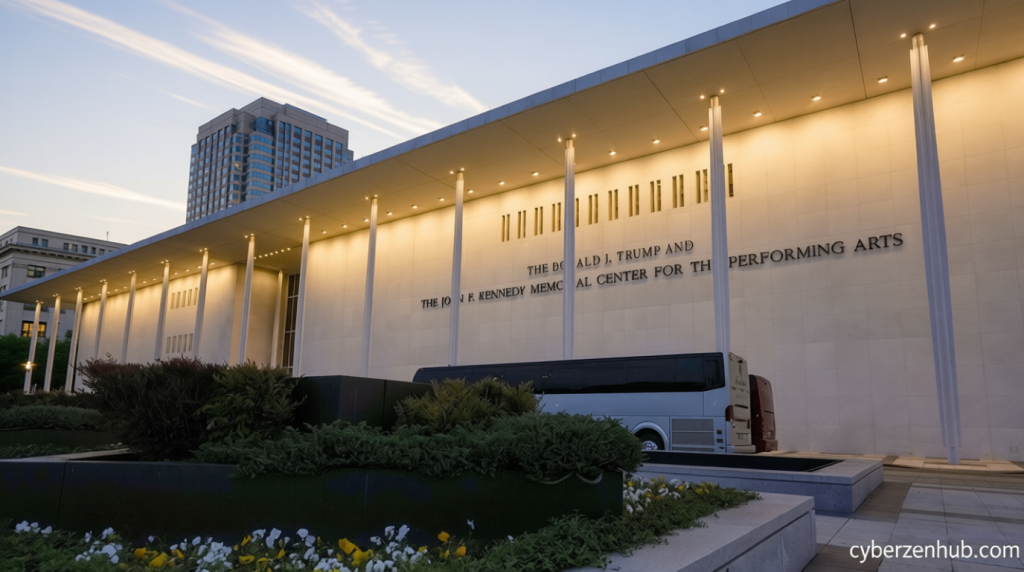
Trump s attempt to remake the Kennedy – On Tuesday, President Donald Trump’s effort to rebrand the Kennedy Center came under a pivotal legal challenge. A federal court in Washington, D.C., convened to hear arguments regarding Rep. Joyce Beatty’s bid to halt the proposed renaming of the institution, its planned closure, and the subsequent renovation. Beatty, a Democrat from Ohio and an ex officio trustee of the Kennedy Center, had initiated the lawsuit last year, contesting the center’s transformation into the Trump-Kennedy Center. Her case hinges on the argument that the renaming reflects an “authoritarian regime” rather than the democratic values of the American republic.
Beatty’s Legal Challenge: A Test of Constitutional Principles
Beatty’s lawsuit asserts that the renaming of the Kennedy Center represents a fundamental breach of its intended purpose. She contends that the change undermines the institution’s role as a enduring tribute to President John F. Kennedy and its mission to serve as a cultural beacon for all Americans, regardless of political affiliation. “This is a flagrant violation of the rule of law, and it flies in the face of our constitutional order,” Beatty’s legal team emphasized in a court filing. “Congress designed the Center to be a living memorial to President Kennedy—and a crown jewel of the arts for the public good.”
“This is a flagrant violation of the rule of law, and it flies in the face of our constitutional order. Congress intended the Center to be a living memorial to President Kennedy—and a crown jewel of the arts for all Americans, irrespective of party,” her lawsuit said.
Since the lawsuit was filed, the Kennedy Center’s board—appointed by Trump, who chairs the organization—voted to close the facility for a two-year renovation. Beatty’s legal action has since broadened to include both the renaming and the closure, arguing that these moves are legally unjustified and breach the board’s fiduciary duties. “Turning the Kennedy Center into a lifeless husk for two years would also constitute a fundamental breach of Defendants’ most basic fiduciary obligations as trustees,” her lawyers stated in a recent filing.
The Trump Administration’s Defense: A Necessity for Renewal
Lawyers representing the Trump administration countered that the renovation is essential for the Kennedy Center’s long-term viability. They claimed that the closure and changes are aligned with Congress’s original vision, which they argue includes the potential for modernization. “Renewal will affirmatively fulfill the Board’s responsibilities to repair and improve the Center in a manner consistent with ‘high quality operations,’ while minimizing taxpayer costs and reducing safety risks during public use,” the Department of Justice’s legal team argued.
Beatty’s case also centers on the question of whether the board’s decisions reflect a legitimate reimagining of the center’s mission or an overreach of executive power. Her attorneys highlighted the importance of preserving the institution’s bipartisan legacy, emphasizing that its identity should not be subsumed by a single political figure. “The Kennedy Center was established to honor a national icon and foster artistic excellence across the political spectrum,” they added.
Partial Victory for Beatty: A Win on Input, Not Authority
Last month, Judge Christopher Cooper delivered a significant ruling in Beatty’s favor, granting her the right to participate in board meetings without being entirely excluded. The decision ensures she will have a meaningful opportunity to voice her concerns during the decision-making process. However, the judge deferred judgment on whether Beatty can still exercise her voting rights or whether the renaming and closure are constitutionally sound.
This ruling has sparked renewed debate about the balance of power between the executive and legislative branches. While Beatty’s access to board meetings is secured, the core issues—such as the legality of the changes and the board’s authority to act—remain unresolved. Legal experts have noted that the case could set a precedent for how government-appointed boards manage institutional identity and public trust.
Broader Implications: A Test of Democratic Accountability
The Kennedy Center’s fate has become a symbol of a larger struggle over democratic governance and the influence of political leaders on cultural institutions. Beatty’s challenge underscores concerns about the potential for executive power to overshadow the public’s interest in preserving historical landmarks. “The Center was meant to be a bridge between generations and ideologies,” one legal analyst remarked, “but Trump’s vision risks turning it into a tool for partisan messaging.”
Meanwhile, the renovation project has raised questions about its long-term benefits. Critics argue that the closure could disrupt access to cultural programming for millions of Americans, while supporters claim it will restore the center to its former glory. “The plan aims to modernize facilities and attract new audiences, ensuring the Kennedy Center remains relevant in the 21st century,” said a spokesperson for the renovation initiative.
Related Developments: Political Control and Public Perception
As the legal battle unfolds, it has drawn attention to the broader question of who truly controls the Kennedy Center. While the board is technically a private entity, its composition and decisions are heavily influenced by Trump’s leadership. This dynamic has fueled accusations of politicization, with some calling the center’s transformation a “power grab” by the executive branch.
Beatty’s case is also part of a larger narrative about the role of federal institutions in reflecting national values. Her argument that the renaming “more resembles authoritarian regimes than the American republic” resonates with critics who see the move as an attempt to reshape the center’s legacy in the image of Trump’s administration. The outcome of this lawsuit could determine whether the Kennedy Center continues to serve as a bipartisan cultural hub or becomes a flagship of a specific political ideology.
With the legal proceedings ongoing, the Kennedy Center stands at a crossroads. The decision to rename and renovate has already sparked controversy, but the court’s recent ruling offers a glimmer of hope for those who believe the institution should remain independent of partisan control. As the case moves forward, it will likely influence how future leaders navigate the intersection of politics and public legacy.
Amid these developments, the broader public remains engaged. The Kennedy Center’s closure has prompted discussions about its impact on the arts community and the accessibility of cultural resources. Supporters of the renovation view it as a necessary step to revitalize the space, while opponents worry about the erosion of its historical significance. “Every step of this process should be transparent and accountable to the people,” said a local arts advocate, “not just to the administration.”
As the legal battle continues, the Kennedy Center’s story becomes a microcosm of the tension between political leadership and institutional autonomy. Whether the renaming and closure will stand or be overturned depends on the court’s interpretation of the organization’s charter and the extent to which its board’s actions align with congressional intent. The resolution of this case could shape the future of cultural institutions in the United States, defining the boundaries of executive influence in the public sphere.