
Americans oppose Trump ballroom 2-to-1; even more oppose his signature on money: ABC News/Washington Post/Ipsos poll
Americans Oppose Trump Ballroom 2-to-1; Even More Reject His Signature on Currency
Americans oppose Trump ballroom 2 to 1 – A recent survey by ABC News, Washington Post, and Ipsos revealed strong public sentiment against President Donald Trump’s plans to transform the East Wing of the White House into a ballroom. Over 56% of respondents expressed opposition to the project, with only 28% in favor and 15% undecided. The controversy extends beyond the ballroom, as Americans also strongly reject the idea of adding Trump’s name to paper currency, with support for that initiative falling below 5% of the population. These findings underscore a growing divide in public opinion regarding Trump’s vision for the presidential residence and his broader symbolic ambitions.
The Ballroom Project and Its Controversy
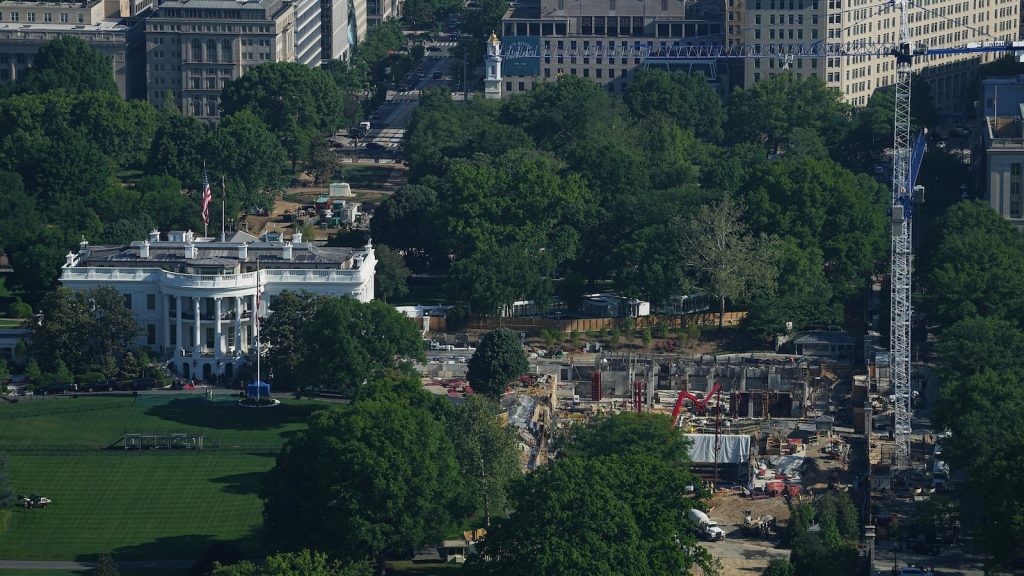
In July 2025, the Trump administration announced the construction of a 90,000-square-foot ballroom adjacent to the White House, claiming it would “not interfere with the current building.” However, by October, the East Wing had already begun demolition, a move that sparked immediate backlash. Built in 1902 and later renovated in 1942, the East Wing has been a cornerstone of the White House’s historic architecture for over a century. Critics argue that the removal of this iconic structure represents a significant departure from preservation efforts, even as supporters view it as a necessary modernization.
The National Trust for Historic Preservation, a nonprofit organization established by Congress to safeguard historic sites, intervened in December 2025 by filing a lawsuit to halt the ballroom’s construction. The lawsuit cited the need for a federal review process, which is standard for all major infrastructure projects. This legal challenge highlighted concerns about the decision’s impact on the White House’s historical integrity. Despite the lawsuit, an appeals court panel recently allowed the ballroom’s construction to proceed, granting an administrative stay to the earlier injunction. This development has intensified debates over the project’s long-term consequences.
Poll Findings and Shifting Public Opinion
The survey results mirror a consistent pattern of public resistance. Before the White House Correspondents’ Association Dinner in October 2025, 62% of Republicans supported the ballroom initiative, but this figure surged to 72% afterward. Meanwhile, Democratic lawmakers have consistently opposed the project, with nearly 90% of Democrats and 60% of independents expressing disapproval. The shift in Republican support, following the attempted shooting at the dinner, suggests that the event’s security implications may have influenced opinions, though the poll found no overall change in attitudes between the two survey periods.
Trump’s argument for the ballroom hinges on its perceived utility for presidential events. He claimed the facility would “provide the appropriate security measures” for gatherings, contrasting it with the hotel ballroom used for the dinner. Yet, the planned capacity of the new ballroom—around 1,000 guests—falls short of the 2,600 attendees at the 2025 dinner. This discrepancy raises questions about whether the project adequately addresses security needs or is primarily a symbolic gesture.
The Trump Signature on Currency
Another contentious proposal in the poll is the addition of Trump’s signature to U.S. paper currency. Americans opposed this idea by more than 5-to-1, with 47% strongly rejecting it and only 9% in favor. The measure, which would see the president’s name etched onto dollar bills, has been criticized as a vanity project. While some supporters argue it would boost his legacy, opponents see it as a misguided attempt to associate his brand with the nation’s currency.
This issue has drawn attention from both political parties. Democratic lawmakers have introduced legislation to regulate the project and impose restrictions on donations, aiming to prevent potential bribes. The proposal reflects broader concerns about the influence of private funding on public decisions. Meanwhile, the Trump administration has reiterated its commitment to the ballroom, with Trump asserting that the project would be “paid for 100% by me and some friends of mine,” referencing his donor base. This statement has fueled criticism about the use of public funds for personal or political gain.
The 250-Foot Arch: A Monumental Ambition
Separately, Trump proposed a 250-foot-tall arch to be constructed at Memorial Circle, near the entrance to Arlington National Cemetery. This structure would dwarf the Lincoln Memorial, which stands 170 feet high, and surpass the 164-foot Arc de Triomphe in Paris. “I’d like it to be the biggest [arch] of all,” Trump stated, envisioning a monument that would “symbolize the strength of our nation.” The arch, positioned at the other end of the Arlington Memorial Bridge, is part of a larger vision to enhance the White House’s prominence through grand architectural projects.
White House press secretary Karoline Leavitt presented an artist’s rendering of the arch to reporters, emphasizing its symbolic value. While the project remains in the planning stages, it has already generated discussions about its impact on the surrounding landscape and historical context. The National Capital Planning Commission staff report notes that the arch would serve as a focal point for national events, though its size and location have sparked debates about whether it complements or disrupts the existing historical environment.
Political Divisions and Legislative Action
Republicans have championed the ballroom and arch proposals, with 65% backing the demolition of the East Wing and 77% among MAGA-aligned Republicans supporting the projects. In contrast, non-MAGA Republicans showed less enthusiasm, with only 31% in favor. This division highlights the ideological split within the party, with MAGA supporters prioritizing Trump’s legacy and traditional Republicans balancing his agenda with fiscal responsibility.
Following the shooting incident at the White House Correspondents’ Association Dinner, Republicans intensified their push for the ballroom, framing it as a necessary upgrade for presidential security. However, the project’s scale and cost have led to calls for transparency. A proposed bill seeks $400 million in funding for the facility, a figure that has drawn scrutiny from critics who question whether the budget is justified. The debate over funding underscores broader tensions between Trump’s ambitious plans and the need for congressional oversight.
As the construction of the ballroom and the arch moves forward, the public’s mixed reactions will likely shape the political discourse. While Trump’s supporters see these projects as a means to bolster his image and address security needs, opponents argue they represent a disregard for historical preservation and fiscal prudence. The upcoming legislative process will determine whether these initiatives gain final approval, reflecting the complex interplay between executive authority and democratic accountability.
Conclusion and Public Sentiment
The poll’s findings reveal a clear majority of Americans favoring preservation over transformation. While Trump’s plans have garnered support within his base, they face significant hurdles from the broader public and political opponents. The East Wing’s demolition, the arch’s scale, and the signature on currency all serve as focal points for this debate, illustrating the challenges of aligning presidential ambitions with public will. As the administration proceeds with its plans, the legacy of these projects will depend on how effectively they balance innovation with historical significance.
“I’d like it to be the biggest [arch] of all,” even bigger than the 164-foot-tall Arc De Triomphe in Paris, Trump said.
The ongoing discussions around these projects will continue to shape perceptions of leadership, with the public’s strong opposition serving as a reminder of the importance of aligning policy with public sentiment. Whether the Trump administration can secure the necessary support remains uncertain, but the poll’s data provides a clear snapshot of the nation’s current stance on its symbolic and structural changes.