
Supreme Court limits Voting Rights Act in historic decision
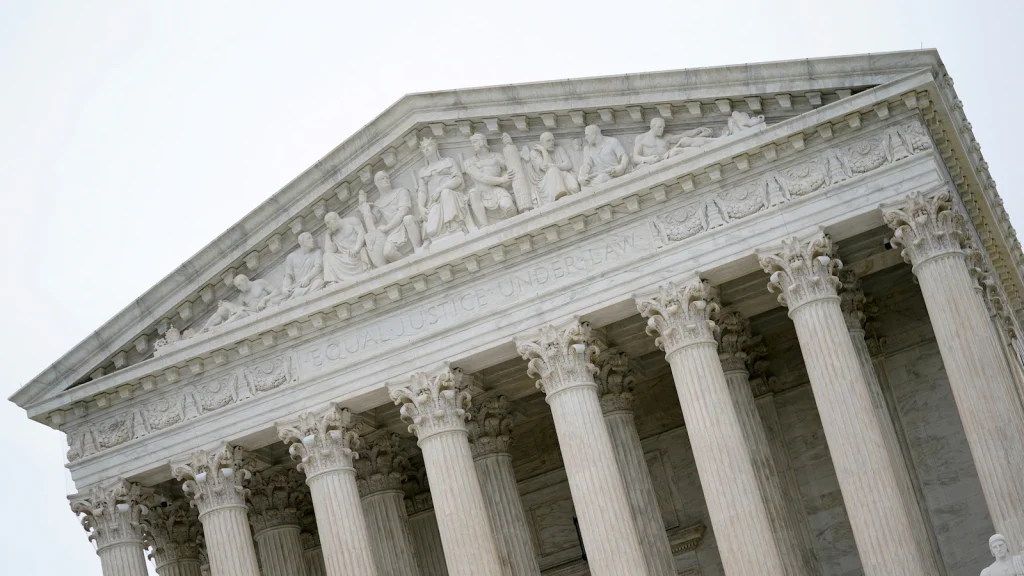
Supreme Court Weakens Voting Rights Act in Landmark Ruling
Supreme Court limits Voting Rights Act – On April 29, 2026, the U.S. Supreme Court delivered a pivotal decision that reshaped the landscape of voting rights in America. The landmark ruling overturned Louisiana’s congressional map, declaring it an unconstitutional racial gerrymander, and simultaneously undermined a key provision of the Voting Rights Act—Section 2. This legislation, enacted in 1965, has historically served as a critical tool to combat election practices that dilute the voting power of racial minorities. The court’s 6-3 decision, authored by Justice Samuel Alito, shifted the standard for proving violations of Section 2, requiring plaintiffs to demonstrate not just the effect of discrimination but also intent to discriminate. This change has significant implications for how courts assess claims of vote dilution in the future.
The Louisiana Case and Its Constitutional Implications
The case centered on Louisiana’s congressional map, redrawn after the 2020 census, which allocated only one majority-Black district out of six. Despite comprising over a third of the state’s voting-age population, Black voters faced a reduced opportunity to elect representatives of their choice. Lower courts had previously ruled that the map violated Section 2, citing its racial impact. However, the Supreme Court’s conservative majority rejected this approach, arguing that states could not be held accountable unless there was clear evidence of intentional discrimination.
“The map is an unconstitutional gerrymander, and its use would violate the plaintiffs’ constitutional rights,” Justice Alito wrote in the majority opinion. “In considering whether the Constitution permits the intentional use of race to comply with the Voting Rights Act, we start with the general rule that the Constitution almost never permits the Federal Government or a State to discriminate on the basis of race.”
The ruling effectively raised the threshold for challenging election maps. While the court acknowledged the historical role of Section 2 in protecting minority voters, it emphasized that the law’s purpose was to address deliberate racial discrimination, not its consequences. This interpretation could allow states to redraw districts in ways that systematically weaken minority representation, provided they lacked explicit intent to do so.
Dissenting Voices Warn of Broader Consequences
Justice Elena Kagan, joined by Justices Sonia Sotomayor and Ketanji Brown Jackson, sharply criticized the decision as a “catastrophic” shift in voting rights jurisprudence. In her dissent, Kagan argued that the ruling would enable states to circumvent the protections of the Voting Rights Act without facing legal consequences. “If other states follow Louisiana’s lead,” she wrote, “the minority citizens residing there will no longer have an equal opportunity to elect candidates of their choice.”
Kagan highlighted the tension between the majority’s interpretation and the law’s original intent. “Under the Court’s view of Section 2,” she noted, “a State can, without legal consequence, systematically dilute minority citizens’ voting power. … The majority claims only to be updating our Section 2 law, as though through a few technical tweaks. But in fact, those ‘updates’ eviscerate the law, so that it will not remedy even the classic examples of vote dilution.” Her concerns reflect fears that the decision would embolden lawmakers to manipulate district boundaries while avoiding accountability for racial disparities in representation.
Section 2’s Role in Preventing Vote Dilution
Section 2 of the Voting Rights Act has long been a bulwark against practices that “pack” Black voters into single districts or “crack” communities of color across multiple districts, thereby diluting their political influence. When courts found such violations, they mandated redrawing maps to ensure fair access to the ballot. This process, rooted in the law’s “effects test,” allowed for flexibility in addressing both intentional and unintentional discrimination. The Supreme Court’s new standard, however, demands proof of intent, making it harder to challenge maps that disproportionately disadvantage minority voters.
Civil rights advocates argue this change could have far-reaching consequences, particularly in the South, where voting rights have been historically contested. The NAACP, for instance, called the ruling a “devastating blow to what remains of the Voting Rights Act,” warning it would grant a “license for corrupt politicians” to rig the system by silencing entire communities. “The Supreme Court betrayed Black voters, they betrayed America, and they betrayed our democracy,” NAACP President Derrick Johnson stated, underscoring the group’s belief that the decision weakens the Act’s ability to safeguard minority voices in elections.
Political Reactions and the Path Forward
The White House hailed the decision as a “complete and total victory for American voters,” celebrating its potential to streamline redistricting processes. In a statement, White House spokesperson Abigail Jackson asserted, “The color of one’s skin should not dictate which congressional district you belong in. We commend the court for putting an end to the unconstitutional abuse of the Voting Rights Act and protecting civil rights.” This sentiment aligns with broader political narratives that frame the ruling as a win for states’ autonomy in electoral design.
However, the decision has sparked debate about its long-term impact. Critics warn that the narrowing of Section 2 could lead to a decline in minority representation in Congress, as states may prioritize partisan interests over racial equity. The ruling also raises questions about the effectiveness of the Voting Rights Act in the face of evolving political strategies. With the majority now requiring proof of intent, plaintiffs must provide stronger evidence to demonstrate that race played a central role in shaping election maps, even if the outcome was discriminatory.
Historical Context and Legal Precedent
The Supreme Court’s interpretation of Section 2 is not entirely new. In previous rulings, the court has emphasized the importance of intent in proving voting rights violations, particularly in the context of redistricting. This case, however, marks a significant departure from past precedents. By requiring “strong inference” of intentional discrimination, the decision may limit the scope of Section 2’s protections, especially in states with a history of racial exclusion in voting.
Legal scholars have pointed out that this shift could weaken the Act’s ability to counteract “cracking” and “packing” tactics. For example, in the 2020s, several Southern states have used these strategies to minimize the political clout of Black voters. Under the new standard, such actions might no longer qualify as violations, even if they result in unequal representation. The ruling also highlights the tension between the Voting Rights Act’s original goals and the modern political landscape, where race and partisanship often intersect in complex ways.
Implications for Future Elections
As the ruling takes effect, its impact on future elections remains uncertain. Civil rights groups fear that states will exploit the decision to redraw districts in ways that advantage their majority populations while marginalizing minority voters. This could lead to a situation where the Voting Rights Act becomes less effective in preventing vote dilution, particularly in states with histories of racial discrimination in voting.
Meanwhile, proponents of the decision argue that it restores balance to the law, ensuring that states are not held to an overly strict standard when redrawing boundaries. They contend that the ruling prevents federal overreach, allowing local legislatures to determine the most equitable district configurations. Nevertheless, the decision has been met with criticism from those who view it as a step back in the fight for racial equity in voting. As the nation prepares for upcoming elections, the debate over the Voting Rights Act’s future will likely intensify, with significant consequences for the representation of minority communities.
The Supreme Court’s action in this case reflects a broader ideological divide in American jurisprudence. While the conservative majority seeks to limit federal oversight of election practices, the liberal dissent emphasizes the need to protect minority voters from systemic disenfranchisement. This decision may set a precedent that reshapes the legal framework for voting rights, challenging the Act’s ability to ensure equal political participation for all citizens. As the ruling unfolds, its effects on the political power of minority communities will be closely watched, with the potential to redefine the balance between state authority and federal protections in the decades to come.