
Trump arrives in Beijing for high-stakes summit with Xi amid US war with Iran
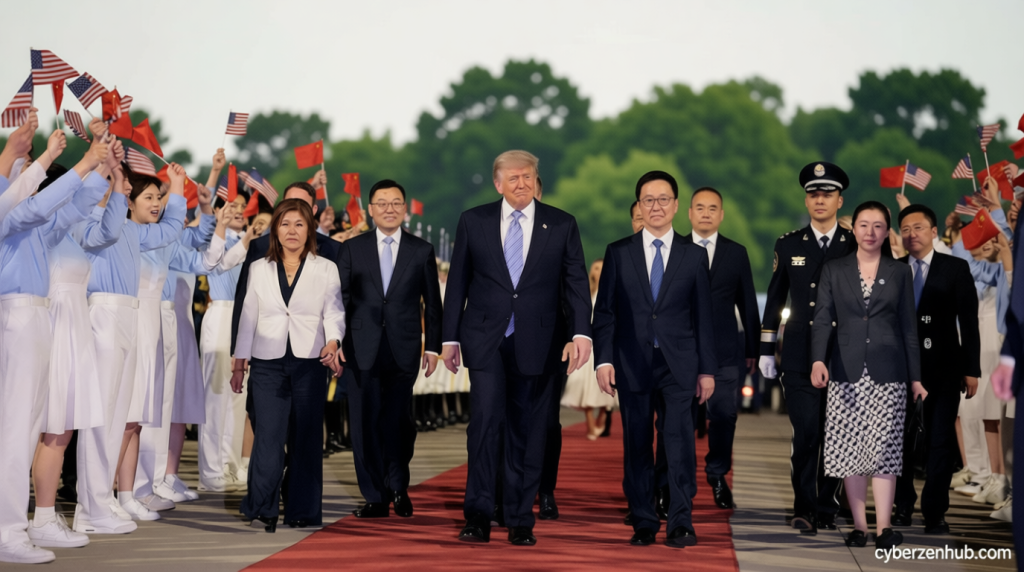
Trump Arrives in Beijing for High-Stakes Summit with Xi Amid U.S.-Iran Tensions
Trump arrives in Beijing for high – On the morning of May 13, 2026, President Donald Trump touched down in Beijing, marking the beginning of a pivotal extended summit with Chinese President Xi Jinping. The visit, which spans multiple days, is poised to address critical global and domestic issues, including the ongoing U.S.-Israeli conflict with Iran and the state of the American economy. Trump’s arrival at Beijing Capital International Airport was met with a formal welcome, as he stepped off Air Force One, flanked by a high-profile delegation of U.S. officials and corporate leaders. The event underscored the significance of the meeting, which comes at a time of heightened geopolitical uncertainty.
The U.S.-Iran War as a Global Factor
As the U.S.-Israeli war with Iran enters its third month, the tension has become a defining backdrop to Trump’s diplomatic mission. The conflict, which has escalated with intensified military actions and diplomatic maneuvering, has triggered ripple effects across international markets and alliances. Experts have highlighted that China’s role as a major importer of Iranian oil could position it as a key mediator in the crisis, offering potential leverage over Tehran. This dynamic has raised questions about how the U.S. and China might coordinate efforts to de-escalate the situation.
Trump, during a press briefing in Washington, D.C., prior to his departure, emphasized that the summit would focus on “shaping the future of global diplomacy and economic cooperation.” The leader’s comments came as the U.S. grappled with domestic challenges, including inflation and job market instability, which have further complicated his foreign policy agenda. The White House described the meetings as an opportunity to “redefine the strategic partnership between the world’s two largest economies,” though the exact terms of the discussion remain shrouded in anticipation.
A Delegation of Influence
Accompanying Trump on his journey to Beijing was a diverse group of American executives, including tech giants such as Nvidia’s CEO Jensen Huang and Apple’s Tim Cook. The inclusion of these business leaders signals a focus on economic collaboration, particularly in sectors where U.S.-China competition is most pronounced. Their presence also underscores the administration’s intent to leverage private sector insights in shaping bilateral agreements.
At the airport, Trump was greeted by China’s Vice President Han Zheng, who escorted him to the ceremony. The event featured a mix of high-level officials and citizens, with young Chinese participants holding both American and Chinese flags to express solidarity. This symbolic gesture highlighted the cultural and political significance of the visit, as it sought to bridge the gap between the two nations amid a backdrop of mutual economic competition and strategic rivalry.
Key Topics on the Agenda
During the welcome ceremony, Trump reiterated his commitment to expanding trade and investment ties with China, a goal he has consistently emphasized since taking office. “We’re going to be talking about opening up the Chinese economy,” he stated, signaling a focus on market access and regulatory reforms. This statement aligns with previous discussions about reducing trade barriers and enhancing economic integration between the two superpowers.
However, the summit also includes a pressing diplomatic issue: the U.S.-Iran war. Trump acknowledged that the conflict would be a central topic, noting that “the U.S. has Iran very much under control.” His assertion contrasts with reports suggesting Iranian forces have launched coordinated attacks in the region, raising concerns about the war’s potential to disrupt global oil supplies and international security.
“We’re either going to make a deal or they’re going to be decimated, one way or the other. We win,” Trump said, reflecting his confident approach to negotiation. The quote captures his broader strategy of using assertive diplomacy to achieve favorable outcomes, whether through agreements or military dominance.
Meanwhile, Chinese officials have framed the summit as an opportunity to strengthen their partnership with the United States. A spokesperson for China’s Foreign Ministry, Guo Jiakun, noted that the discussions would “provide strategic guidance for China-U.S. relations” and focus on “major issues concerning global peace and development.” This statement emphasizes the shared responsibility of addressing challenges that extend beyond bilateral interests, such as climate change and technological innovation.
Guo’s remarks also highlighted China’s willingness to collaborate on economic and security matters. “China stands ready to work with the U.S. to expand cooperation and manage differences in the spirit of equality, respect, and mutual benefit,” he added. This pledge reflects the complex balance of competition and collaboration that defines the U.S.-China relationship, particularly in an era of shifting alliances and economic interdependence.
Historical Context and Strategic Implications
The summit builds on a history of U.S.-China interactions, from trade negotiations to climate accords. While past meetings have addressed issues such as tariffs and intellectual property rights, this visit carries added weight due to the concurrent war with Iran and domestic economic pressures. Analysts suggest that Trump’s administration may use the visit to present a unified front against global adversaries while reinforcing economic ties with China, a critical partner in navigating the crisis.
One of the key challenges facing the summit is the delicate interplay between economic collaboration and strategic rivalry. China’s role as an energy supplier to Iran could complicate U.S. efforts to isolate Tehran, forcing Trump to weigh the benefits of trade with China against the need to curb Iranian influence. This balancing act is likely to dominate discussions, particularly as both nations seek to assert their global standing.
Additionally, the summit’s timing coincides with a period of volatility in international markets. The U.S.-Israeli war has already impacted oil prices and investor confidence, creating an environment where diplomatic solutions are both urgent and strategically valuable. For China, maintaining stability in its trade relationships is essential to supporting its economic growth, while for the U.S., securing commitments from Beijing could help stabilize domestic economic conditions.
A Global Stage for Bilateral Relations
The Great Hall of the People in Beijing is expected to host the first major bilateral meeting, with Trump and Xi set to discuss a wide range of topics. These include trade policies, technological competition, and the future of global governance. The state banquet that night will provide a formal setting for further dialogue, allowing both leaders to engage in more informal discussions.
Trump’s departure from the White House on Tuesday was marked by a series of press interactions, where he outlined his priorities for the visit. “We’re going to be talking with President Xi about the future of our relationship,” he said, emphasizing the need for renewed cooperation. The Chinese government, in response, has reaffirmed its commitment to working with the U.S., stressing the importance of stability in the face of global uncertainties.
As the summit progresses, the interplay between economic diplomacy and military strategy will likely shape the outcomes. Trump’s ability to navigate these complexities will be tested, particularly as he seeks to align Chinese interests with U.S. objectives in the Middle East. The success of the talks could determine the trajectory of the U.S.-China relationship for months to come, with far-reaching implications for global trade, security, and geopolitics.
Looking Ahead
The extended nature of the summit allows for comprehensive discussions, but it also requires careful coordination among the delegations. With over a dozen U.S. executives present, the agenda is expected to include both formal negotiations and informal consultations. The outcome of these talks may influence trade policies, investment strategies, and the broader alignment of interests between the two nations.
As the world watches, the summit represents a critical moment in U.S.-China relations. The interplay between economic collaboration and strategic rivalry, compounded by the ongoing conflict with Iran, will determine the effectiveness of the discussions. Whether the two leaders can bridge differences or deepen divisions remains to be seen, but the visit underscores the importance of dialogue in an increasingly interconnected world.