
Trump won’t commit to arms sale to Taiwan after stark warning from Xi
Trump Delayed on Taiwan Arms Sales Amid China’s Firm Stance
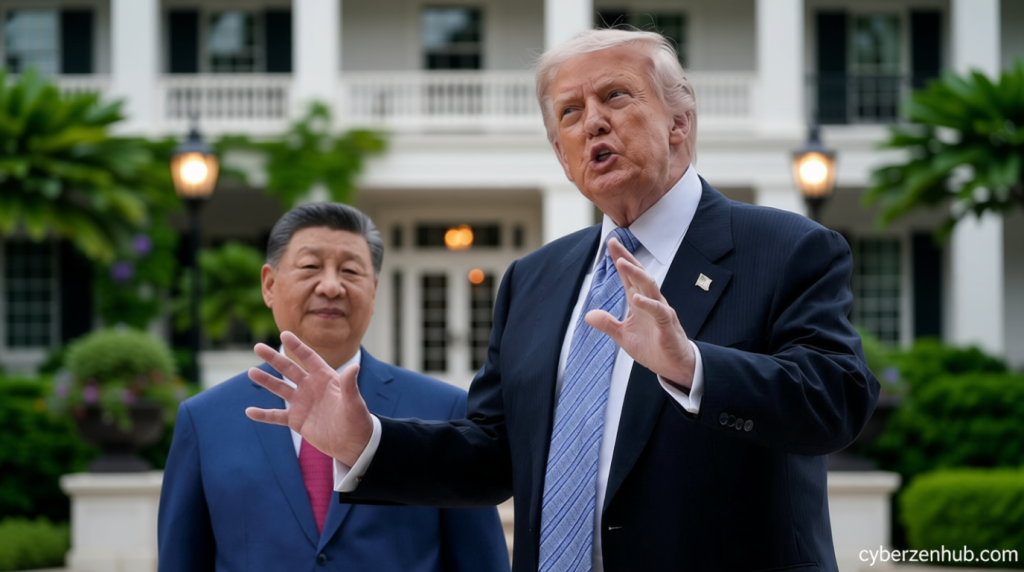
Trump won t commit to arms – Following a tense two-day summit with Chinese President Xi Jinping in Beijing, U.S. President Donald Trump has yet to confirm his decision on the latest arms package destined for Taiwan. The discussions, held during Trump’s visit to the Zhongnanhai Garden—a symbol of China’s political power—revealed the administration’s hesitation. While Xi Jinping’s firm warnings about potential conflict loomed over the talks, Trump signaled he would wait before finalizing the sale, keeping the issue in limbo.
Xi’s Warning and Trump’s Ambiguity
During the meeting, Xi Jinping delivered a sharp warning to Trump, emphasizing that mishandling the Taiwan issue could lead to a direct clash between the two nations. This statement, as reported by China’s state media, underscores the growing sensitivity of the topic. However, the Chinese leader also acknowledged that a diplomatic approach could maintain stability in bilateral relations. Despite this, Trump’s reluctance to commit to the arms sale suggests a cautious balancing act.
“Xi Jinping warned that if Taiwan’s status is addressed ‘improperly,’ the U.S. and China could ‘come into conflict.’ But he added that a ‘proper’ resolution would ensure ‘generally stable’ ties between the nations.”
The $14 Billion Arms Package and Political Delays
Trump has been delaying the approval of a $14 billion arms sale to Taiwan, a decision that has drawn criticism from some lawmakers. The package, originally authorized in January 2025, was intended to strengthen Taiwan’s defense capabilities. Yet, Trump’s hesitancy reflects broader concerns about escalating tensions with China, a key economic and strategic partner. His delay has been met with mixed reactions, as allies and adversaries alike await his final stance.
A Question of Defending Taiwan
During a press conference aboard Air Force One, Trump was asked whether he would support Taiwan in the event of a Chinese attack. The president responded by recounting Xi’s direct inquiry on the matter. “That question was asked to me today by President Xi. I said, ‘I don’t talk about, I don’t talk about that,'” he emphasized, highlighting his desire to keep the decision confidential until a final determination is reached.
Setting the Stage for Strategic Talks
The summit’s backdrop was the historical significance of the Zhongnanhai Garden, a revered site for Chinese leaders. Xi had chosen the location to honor Trump’s 2017 visit to Mar-a-Lago, where he was hosted by the Chinese president. The setting symbolized a mutual respect for diplomatic traditions, though the discussions revealed underlying tensions. Trump, known for his populist rhetoric, appeared to focus on pragmatic outcomes, even as he engaged in symbolic gestures.
Iran and the Strait of Hormuz
While the Taiwan issue dominated headlines, the summit also addressed regional security concerns, particularly Iran. Trump noted that he and Xi share similar views on ending the conflict with Iran and preventing the country from acquiring nuclear weapons. “We feel very similar in Iran. We want that to end. We don’t want them to have a nuclear weapon. We want the Strait of Hormuz opened,” he stated, showcasing his focus on de-escalation.
“Trump argued that the Strait of Hormuz should be reopened as a priority, calling the ongoing hostilities a ‘crazy thing.’ He claimed the U.S. had already taken decisive action to secure the strait, though he acknowledged the need for further collaboration with China.”
China’s Position on the Strait and Ceasefire
China’s Foreign Ministry, when asked about the Trump-Xi discussions on Iran, avoided direct confirmation but reaffirmed its stance. Officials emphasized that a ceasefire and renewed negotiations were essential to stabilize the region. “There is no need to continue this war that should not have happened,” a spokesperson said, adding that early solutions would benefit not only the U.S. and Iran but also neighboring countries and global stability.
Broader Implications of the Summit
As the summit progressed, Trump’s interactions with Xi highlighted the complex interplay of diplomacy and national interest. The talks covered a range of topics, from trade agreements to technological cooperation, with U.S. and Chinese CEOs playing a pivotal role. Elon Musk of Tesla and SpaceX, Tim Cook of Apple, and Jensen Huang of NVIDIA were among those accompanying Trump, underscoring the economic stakes.
Strategic Trade and Technological Ties
Trade and technology emerged as critical themes during the summit. Trump praised the “fantastic trade deals” made between the two leaders, though specifics were left to future negotiations. The presence of business leaders signaled a shared interest in fostering economic partnerships, even as political disagreements remained unresolved. However, the arms sale to Taiwan remains a sticking point, complicating the broader relationship.
Global Reactions and Regional Dynamics
Taiwan’s Mainland Affairs Council Deputy Minister Liang Wen-chieh expressed vigilance over the summit’s outcomes, stating that the island was “paying close attention” to Trump’s commitments. The meeting also included a tea and working lunch, a gesture meant to blend informal camaraderie with strategic discussions. Despite these efforts, the absence of a clear agreement on arms sales suggests a continued diplomatic tug-of-war.
Trump’s Position on China’s Influence
Trump’s statements during the summit reflected his reliance on personal rapport with Xi to navigate complex geopolitical issues. While he emphasized mutual goals, such as reducing tensions with Iran, he also highlighted his independence in decision-making. “I’m not asking for any favors, because when you ask for favors, you have to do favors in return,” he said, reinforcing his belief that the U.S. should act on its own terms.
Conclusion: A Delicate Balance
The Trump-Xi summit has underscored the delicate balance between strategic cooperation and competition. While the leaders agreed on certain priorities, such as reopening the Strait of Hormuz and advancing trade, the arms sale to Taiwan remains a contentious issue. This delay not only highlights the internal dynamics within the Trump administration but also reflects the broader geopolitical landscape where every move carries significant weight. As the summit concludes, the world watches for signs of compromise or further escalation in U.S.-China relations.