
Takeaways from Fed Chair Jerome Powell’s tenure as he steps down
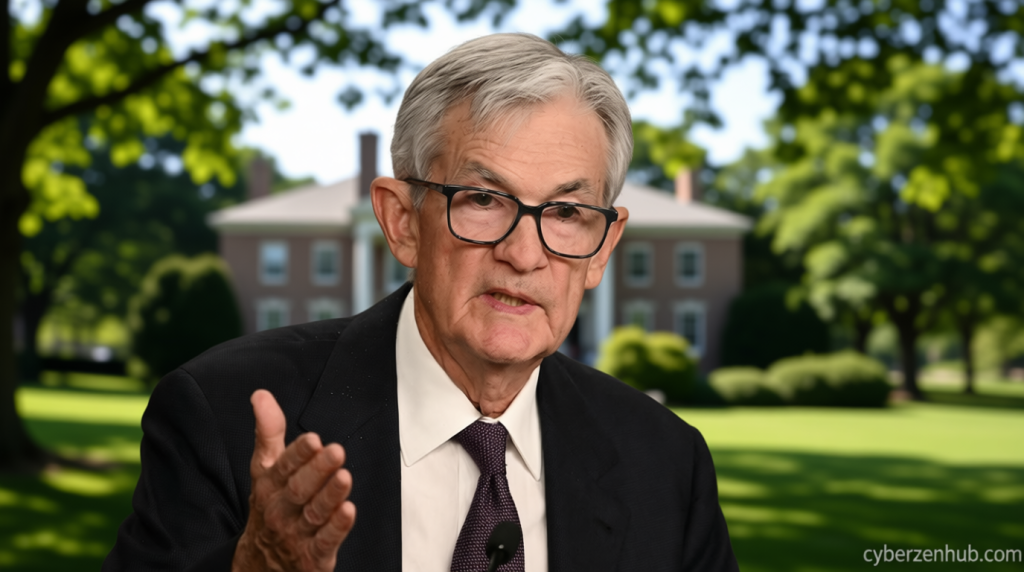
Takeaways from Fed Chair Jerome Powell’s Tenure as He Steps Down
Eight Years of Economic Turbulence
Takeaways from Fed Chair Jerome Powell – Jerome Powell’s eight-year tenure as Federal Reserve Chair concluded on Friday, marking the end of a period defined by relentless challenges. From the abrupt devastation of the global pandemic to the surge of inflation that disrupted decades of economic stability, Powell navigated a landscape of shifting priorities. His leadership was tested by the collapse of millions of jobs in a matter of weeks, the highest inflation levels in four decades, and a federal criminal probe that cast a shadow over the central bank’s operations. These events not only shaped the trajectory of U.S. monetary policy but also left an indelible mark on the daily lives of Americans and the political independence of the Federal Reserve.
A Legacy of Resilience and Adaptability
Throughout his time at the helm, Powell’s decisions carried immense weight, influencing everything from household budgets to the Fed’s standing as a trusted institution. His tenure spanned two presidential administrations and saw the central bank respond to crises that tested its adaptability. When President Donald Trump nominated Powell for the role in 2017, the Fed was expected to play a pivotal role in supporting a robust economy. Yet, by 2020, the world had been upended by a novel virus, and Powell’s leadership was thrust into the spotlight as the Federal Reserve grappled with unprecedented disruptions.
At the core of his approach was a belief in proactive measures. Powell’s early actions, including raising interest rates to counter inflationary pressures, positioned the Fed to pivot swiftly when the crisis struck. However, the rapid onset of the pandemic revealed the need for immediate intervention. In March 2020, the Fed cut rates to near-zero, injecting liquidity into a market in turmoil. This decision, while controversial, proved critical in stabilizing the economy during its most vulnerable phase.
Transitioning to a New Era
As Powell prepares to step down, the transition to his successor, Kevin Warsh, offers a chance to reflect on the central bank’s role in shaping recent economic outcomes. Warsh, a Trump-appointed nominee, inherits a resilient economy but one still contending with inflationary pressures. Powell’s decision to remain on the 12-member board of governors after his term ends ensures his influence on interest-rate policy will persist until 2028, contingent on the resolution of a Fed inspector general’s investigation into the renovation of the central bank’s headquarters.
His extended tenure has allowed Powell to weather multiple economic cycles, from the optimism of the pre-pandemic era to the uncertainty of a global health crisis. The Federal Reserve’s ability to respond to these challenges underscores its adaptability, even as it faced criticism for its initial reluctance to address inflation head-on. Powell’s tenure is often compared to the complex interplay of political and economic forces, balancing the demands of a diverse set of stakeholders while maintaining the Fed’s independence.
Key Moments in Powell’s Leadership
One of the defining moments of Powell’s tenure occurred in the early months of 2020. As the pandemic forced lockdowns, the labor market collapsed, and businesses faced existential threats, the Fed’s emergency measures became a lifeline. Powell’s swift action to lower interest rates to near-zero levels, coupled with expansive monetary policies, helped mitigate the worst effects of the crisis. “Families, businesses, schools, and governments are taking steps to protect people’s health,” he explained at the time, acknowledging the trade-offs between public safety and economic growth.
“You don’t choose your challenges, but you do choose how you respond,” said Claudia Sahm, chief economist at New Century Advisors and a former Fed official. “In the end, Powell’s legacy will be judged by those outcomes.”
Despite these efforts, the economic recovery was not without its hurdles. The pandemic-induced recession, which lasted only two months, was the shortest in U.S. history, according to the National Bureau of Economic Research. While this rapid rebound was a testament to the effectiveness of the Fed’s stimulus measures, it also highlighted the growing risk of inflation. Supply chain bottlenecks, exacerbated by the Russia-Ukraine war, triggered a spike in prices that Powell initially dismissed as temporary.
His assertion that inflation was “transitory” became a point of contention. As prices rose sharply, the Fed’s credibility was tested, and Powell later admitted the error in his judgment. The shift from a dovish stance to a more hawkish approach underscored the evolving nature of his leadership. By the time of his final months in office, the Fed had raised rates multiple times to curb inflation, a strategy that left the economy in a delicate balance between growth and stability.
The Role of Political Dynamics
Throughout his career, Powell’s relationship with the executive branch has been a focal point. Trump, who initially praised Powell as a “consensus builder” capable of fostering economic growth, had a mixed experience with his tenure. While the pandemic response aligned with Trump’s vision of a strong, proactive Fed, the inflationary pressures later challenged that narrative. Powell’s ability to maintain the Fed’s independence, even amid political scrutiny, was a hallmark of his leadership.
His early years in the role were marked by a commitment to steady growth and low inflation, but the pandemic forced a dramatic shift in priorities. The Federal Reserve’s balance sheet expanded rapidly, with asset purchases and low-interest lending becoming central to its strategy. This approach, while effective in stabilizing the economy, also set the stage for a new set of challenges as the recovery gained momentum and inflation resurfaced.
Economic Stimulus and Policy Shifts
The recovery efforts were bolstered by a combination of monetary and fiscal policies. Trump and President Joe Biden’s stimulus packages provided critical support to households and businesses, helping to cushion the impact of job losses and economic hardship. These measures, along with the Fed’s rate cuts, created an environment where the economy rebounded quickly, but at the cost of increased inflationary pressures.
As the economy warmed, the Fed’s role in managing inflation became more prominent. Powell’s initial hesitancy to act decisively against rising prices, described as “transitory,” proved to be a pivotal miscalculation. The central bank’s subsequent tightening cycle, including multiple rate hikes, reflected a recognition of the long-term threat posed by inflation. This shift in strategy has been a central theme of his legacy, with critics and supporters alike weighing the trade-offs between growth and price stability.
Looking Ahead
With Powell’s tenure ending, the focus now turns to the next chapter in Federal Reserve history. Kevin Warsh, who has been confirmed by the Senate, faces a unique set of challenges. The economy, while resilient, is grappling with renewed inflationary concerns, and the Fed’s ability to navigate these issues will determine the success of its next leadership. Powell’s extended role on the board ensures that his insights will continue to shape policy, even as he steps back from the chair.
As the transition unfolds, the legacy of Powell’s time at the Fed will be measured against the economic outcomes of his decisions. His tenure has been a blend of crisis management, strategic adaptation, and political navigation, leaving a complex but influential imprint on American economic policy. The lessons learned during these eight years will undoubtedly inform the next leadership, as the Fed continues its mission to stabilize the economy in an ever-changing global landscape.