
A third of the Congressional Black Caucus could lose seats amid redistricting fight
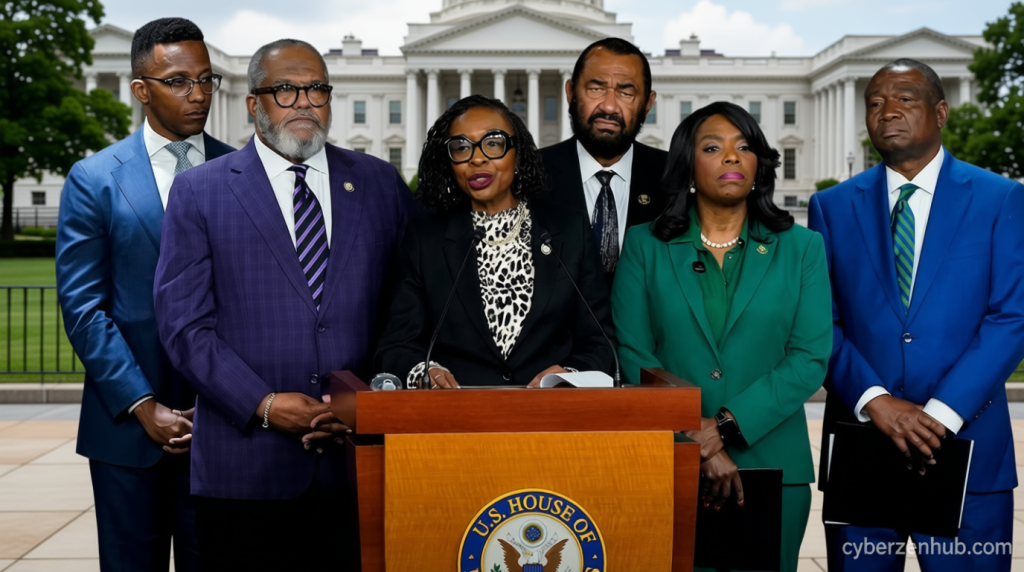
A Third of the Congressional Black Caucus at Risk of Losing Seats Amid Redistricting Efforts
A third of the Congressional Black – With the 2028 election cycle approaching, a significant portion of the Congressional Black Caucus (CBC) — 19 out of its 62 members — could face the prospect of losing their congressional seats. This shift is driven by Republican-led redistricting initiatives in Southern states where they control legislative power, which have accelerated in the wake of a Supreme Court ruling that weakened Section 2 of the Voting Rights Act. The move comes less than two weeks after the Court’s decision, signaling a strategic effort to reshape electoral boundaries and influence the balance of power in the House of Representatives.
The redistricting push, which has been ongoing since 2025, represents a continuation of efforts to dilute the voting influence of minority communities. President Donald Trump has actively encouraged these actions, aiming to bolster Republican chances in the November 2026 midterm elections. Advocates argue that the maps being redrawn align with judicial standards and are not necessarily aimed at undermining Black representation, though critics contend that the process has been used to target districts historically favorable to CBC members.
Alabama has become a focal point in this debate, as the Supreme Court’s ruling on Monday allowed the state to eliminate at least one of its majority-Black congressional districts ahead of the 2026 midterms. This decision could provide Republicans with an additional House seat, further complicating the race for control of the closely divided chamber. In Louisiana, South Carolina, and Tennessee, similar redistricting strategies have already been implemented, raising concerns about the long-term impact on Black political representation.
Response from the Congressional Black Caucus
Despite the challenges, the CBC has vowed to counter these efforts. Congressional Black Caucus Chair U.S. Representative Yvette Clarke emphasized that the group is collaborating with legal organizations, including the Elias Law Group and the Legal Defense Fund, to challenge the GOP’s redistricting tactics. “We are not standing idly by,” Clarke stated, highlighting the coalition’s determination to protect voting rights and ensure fair representation.
House Minority Leader Hakeem Jeffries has also pledged a strong Democratic response, outlining plans to redistrict in states such as New York, New Jersey, Oregon, Washington, Colorado, Illinois, and Maryland. “In the coming year, you’ll see Democrats making it clear that we are not going to unilaterally disarm,” Jeffries said. “Our strategy is to be proactive and ensure that we have a decisive and overwhelming counter to these efforts by the time the 2028 elections arrive.”
“This decision sets the stage for Alabama to return to the era of the 1950s and 1960s in terms of Black political representation,” said Alabama Representative Shomari Figures, whose district is now under threat. Figures, a key figure in the CBC, criticized the Supreme Court ruling as a tool to erode decades of progress in minority voting rights.
Rep. Emmanuel Cleaver of Missouri, whose district was among the first targeted by redistricting efforts, echoed similar concerns. He described the changes as an attempt to “send us back to Reconstruction,” a period marked by the systematic suppression of Black voting rights. Cleaver expressed cautious optimism about the Democratic response, while acknowledging the challenges ahead. “If we fight fire with fire, nothing would be left but ash,” he warned, emphasizing the need for a more strategic approach to safeguard representation.
Meanwhile, Rep. Jim Clyburn of South Carolina, another CBC member at risk, criticized the Supreme Court’s decisions as enablers of this targeted strategy. Clyburn argued that the Court’s rulings, coupled with Trump’s rhetoric, have positioned the country on the brink of a “kleptocracy,” where political power is concentrated at the expense of minority voices. “This is about whether or not you’re going to have a democracy,” Clyburn stated, underscoring the broader implications of the redistricting battle.
Clyburn, who has represented South Carolina for over two decades, noted his uncertainty about the district he will contest in the upcoming election. “I have no idea what district I’m running in,” he admitted, calling for coordinated action across multiple states to counter the GOP’s efforts. The CBC members in Illinois, Maryland, New York, and New Jersey are also preparing to take the lead in redistricting initiatives, aiming to create districts that favor Democratic candidates and protect minority voting power.
While the CBC continues to advocate for the John R. Lewis Voting Rights Advancement Act, a legislative proposal designed to restore protections under the Voting Rights Act, Cleaver acknowledged the current Congress’s limited capacity to pass such measures. “We have to be strategic in how we respond,” he said, emphasizing the importance of grassroots mobilization and legal challenges to preserve the Caucus’s influence.
Broader Implications and State-Level Actions
The redistricting fight extends beyond Alabama, with states like Virginia and others also taking steps to challenge the GOP’s plans. Virginia Democrats, for instance, have sought to have the U.S. Supreme Court override a state court ruling that allowed a redistricting plan to be implemented. This highlights the growing role of federal courts in shaping electoral boundaries and the urgency with which Democrats are responding to the threat posed by conservative-led redistricting.
Jeffries’ comments suggest a coordinated multi-state strategy, targeting key areas where Democratic strength is most vulnerable. By redrawing districts in states with significant Black populations, Republicans hope to maximize their electoral gains while minimizing the CBC’s impact. However, Democrats argue that these efforts are not just about winning seats but about preserving the integrity of the voting process for all Americans.
As the 2028 election cycle nears, the stakes for the CBC have never been higher. The Caucus, which has historically been a powerful force in advancing civil rights and racial equity, now finds itself in a defensive position. Members are working tirelessly to ensure that their communities are not left without a voice in Congress, even as the redistricting battle intensifies across the South and beyond.
With the potential to lose a third of its members, the CBC is preparing to fight on multiple fronts. Legal challenges, public advocacy, and state-level redistricting efforts are all part of their strategy to counter the GOP’s dominance. The outcome of this battle will not only determine the future of the CBC but also shape the political landscape for years to come, as the fight for equitable representation continues to evolve in the wake of recent Supreme Court decisions.