
Airlines reduce, cap fares for Spirit travelers looking to rebook canceled flights
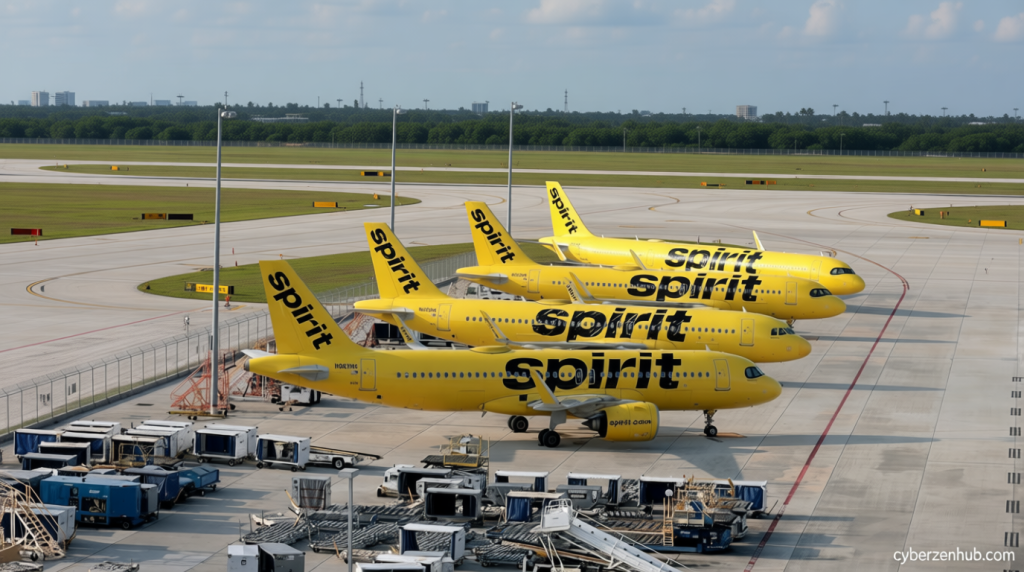
Airlines Implement Fare Caps for Spirit Travelers Rebooking Canceled Flights
Airlines reduce cap fares for Spirit – The Department of Transportation (DOT) announced on Saturday that most major airlines will impose fare limits for passengers affected by Spirit Airlines’ decision to scale back operations. This measure aims to ease the financial burden on travelers who need to rebook flights due to Spirit’s cancellation of services. Some carriers have already taken steps to lower prices on routes previously served by Spirit, particularly those with high passenger demand.
DOT’s Role in Stabilizing the Situation
Following the collapse of talks between Spirit and the federal government over a $500 million rescue package, the DOT stepped in to provide relief. The agency’s intervention has prompted airlines to offer temporary fare caps, ensuring impacted customers can secure seats without facing excessive costs. This move underscores the DOT’s commitment to protecting consumer interests during the transition period.
According to the DOT, carriers such as United, Delta, JetBlue, and Southwest have committed to capping ticket prices specifically for Spirit passengers. These restrictions apply to rebooking efforts, with some airlines even reducing fares on certain high-traffic routes. The goal is to create a more equitable pricing environment for those seeking alternatives to Spirit’s canceled flights.
Spirit’s Operations and Refund Policy
Spirit Airlines began reducing its flight schedule early Saturday, signaling the start of its phased exit from the market. The airline confirmed that travelers who booked tickets using a credit or debit card will receive automatic refunds, as stated in a press release. However, passengers who used alternative payment methods may need to follow a different process to claim their money.
“Travelers who booked their tickets with a credit or debit card will be automatically refunded,” Spirit Airlines said in a statement.
To qualify for the special fares, passengers must provide their Spirit flight confirmation number and proof of payment. This verification process ensures that only those affected by the cancellations benefit from the capped rates. The availability of these fares varies by carrier, with some offering limited time windows for rebooking.
Carrier-Specific Fare Caps and Availability
JetBlue and Southwest have set a 72-hour window for their special fares, requiring in-person transactions at airport ticket counters. Delta, on the other hand, is extending its offer to five days, with online access for customers. United Airlines has provided the longest window, allowing rebookings for two weeks through its website. The airline also highlighted its coverage of major cities where Spirit previously operated, including Atlanta, Chicago, Fort Lauderdale, Houston, Las Vegas, Miami, Newark, New Orleans, and Orlando.
American Airlines has launched a dedicated page on its website to display rescue fares for Spirit customers. This resource covers a range of domestic and international destinations, giving passengers a centralized platform to explore options. The airline is also reviewing the possibility of adding more flights and larger aircraft to routes that were previously managed by Spirit, aiming to accommodate as many rebooked passengers as possible.
Broader Support for Travelers and Employees
In addition to fare caps, several airlines are offering supplementary assistance to impacted individuals. Allegiant Air has pledged to freeze prices on routes that overlap with Spirit’s network, ensuring stability for those seeking alternatives. Frontier Airlines is providing up to 50% discounts on base fares across its entire system until May 10, further easing the transition for stranded travelers.
Recognizing the ripple effects on employees, the DOT also mentioned that most U.S. carriers are extending travel benefits to Spirit staff. This includes travel passes and spare jump seats, enabling employees to return to their home bases. Airlines like American and United have added preferential interview opportunities for Spirit team members, prioritizing their hiring to maintain workforce continuity in the aviation sector.
Temporary Solutions and Long-Term Implications
While the DOT’s actions provide immediate relief, the long-term impact of Spirit’s operations remains uncertain. The airline has capped most of its fares at $199, though longer routes are priced up to $299. This pricing structure is intended to balance affordability with the costs of maintaining a robust service network. The DOT’s role in facilitating these measures highlights its importance in mediating airline crises and safeguarding consumer rights.
Travelers are advised to act quickly, as the special fare windows are time-sensitive. For example, Southwest’s offer is only available for 72 hours, and Delta’s five-day window may close before passengers have a chance to secure their preferred options. United’s extended period of two weeks online offers more flexibility, but the airline emphasizes that these fares are limited to routes where Spirit previously operated.
As the situation evolves, the DOT continues to monitor the situation closely. Its interventions have not only addressed immediate concerns but also set a precedent for how airlines might respond to similar disruptions in the future. The coordination among carriers to offer discounted fares demonstrates a collective effort to support the travel industry during this challenging period.
Impact on the Travel Industry
Despite the recent pause in operations, Spirit Airlines’ decision to reduce its services has created a ripple effect across the aviation sector. The DOT’s involvement highlights the growing importance of regulatory oversight in managing airline transitions. Meanwhile, the collaborative efforts among carriers to offer refunds and discounted fares reflect a shared commitment to minimizing passenger inconvenience.
Industry analysts note that the situation could serve as a case study for how airlines adapt to financial stress. By capping fares and providing refunds, the affected carriers are not only addressing the immediate needs of Spirit’s customers but also stabilizing their own revenue streams. The DOT’s coordination ensures that these measures are implemented consistently, reducing the risk of consumer confusion or dissatisfaction.
Passengers are encouraged to check with their chosen airline for specific details on eligibility and availability. The DOT’s website also serves as a resource for tracking updates and understanding the broader implications of Spirit’s operations. As the airline industry navigates this uncertainty, the collaborative approach between regulators and carriers offers a blueprint for managing future disruptions.
Looking Ahead
With the DOT’s intervention and airlines’ proactive measures, the focus now shifts to ensuring a smooth rebooking process for affected passengers. While Spirit’s operations may continue to shrink, the support from other carriers suggests that the travel ecosystem is resilient. The next few weeks will be critical in determining whether these efforts can prevent a larger crisis for travelers and employees alike.
As the industry adjusts, the DOT’s role remains pivotal. Its ability to broker agreements and enforce fare caps ensures that consumers are not left without options during times of airline instability. The coordinated response from major carriers also demonstrates the importance of partnerships in maintaining service quality and customer trust, even in the face of unexpected challenges.