
Musk, Cook and other prominent US executives invited to join Trump on trip to China
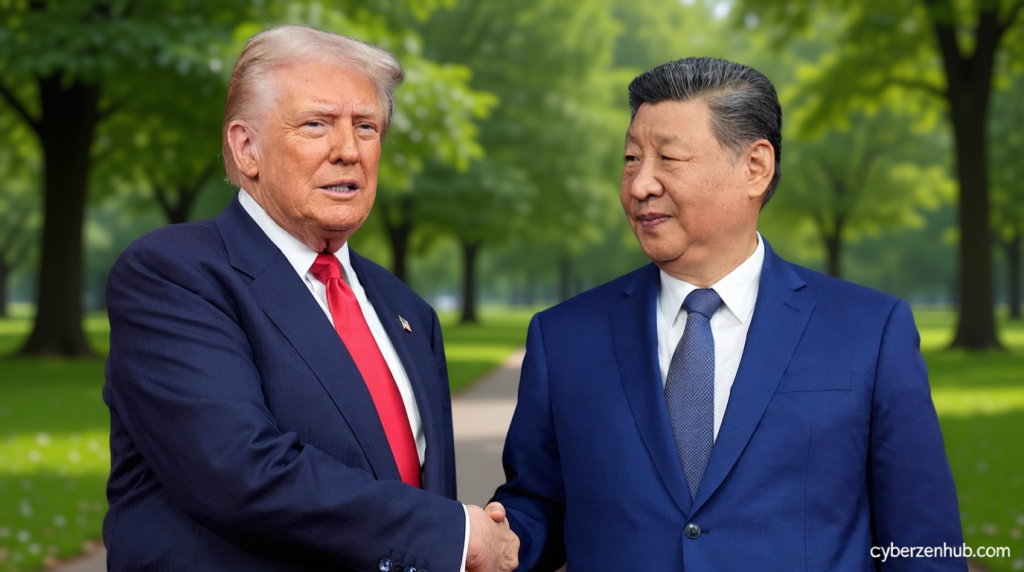
Musk, Cook and Other Prominent U.S. Executives to Join Trump in China Trip
Musk Cook and other prominent US executives – President Donald Trump’s upcoming journey to China has drawn the attention of several high-profile American business leaders, from tech innovators to agricultural sector figures. According to a White House official, this week’s trip will see the inclusion of notable executives who have been invited to participate in discussions with Chinese leaders. The visit, which begins on Tuesday, aims to address a range of critical issues, including trade relations and advancements in artificial intelligence. While the primary focus of the meeting with President Xi Jinping is expected to revolve around trade and AI, other topics such as Iran’s geopolitical stance may also be on the agenda.
Executive Participation and Strategic Motivations
The White House official, who spoke on condition of anonymity due to lack of public authorization, confirmed that the delegation will include a diverse group of corporate representatives. This includes Elon Musk, the CEO of Tesla and SpaceX, who has a unique history with the administration. Musk previously served as the head of the Department of Government Efficiency, a short-lived agency established during Trump’s first term. After resigning in the spring of 2025, the agency was officially disbanded in November of the same year, marking the end of Musk’s tenure in that role.
Musk’s recent focus has shifted back to his core ventures, particularly Tesla and X (formerly Twitter). Despite his earlier tensions with Trump, he has since expressed regret over some of his controversial posts on the social media platform. The feud began last summer, when Musk publicly accused the government of hiding information about Trump’s ties to Jeffrey Epstein, a well-known pedophile. However, Musk later clarified his stance, acknowledging that his initial claims lacked sufficient evidence.
“I regret some of my posts on X about Trump,” Musk stated, though the exact nature of his remorse was not elaborated in the official account.
As the trip unfolds, Musk’s presence is likely to highlight the intersection of technology and geopolitics. His companies operate in China, and the nation’s growing influence in the global economy makes the engagement a strategic move. Additionally, Musk is currently facing legal challenges related to child sexual abuse images, deepfakes, and disinformation on X. These cases involve French prosecutors and are part of a broader investigation into the platform’s role in facilitating harmful content.
Apple’s Transition and Diplomatic Achievements
Tim Cook, Apple’s long-serving CEO, is also part of the delegation. His leadership has come to a close as he steps down from the role on September 1, after 15 years at the helm. Cook will remain as an executive chairman, ensuring continuity in Apple’s strategic direction. His tenure has been marked by significant growth, as the company’s market value surged by over $3.6 trillion during the iPhone era.
During Trump’s trade wars with China, Cook played a pivotal role in navigating the complex landscape of international commerce. He successfully lobbied the administration to exempt iPhones and other products from tariffs, a feat that required mastering the art of political negotiation. However, challenges persisted in the current administration, as Trump pushed for a shift of manufacturing operations from China to the U.S. Cook countered by redirecting U.S.-bound iPhone production to India and securing exemptions through Apple’s commitment to invest $600 billion in the American economy during Trump’s second term.
Boeing’s Recovery and Trade Dynamics
Robert “Kelly” Ortberg, who assumed the CEO role at Boeing in 2024, is another key figure joining the trip. His leadership comes at a critical juncture for the aerospace company, which has been grappling with legal disputes, production delays, and financial setbacks. Ortberg has emphasized Boeing’s efforts to regain stability, noting that the U.S.-China trade war has not significantly hindered the company’s progress. He previously stated that the conflict would not prevent Boeing from meeting its aircraft delivery goals with Chinese airlines, which had initially resisted accepting U.S. planes.
China’s import tax on American goods, which reached 125% in April 2025, has added pressure to the situation. This move was a retaliatory measure against Trump’s 145% tariff on Chinese-made products. For Boeing, a major exporter of passenger jets, the higher tariffs have increased the cost of its aircraft by more than double. However, recent trends suggest a reduction in the impact of these taxes, as Beijing has begun exporting fewer finished planes to the U.S., signaling a potential easing of tensions.
Other Notable Executives in the Delegation
The delegation also includes representatives from other industries, such as Larry Fink of BlackRock, Stephen Schwarzman of Blackstone, and Brian Sikes of Cargill. These leaders are expected to contribute their expertise to discussions on trade and economic cooperation. In addition, Jane Fraser of Citi, Jim Anderson of Coherent, H. Lawrence Culp of GE Aerospace, David Solomon of Goldman Sachs, Jacob Thaysen of Illumina, Michael Miebach of Mastercard, and Dina Powell of Meta will accompany Trump. Each brings unique insights relevant to the topics of interest, including the future of AI and global trade strategies.
The inclusion of these executives underscores the importance of business leadership in shaping international policy. Their participation is not only a reflection of their influence but also a strategic effort to align corporate interests with the administration’s goals. As Trump prepares to engage with Chinese counterparts, the executives’ roles may focus on addressing mutual economic concerns, fostering partnerships, and navigating the challenges posed by trade tensions and technological competition.
Context and Broader Implications
Trump’s trip to China is part of a larger effort to stabilize trade relations and secure economic benefits for U.S. industries. The decision to invite these executives highlights the administration’s focus on leveraging private sector expertise in diplomatic negotiations. For companies like Boeing and Apple, the trip represents an opportunity to reinforce their positions in the global market while mitigating the risks of escalating trade disputes. Meanwhile, Musk’s involvement may serve as a reminder of the evolving relationship between technology and government, particularly in the wake of his past disagreements with Trump.