Administration Seeks New Legal Pathways to Restore Tariff Revenue
Cyberzenhub.com – Following a significant legal setback, the Trump administration is working urgently to reconstruct its tariff framework before critical deadlines expire. After the Supreme Court invalidated the administration’s most aggressive import taxes in February, Treasury revenues experienced a sharp decline. The central challenge now involves determining whether the president’s trade officials can successfully transition to alternative legal authorities to maintain the financial benefits of import levies.
The Section 122 Temporary Solution
In response to the Court’s decision, the president initially relied on Section 122 of the Trade Act of 1974 to implement a universal 10 percent tariff. However, this provision carries a strict time limitation of 150 days, meaning Trump’s current tariffs will automatically expire on July 24. Congressional extension appears increasingly improbable given the approaching November 3 midterm elections and growing public frustration regarding elevated living expenses.
Despite this looming deadline, administration officials remain optimistic about their ability to implement more permanent alternatives. Trade attorneys and industry analysts express confidence that the president’s team will successfully replace the temporary Section 122 measures with more substantial Section 301 tariffs before the July deadline arrives.
Section 301: A More Durable Framework
Section 301 of the same 1974 trade legislation provides the president with broader authority to implement tariffs and sanctions against nations engaging in what the law describes as “unjustifiable,” “unreasonable,” or “discriminatory” commercial practices. Unlike Section 122, Section 301 tariffs carry no strict expiration date, though they do lapse after four years unless renewed. This provision offers considerable flexibility in implementation.
The president has already demonstrated familiarity with this tool, having utilized Section 301 extensively during his first term to target Chinese imports. Most recently, Trump announced 25 percent tariffs on certain Brazilian goods, citing multiple unfair trade practices by the world’s eleventh-largest economy.
“They’re going to raise the tariff wall again,” said trade lawyer Ryan Majerus, a partner at King & Spalding and a trade official in Trump’s first administration and in President Joe Biden’s.
Financial Impact and Legal Challenges
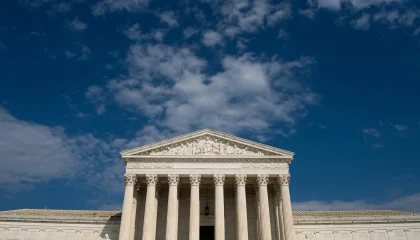
The Supreme Court’s February ruling represented a substantial reversal of decades of American trade policy, which had generally favored reduced tariffs and freer commerce. The Court determined that the president lacked authority under the 1977 International Emergency Economic Powers Act (IEEPA) to impose import taxes, a power constitutionally vested in Congress. This legal defeat necessitated refund payments to importers who had already settled the levies.
The financial consequences became immediately apparent. Import tax revenue reached a peak exceeding $31.4 billion last October. Following the Court’s decision, collections declined to $22 billion in both March and April. As refund distributions accelerated beyond incoming Section 122 revenue, the Treasury experienced a $42 million deficit in May, followed by a substantial $25.6 billion shortfall in June.
Trump and Treasury Secretary Scott Bessent have committed to utilizing alternative legal mechanisms to recover the lost funds. The administration must now complete procedural requirements, including public comment collection and formal hearings, before implementing Section 301 measures.
Business Uncertainty and Future Outlook
Fluctuations in tariff policy have created considerable hesitation among businesses regarding investment decisions. The transition toward rule-based Section 301 mechanisms should reduce some volatility, though complete certainty remains elusive.
“There’s less uncertainty but not no uncertainty,” said Sarah Bianchi, a former U.S. trade official who is now chief strategist of international political affairs at the investment research firm Evercore ISI.
The administration has initiated two major Section 301 investigations as part of its strategy to replace depleted tariff revenue. One investigation targets 60 nations, which collectively represent 99 percent of American imports, alleging systematic failures to comply with fair trade standards.