
As former Nato chief warns about defence spending, how much has the military shrunk?
As former Nato chief warns about defence spending, how much has the military shrunk?
Former NATO secretary general Lord Robertson has raised concerns that the UK’s security is at risk due to insufficient investment in its military. He argues that relying on an increasing welfare budget alone is inadequate for maintaining national defence. BBC Verify has examined the current scale of the UK armed forces, revealing a significant decline since the end of the Cold War.
The British Army, which once boasted 153,000 regular soldiers in 1990, now has around 73,790 troops. This reduction has sparked debate, especially as the 2025 Strategic Defence Review (SDR) aims to keep the regular force above 73,000. However, the Ministry of Defence (MoD) reported a 40% drop in enlistment applications in 2025 compared to the previous year. Meanwhile, the number of reservists has fallen from 76,000 to 25,770 since 1990.
Naval and Air Forces: A Shift in Strength
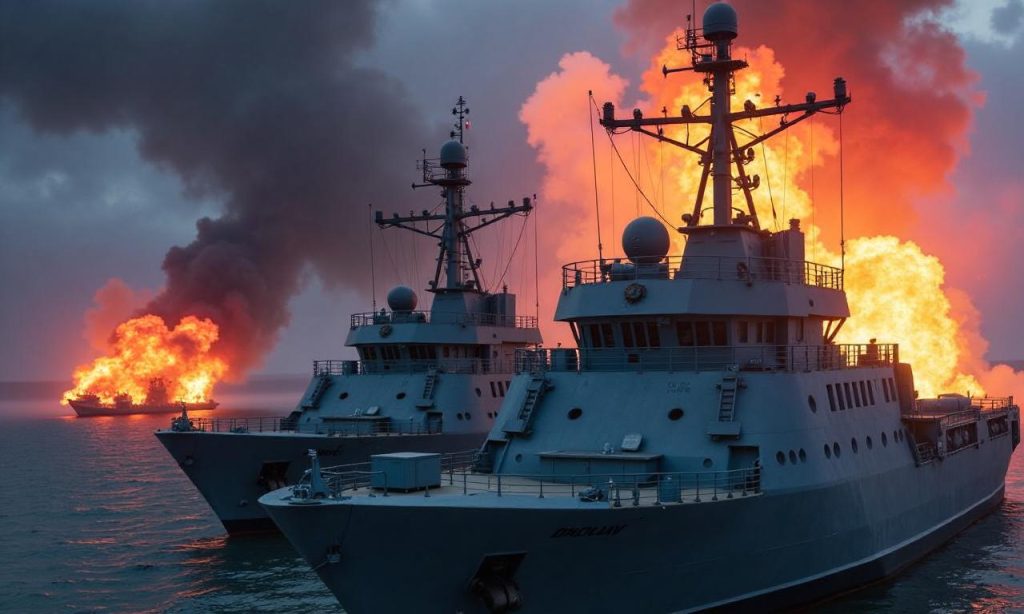
The Royal Navy’s fleet has diminished from 48 major combat ships in 1990—comprising 13 destroyers and 35 frigates—to just 11 frigates and 6 destroyers today. The Royal Air Force (RAF) has also seen a decline in its combat jet numbers, from over 300 to 137 Eurofighter Typhoons and at least 37 Joint Strike Fighter F-35 Lightning II aircraft. Despite this reduction, the newer planes are technologically advanced. Uncrewed aircraft systems, or drones, have emerged as a critical component of the UK’s air capabilities, a development unseen in 1990.
In the Ukraine conflict, drones have demonstrated their effectiveness, surpassing traditional artillery in casualties. Analysts emphasize the need for greater investment in this technology. Yet, the government maintains that it is pursuing a “largest sustained increase in defence spending since the Cold War,” aiming for 2.5% of GDP by April 2027 and 3% in the next parliamentary session.
Procurement Challenges and Criticisms
The MoD oversees some of the government’s biggest procurement projects, managing 47 out of 213 in the Government Major Projects Portfolio (GMPP) during 2024-25. The National Audit Office (NAO) recently highlighted delays, noting that 12 of these projects were rated ‘Red,’ meaning their success seems improbable. Over time, the MoD has faced recurring issues in meeting performance, cost, and timeline targets.
Contract awarding for projects over £20 million has taken an average of six and a half years, according to the NAO. This inefficiency contrasts with the 2025 SDR’s recommendation for a “segmented approach” to streamline procurement and deliver contracts within two years. The review also pointed to growing threats from Russia since 2022, the ongoing Middle East conflict, and uncertainties about the US’s role in NATO as reasons for increased defence spending.
Comparative Spending and Future Goals
The UK’s 2025 defence spending of 2.3% of GDP places it near the midpoint of NATO members’ contributions. While the government has set an ambition to reach 3% by the next Parliament, it still trails behind several countries. Poland, Lithuania, and Latvia exceeded the 3.5% threshold in 2025, with Estonia and Norway nearly matching it. The broader NATO target of 5% GDP for national security by 2035 includes 3.5% for core defence and an additional 1.5% for infrastructure protection and civil preparedness.
“We cannot defend Britain with an ever-expanding welfare budget.”