
After Trump’s attacks, Supreme Court Justice Neil Gorsuch determined to stay ‘fearless’ and ‘independent’
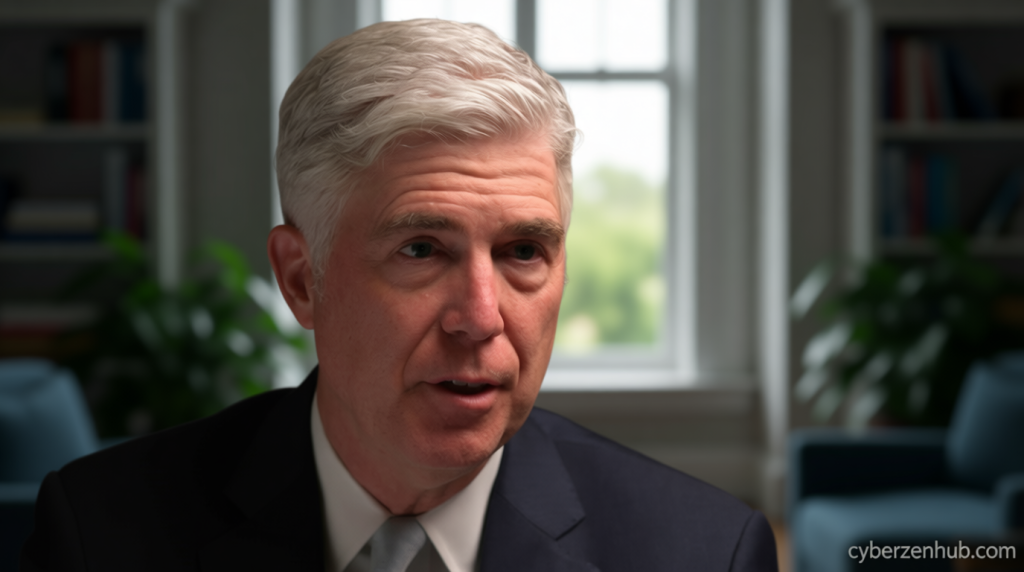
Supreme Court Justice Neil Gorsuch Determined to Stay ‘Fearless’ and ‘Independent’ Amid Trump’s Criticism
After Trump s attacks Supreme Court – Supreme Court Justice Neil Gorsuch addressed public criticisms from President Donald Trump during an interview with ABC News Live Prime anchor Linsey Davis. The exchange, conducted ahead of the release of a new children’s book, revealed his resolve to uphold judicial independence and integrity despite the sharp rhetoric from the leader he was appointed by. Gorsuch emphasized that his role as a judge requires him to remain unwavering in his decisions, even when facing personal attacks that challenge his impartiality.
Trump’s Lashing Out After the Vote
Earlier this year, Gorsuch’s vote against Trump’s sweeping global tariffs in February sparked a fierce backlash from the president. Alongside Chief Justice John Roberts and Justice Amy Coney Barrett, Gorsuch joined the court’s three liberal justices in striking down the policy, a move that prompted Trump to condemn his nominees. The president labeled them as “a disgrace,” “disloyal,” and “unpatriotic,” accusing them of being “fools and lapdogs” who failed to align with his vision for the nation. Gorsuch, however, remained unfazed, using the opportunity to reflect on the values that define the American judiciary.
“We want independent judges, people who are fearless and able to apply the law without respect to persons, as our judicial oath says, right? That’s why we’re giving life [tenure] to anybody, and it’s quite an honor,” Gorsuch said during the interview.
The comments from Trump prompted Gorsuch to draw a connection between the current political climate and the ideals set forth in the Declaration of Independence. He described the founding document as a symbol of the nation’s commitment to fairness and freedom, arguing that these principles must remain central to judicial decision-making. “It’s a humbling privilege to be able to serve in this capacity, and I’m just one link in a long chain,” he added, underscoring the collective nature of the judiciary’s mission.
Gorsuch’s Reflections on the Founding Charter
Discussing the nation’s foundational text, Gorsuch highlighted its historical significance and the challenges it faced during its creation. “We tell the story about the debate that led up to [the Declaration],” he explained. “It almost didn’t go through.” He noted that the document’s survival was not guaranteed, and that the same risks persist today as political tensions threaten the cohesion of democratic institutions. “None of this is inevitable, and it isn’t inevitable that it will survive,” he said, reflecting on the fragility of America’s democratic ideals.
Gorsuch’s remarks came in the context of his upcoming book, “Heroes of 1776: The Story of the Declaration of Independence,” which was officially released Tuesday. The publication coincided with his appearance on ABC News’ “All Access” program, where he discussed the importance of preserving the nation’s founding values. “America’s biggest enemy is itself,” he stated, warning that without sustained commitment from each generation, the legacy of the Declaration could erode.
“What keeps me up at night is disagreements that we have, and our sometimes incapacity to realize the humanity of the people we disagree with,” Gorsuch said, addressing the broader implications of political polarization.
Before his confirmation to the Supreme Court in 2017, Gorsuch had already faced scrutiny from Trump. The president, in his first term, had targeted federal judges who opposed his policies, casting doubt on their loyalty. At the time, Gorsuch described the attacks as “disheartening” and “demoralizing,” a sentiment that echoed in his recent reflections. Now, as a conservative justice, he expressed concern over the growing trend of personal attacks against judicial figures. “A surge in personal criticism can be dangerous,” he noted, though he acknowledged that such critiques are part of democratic discourse.
Gorsuch also touched on the recent attempted assassination of Trump at the White House Correspondents’ Dinner, calling it a pivotal moment in the nation’s political landscape. “This episode appeared to be part of a broader deterioration of civility in politics,” he observed, linking the event to the increasing hostility toward judicial independence. He stressed that even in disagreement, judges must maintain faith in the institutions they represent, as their role is to serve the public interest rather than personal agendas.
Enduring Relationships and Institutional Loyalty
Despite his conservative leanings, Gorsuch has maintained a public rapport with liberal Justice Sonia Sotomayor, a relationship that has become notable in recent years. The two have collaborated on several occasions to promote civics education and bolster public trust in the judiciary. Gorsuch’s interactions with Sotomayor highlight his belief in the importance of bipartisan cooperation, even as the court remains divided on key issues.
“When I disagree with my colleagues … I never question that the person sitting across from me loves this country every bit as much as I do, that they love the Constitution and Declaration [of Independence], and that they’re doing their best,” Gorsuch said, reflecting on the shared dedication of all justices to the nation’s principles.
This sentiment underscores Gorsuch’s commitment to the judiciary as an institution, rather than as a political tool. While Trump’s attacks have been a recurring theme, Gorsuch insists that the role of a judge is to remain neutral and principled. “Part of the job of the judge is to accept criticism,” he explained. “Everybody’s got a right to free speech. It’s a raucous thing in democracy, and that’s good. That’s great.” He added that the ability to critique and be critiqued is essential to the functioning of a free society, provided it is done with respect for the law.
As the conservative justice prepares for his tenth year on the bench, Gorsuch’s reflections on the past and present of the Supreme Court reveal a blend of historical awareness and contemporary resolve. He drew parallels between the 1776 debates and modern political struggles, emphasizing that the spirit of the Declaration remains relevant in today’s divided climate. “It’s part of our story too, is realizing, again, that the person sitting across from you probably loves his country every bit as much as he did,” he said, a reminder of the shared purpose that binds the nation’s legal and political leaders.
Gorsuch’s comments also serve as a counterpoint to Trump’s broader narrative of judicial loyalty. While the president has often framed his appointees as ideologically committed to his agenda, Gorsuch argues that the judiciary’s strength lies in its independence from partisan pressures. He acknowledged that personal attacks can be intense, but he maintained that they are not inherently detrimental to the court’s mission. “Even if intense criticism is fair game,” he said, “it’s crucial that judges remain fearless in their decisions.”
The interview with Linsey Davis, which aired as part of ABC News’ “All Access” series, provided a rare glimpse into Gorsuch’s personal and professional philosophy. As he prepared to launch his children’s book, a project that aims to educate younger generations about the nation’s founding, he reiterated his belief in the enduring values of the Declaration of Independence. “We have to recommit every generation … if we’re going to carry those ideals forward,” he stated, a call to action that resonates beyond the courtroom.
Gorsuch’s defense of judicial independence has been a recurring theme in his public statements, particularly in light of the recent surge in attacks against judges. While Trump has often targeted dissenting voices within the court, Gorsuch remains steadfast in his conviction that the judiciary must act as a bulwark against partisan influence. “It’s a dangerous trend,” he admitted, but he viewed it as a challenge that could strengthen the system if met with resilience and principle.
The justice’s words are not only a personal statement but also a broader commentary on the state of American democracy. By connecting the present to the past, Gorsuch emphasizes the cyclical nature of political strife and the importance of preserving the institutions that safeguard liberty. His reflections, delivered with a mix of pragmatism and idealism, highlight the delicate balance between judicial independence and the pressures of a polarized political environment. In doing so, he reaffirms his commitment to the role he was entrusted with, even as he faces the scrutiny of the leader who appointed him.