Gallego Blames Trump Admin for USS Lincoln Conditions
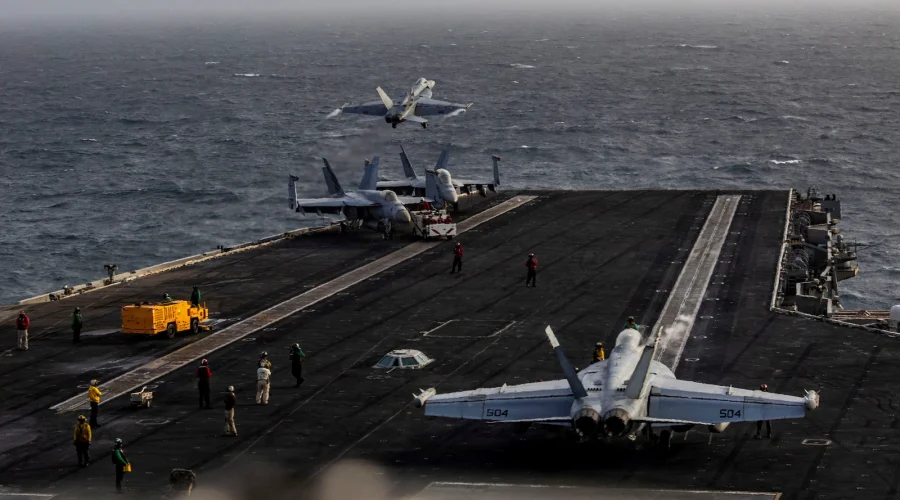
Cyberzenhub.com – In a pointed critique aired on ABC News’ “This Week,” Arizona Senator Ruben Gallego — a former Marine himself — placed direct blame on the White House for what he called an unplanned escalation that stranded the aircraft carrier USS Abraham Lincoln at sea far beyond its intended timeline. Speaking with co-anchor Martha Raddatz, Gallego argued that the administration’s failure to anticipate how the conflict with Iran would unfold has left sailors aboard the Lincoln enduring conditions he described as symptomatic of a deeper strategic breakdown.
The carrier has now spent close to nine months in the Middle East theater and more than 200 consecutive days without docking at any port. That stretch ranks among the longest uninterrupted deployments in recent Navy history, and it has triggered alarm both among families waiting at home and within congressional oversight panels monitoring shipboard welfare.
“They Did Not Plan for This War”
Gallego told Raddatz that his concerns were not retrospective. He had spoken with a sailor’s spouse just three days before the broadcast and described ongoing, unresolved problems aboard the ship. His language made clear where he located responsibility.
“I was just speaking to a spouse just about three days ago and this is the current problems right now,” Gallego said. “It really goes to the deep, deep, deep problem here is that this administration did not plan for this war, did not plan how to get out of this war, did not really understand how this war was going to escalate.”
The senator’s remarks arrived alongside a broader Democratic effort to compel a formal inquiry into conditions on the Lincoln. Multiple members of Congress have framed the sheer length of the deployment as a welfare issue in its own right, independent of any single incident reported by crew families.
Administration Pushback and the Retention Problem
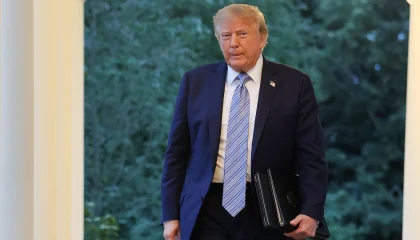
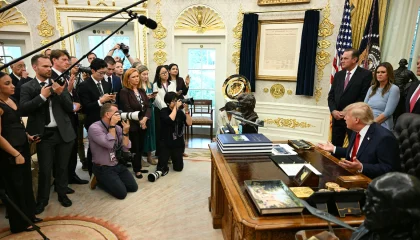
The White House response was quick and dismissive. Defense Secretary Pete Hegseth labeled reports of deteriorating shipboard conditions “completely misrepresented,” while President Donald Trump, asked whether the mission had stretched too far, answered that it was “not nearly long enough.” To many observers, treating an already extraordinary period at sea as insufficient struck a tone-deaf note toward sailors who have been away from home for close to a year.
Gallego warned that such public postures carry consequences well beyond the political moment. When service members return and sit down with their spouses to weigh re-enlistment, visible indifference from leadership becomes a retention crisis. He called the situation “a true lack of leadership” from both the secretary of Defense and the president.
“When they get back to home, when they start having that conversation with their wife or with their husband — is it worth rejoining? They’re going to have to think twice because look at how this leadership is treating them,” Gallego said.
The retention angle carries practical weight. The Navy has spent years stabilizing its enlisted ranks amid competition from civilian employers and periodic pay disputes. Public signals that commanders prioritize mission duration over crew welfare can accelerate attrition precisely when experienced hands are needed on carrier decks.
Mullen: Overruns Happen, but This One Takes a Toll
Retired Admiral Mike Mullen, former chairman of the Joint Chiefs of Staff, offered a more measured yet still critical perspective in his own “This Week” appearance. He acknowledged that carrier deployments frequently exceed planned time frames and that such overruns are not unprecedented.
Yet when pressed on Trump’s suggestion that the Lincoln’s mission had not yet gone long enough, Mullen pushed back firmly. Drawing on Vietnam-era experience, he noted that sustained year-long deployments wore down both ships and crews alike.
“We learned in Vietnam, we deployed for a year at a time there. That’s just too long. You wear yourself out,” Mullen said. “These ships, these people, these families need to basically come back.”
Mullen added that he had spoken with U.S. Central Command commander Brad Cooper on Saturday evening. According to Mullen, Cooper reported that shipboard problems aboard the Lincoln had been addressed and that crew morale improved noticeably once sailors learned they would be rotating home.
Frequently Asked Questions
How long has the USS Abraham Lincoln been deployed without a port call?
The carrier has been underway for nearly nine months, with more than 200 consecutive days spent at sea without docking at any port.
What exactly did Senator Gallego accuse the administration of?
Gallego accused the Trump administration of failing to plan for the war’s escalation, failing to plan an exit strategy, and thereby exposing sailors to conditions he called a “true lack of leadership.”
How did the White House respond to the criticism?
Defense Secretary Pete Hegseth dismissed reports of deteriorating conditions as “completely misrepresented,” and President Trump said the deployment was “not nearly long enough.”
What did Admiral Mullen say about deployment length?
Mullen cited Vietnam-era experience to argue that year-long deployments are too long, stating that ships, personnel, and families all need rotation home.