US Pulls Last Aircraft Carrier in Asia as Trump Shifts Focus
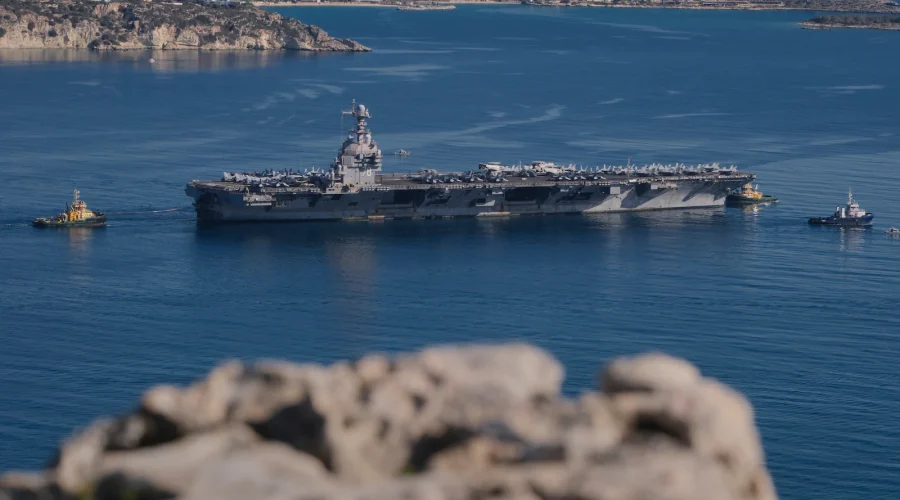
Cyberzenhub.com – The United States is experiencing an unusual moment in its naval posture: for the first time in recent memory, no aircraft carrier is stationed in the western Pacific. This gap coincides with President Donald Trump’s intensified military engagement with Iran and a broader recalibration of American priorities toward the Western Hemisphere. The departure of the USS George Washington from Pacific waters, coupled with the extended deployment of the USS Abraham Lincoln in the Middle East, has created a temporary void that regional allies are watching closely.
Carrier Realignment Amid Growing Tensions
The George Washington is scheduled to replace the Lincoln in Middle Eastern waters, where it will support ongoing operations against Iran. The Lincoln, which was originally slated to return to port in May, has had its deployment extended due to the escalating situation. This dual-carrier movement has left the Pacific without its traditional naval anchor, a situation that could prove significant given China’s increasingly assertive behavior in the region.
While the Navy may deploy another carrier within the coming months, the current absence carries symbolic weight. Analysts note that the open-ended nature of American operations in the Middle East is taking a toll on sailors’ mental health and creating supply challenges aboard the long-deployed vessels. The situation reflects a broader administrative retreat from Asia-Pacific commitments.
“The administration says that the Pacific is supposed to be the most important behind the Western Hemisphere,” said Greg Poling, director of the Southeast Asia Program at the Center for Strategic and International Studies. “Instead, the U.S. is doing the exact opposite” of its previously expressed goal of pulling out of the Middle East.
Regional Allies Navigate Uncertainty
American partners in the Pacific are grappling with what they perceive as inconsistent American policy. Poling observed that Beijing views the current American distraction favorably, noting that China is “quite happy with U.S. distraction, with the frustration of U.S. allies and partners.” The Chinese government sees America’s military presence as both a threat to its rise and an obstacle to its ambitions regarding Taiwan, the self-governing island it claims as sovereign territory.
Despite the carrier’s absence, most experts do not anticipate an immediate Chinese invasion of Taiwan. However, the timing provides Beijing with an opportunity to project strength. Bryan Clark, a former Navy submariner and defense analyst at the Hudson Institute, explained that China is leveraging this moment to reshape regional perceptions.
“They’re using this as part of the narrative to demonstrate to the Philippines, to Japan, to Indonesia and others that the U.S. is not the big dog in the western Pacific anymore,” Clark said. “They would just prefer that countries in the region decide that China is the bigger power and the U.S. is not able to guarantee their security anymore.”
Chinese Military Activity Intensifies
Beijing has been active in demonstrating its capabilities. This week, China conducted naval exercises with Indonesia, while also showing increased aggression toward Japan and the Philippines—two key American allies with territorial disputes with Beijing. Military drills near the Scarborough Shoal in the South China Sea were carried out this month, an area where both China and the Philippines assert claims. Additionally, a Chinese guided-missile destroyer conducted live-fire exercises off Japan’s southernmost island of Okinotori last month.
Admiral Frank Bradley, head of the U.S. Special Operations Command, has been working to reassure regional partners of Washington’s continued commitment. During a visit to Manila on Thursday, Bradley told Filipino counterparts that American special operations forces are prepared to expand joint exercises to strengthen bilateral ties. A trip to Japan is also anticipated.
Carrier Operations Under Scrutiny
Evan Sankey, a policy analyst at the Cato Institute focusing on U.S.-China relations, emphasized that aircraft carriers serve a crucial psychological function for American allies. Their absence, he noted, “adds to the general sense that the U.S. is distracted by events in the Middle East.”
Trump has relied heavily on carriers during his second term. The USS Gerald R. Ford completed an 11-month deployment in mid-May—the longest since the Vietnam War—while supporting operations against Iran and the capture of Venezuela’s then-leader, Nicolás Maduro. The Ford experienced a fire in a laundry space that forced it to return to the Mediterranean for repairs, leaving hundreds of sailors without sleeping quarters.
Frequently Asked Questions
Why is the US pulling its last aircraft carrier from Asia? The United States is redeploying carriers to support operations in the Middle East, particularly regarding Iran, while recalibrating its strategic focus toward the Western Hemisphere.
Which carriers are currently deployed outside the Pacific? The USS George Washington and USS Abraham Lincoln are both operating in Middle Eastern waters, creating the first recent absence of carriers in the western Pacific.
How does this affect regional security? China is leveraging this moment to project strength and reshape regional perceptions, though experts do not anticipate an immediate invasion of Taiwan.
When might carriers return to Asia? The Navy may deploy another carrier within the coming months, though the current absence carries significant symbolic weight for regional allies.