
USS Abraham Lincoln Nears Homecoming After Historic 10-Month Mission
Cyberzenhub.com – The USS Abraham Lincoln carrier strike group is expected to reach its San Diego homeport on Thursday, ending a deployment that stretched across 10 months and included major operations in the Middle East during the war with Iran.
By the time the Nimitz-class aircraft carrier returns, the strike group will have spent 321 days deployed. That makes it the second-longest U.S. carrier deployment since the Cold War ended. The USS Gerald R. Ford holds the current record after completing a 326-day mission earlier in 2026 that covered Europe, the Caribbean and the Middle East.
The Lincoln’s time away from home was especially notable for the 265 consecutive days it spent between port visits, a new benchmark for a carrier strike group. Modern carrier deployments commonly last about seven months, making the length of this mission an exceptional test for sailors, their families and the Navy’s logistics system.
Hegseth Visits Crew Before Return to San Diego
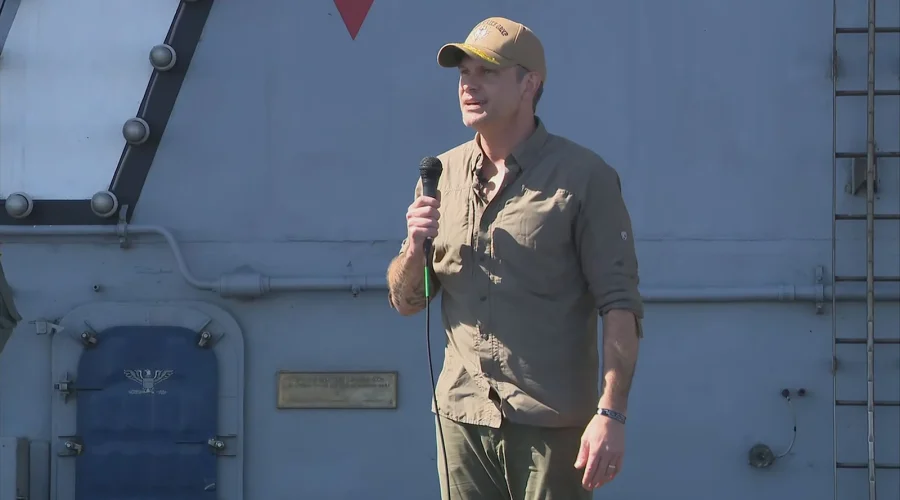
Defense Secretary Pete Hegseth boarded the Lincoln on Wednesday as the ship prepared to conclude its mission. Speaking to sailors assembled on the flight deck, he thanked them for maintaining operations through repeated extensions and demanding combat conditions.
Hegseth said he had personally extended the deployment twice, describing those decisions as necessary because of the group’s role in the conflict and the confidence placed in the crew by President Trump.
“I plead guilty, A., because of the incredible effectiveness that you showcased on the battlefield and the necessity. But also B., the mission required it, and C., because President Trump had full faith that you would deliver on behalf of the American people, and you did.”
He said the Abraham Lincoln strike group accomplished work unlike that performed by any previous carrier group, citing thousands of missions and extensive combat activity during its time at sea.
“What the USS Abraham Lincoln Carrier Strike Group did, no other carrier strike group has ever done.”
Among the figures Hegseth highlighted were 10,000 sorties, 23,000 combat flight hours, nearly 4,000 combat sorties and about 1.5 million pounds of ordnance used against enemy targets.
Combat Operations Against Iran
During a later presentation of the Presidential Unit Citation, Hegseth provided additional details about the strike group’s operations against Iran. The unit award recognizes exceptional distinction by military organizations in action.
The citation said the carrier group conducted 3,693 combat sorties and used 1.37 million pounds of ordnance against Iranian targets. Warships operating alongside the carrier launched 450 Tomahawk cruise missiles during the campaign.
The strike group also took part in defensive operations against Iranian threats at sea and in the air. Its forces shot down 77 Iranian one-way attack drones and 21 anti-ship cruise missiles. They defended against four fast-attack craft and explosive-laden dhows, while also contributing to the sinking of 64 Iranian warships.
The carrier’s embarked aircraft had already departed earlier in the week for their home bases in California and Washington state. Their return marked one of the final steps before the ship itself headed back to Southern California.
Long Deployment Brings Strain as Well as Recognition
The mission’s operational achievements came with significant human and logistical pressures. Supply disruptions that began with the war affected food stocks aboard the Lincoln, while the extended period at sea raised concerns about the crew’s well-being.
Eight suicide attempts occurred aboard the carrier during the deployment. One sailor went overboard and was later rescued. A U.S. official said the total appeared to fall toward the lower end of the range experienced during carrier deployments, but the incidents nevertheless underscored the strain associated with lengthy missions.
Hegseth rejected portrayals of the ship as an example of poor morale or an unsuccessful operation, telling sailors that his discussions with commanders and crew members had given him a different impression.
“There were a few folks in the media who tried to turn the USS Abraham Lincoln into some sort of a symbol. A symbol of dysfunction, or a symbol of low morale, or a symbol of a failed mission.”
“What I look out right here or when I talk to your leadership, and I haven’t had a chance to talk to a number of you, I know it’s the exact opposite.”
Lessons for the Next Carrier Deployment
Navy leaders have said the Lincoln’s experience is already influencing preparations for future extended carrier operations. The USS Theodore Roosevelt left San Diego about a week earlier for a Middle East deployment, carrying lessons learned from the Lincoln’s unusually long mission.
Adm. Daryl Caudle, the Chief of Naval Operations, said the Roosevelt is increasing supplies before departure, including food, retail products and hygiene items. Sailors are also converting available areas into extra storage in an effort to improve the ship’s ability to sustain itself for longer periods.
“Roosevelt is maximizing its load-out of food, retail products and hygiene items before getting underway.”
The Lincoln’s return will reunite sailors with families after a deployment that reshaped expectations for carrier readiness, supply planning and endurance. Its 321 days away from San Diego will stand as one of the longest post-Cold War carrier missions, defined by intense combat operations, prolonged separation from home and a demanding test of the Navy’s ability to keep a strike group operating far from port.
Related Reading
Frequently Asked Questions
What is Hegseth greets USS Abraham Lincoln near?
Hegseth greets USS Abraham Lincoln near is the main topic of this guide. The article explains the context, practical details, and next steps readers should understand.
Why does Hegseth greets USS Abraham Lincoln near matter?
Hegseth greets USS Abraham Lincoln near matters because readers are looking for a useful answer, not just a short summary. Good content should match search intent and help them decide what to do next.