Trump Doubles Down on Reflecting Pool Vandalism Claims Without Providing Evidence
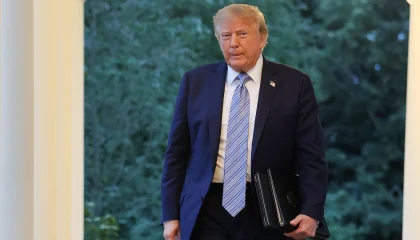
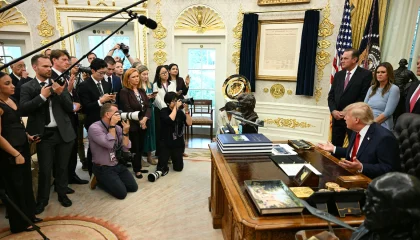
Cyberzenhub.com – President Donald Trump reiterated his allegations of vandalism against the recently renovated Lincoln Memorial Reflecting Pool on Monday, insisting that a “350-foot slit” had been made through the pool’s lining using a “box-cutter or a knife of some kind.” During a press briefing, he described the incident with dramatic emphasis, claiming that vandals had “cut it very violently” and “lifted it” to cause visible damage. “I saw it,” he said, “they cut it, they cut it very violently.” The pool, which was part of a major overhaul under the Trump administration, has faced criticism for its deteriorating condition, including algae growth and peeling blue sealant, since its completion.
Vandalism Claims and Renovation Details
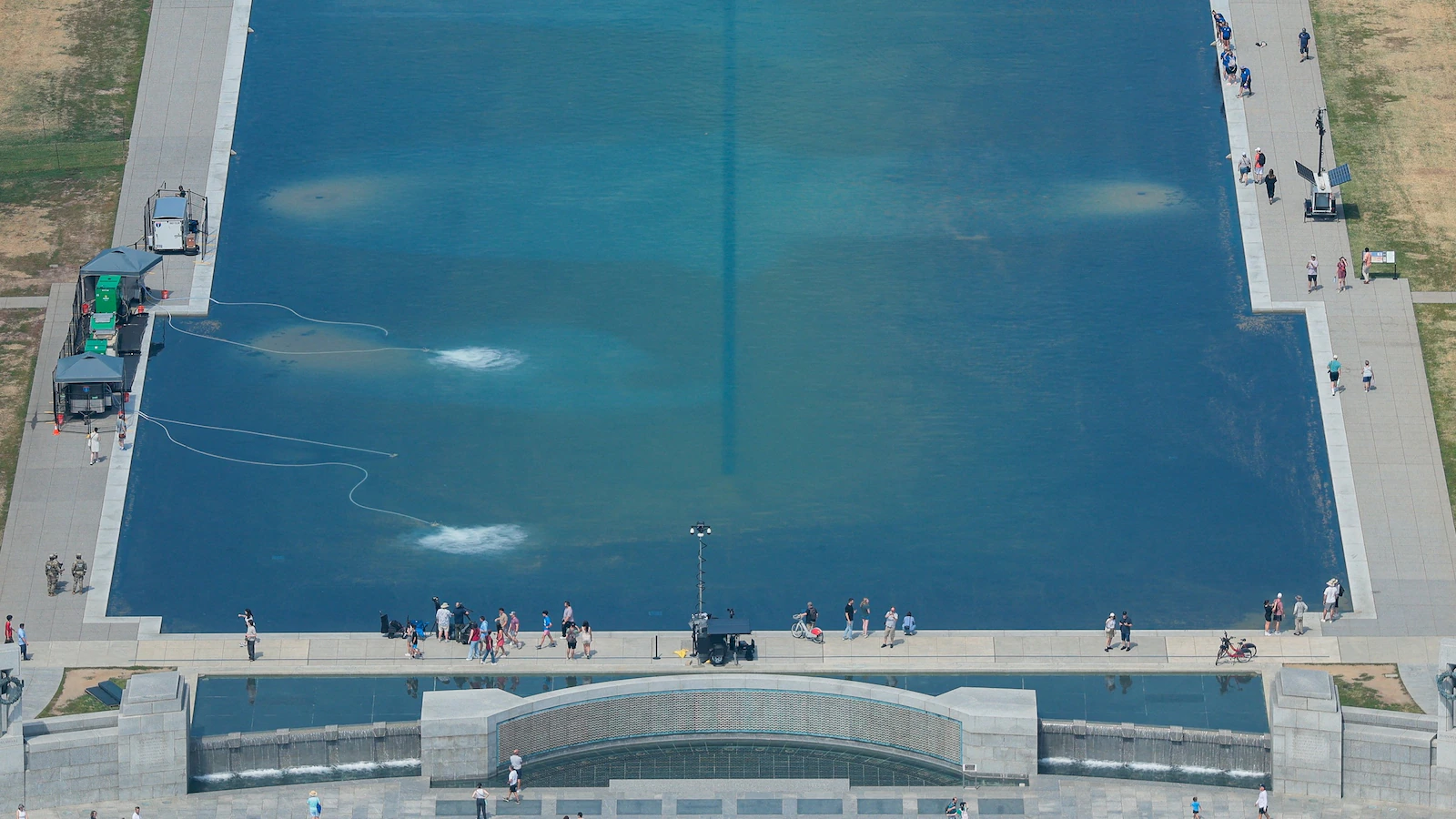
The renovation project, which cost over $16 million, exceeded initial estimates by more than $4 million, raising questions about its financial management. Trump’s accusation of vandalism came after the pool was unveiled as part of a larger effort to revitalize the National Mall for the 250th anniversary of U.S. independence. Despite the costly overhaul, the pool has been marred by visible issues, with algae forming a murky green layer and paint chipping off the floor. While the White House and the Interior Department have not released concrete evidence to support Trump’s claim of deliberate cuts, they have pointed to the U.S. Park Police for details on ongoing investigations.
“The algae is residual and comes from reactivated supply lines,” said an Interior Department spokesperson in a statement to CNN. The official emphasized that the algae issue was a natural byproduct of the renovation process, not a sign of intentional damage. However, Trump has framed the problem as a result of sabotage, suggesting that vandals targeted the pool’s structure to cause chaos.
Cleanup efforts continue, with workers addressing both the algae and the damaged flooring. Photos from Reuters and EPA/Shutterstock show the pool’s condition, highlighting the contrast between its intended grandeur and the visible signs of wear. Trump, who had previously posted about the alleged cuts on his social media platform, directed reporters to the Interior Department and the National Park Service for proof, but did not provide any visual or documentary evidence himself.
Evidence and Accountability
Although the president claimed to have witnessed the damage firsthand, he offered no direct proof of the “slit” he described. When asked for clarification, Trump hesitated, suggesting that the evidence would be unveiled “at the right time” during court proceedings. “You’d have to go to the Parks Department. They’ll show it to you,” he said, leaving the public to speculate about the validity of his claims. The Interior Department has since confirmed that five individuals were arrested and five others received federal citations for alleged vandalism, with 14 police reports filed to document the incidents.
“The U.S. Park Police will continue to uphold law and order in our nation’s capital,” stated the spokesperson, adding that the vandalism cases included the crime referenced in Trump’s social media post. However, the department has yet to release photographs or detailed reports of the damage, fueling skepticism about the extent of the alleged sabotage.
Trump’s initial claim on his platform had described a 250-foot-long “gash” in the pool’s lining, which he attributed to vandals. Despite this, neither the Interior Department nor the White House has provided photographic or physical proof to substantiate the claim. This lack of evidence has led critics to question whether the allegations are being used to deflect blame from the administration’s management of the renovation.
Algae and Potential Causes
While the algae issue has been a focal point of criticism, the Interior Department has maintained that it is a result of the pool’s reactivated supply lines. “Residual algae is a normal occurrence during the restoration phase,” the spokesperson clarified, though Trump suggested that the algae growth might be the consequence of intentional acts. He mused about the possibility that fertilizer was introduced into the pool to accelerate algae formation, a theory that has not been officially confirmed.
The pool’s problems have sparked broader discussions about the effectiveness of the renovation. Some have pointed to the blue sealant peeling off the floor as a sign of poor materials or construction. Others argue that the algae and structural damage could indicate a combination of factors, including both natural degradation and potential human interference. The National Park Service has been working to address these issues, but Trump has accused them of covering up the damage, calling the situation a “big thing” that needs to be resolved.
Grass Damage Incident
Adding to the controversy, Trump also criticized the National Mall for the presence of an “86 47” that was burned into the grass last week. He described the letters as “massive” and claimed that the Park Service had failed to adequately cover them up. “They destroyed the grass,” he said, according to Reuters footage. “So, that’s a big thing, but we’re going to get it back very soon.” The markings, which were likely a protest or political statement, have become increasingly visible despite efforts to conceal them.
Trump’s comments reflect a pattern of using public infrastructure as a platform for political messaging. By linking the Reflecting Pool’s condition to vandalism, he has positioned the issue as a symbol of opposition to his administration. While the U.S. Park Police have not confirmed any deliberate sabotage, the lack of transparency surrounding the renovation’s details has left room for further scrutiny. The administration’s response to the allegations has been cautious, with officials emphasizing that the investigation is ongoing and that evidence will be shared when appropriate.
As the cleanup continues, the debate over the pool’s condition remains unresolved. Critics argue that Trump’s claims lack substantiation, while supporters view them as a necessary critique of the renovation’s impact. The “86 47” incident and the algae issue have become emblematic of the broader narrative surrounding the project, with the president asserting that the pool’s problems are a direct result of intentional acts. Whether these claims hold water or are merely a strategic move to shift focus from the renovation’s financial overruns, the situation underscores the political stakes tied to public spaces.
ABC News’ Jack Date and Luke Barr contributed to this report. The article highlights the intersection of political rhetoric and infrastructure maintenance, as Trump’s repeated assertions of vandalism without evidence draw attention to the challenges of holding public officials accountable for their projects. As the investigation unfolds, the Reflecting Pool stands as a test case for the administration’s ability to address both physical and symbolic damage to its legacy.