
What to watch for in high-stakes Trump-Xi meeting
What to Watch for in High-Stakes Trump-Xi Meeting
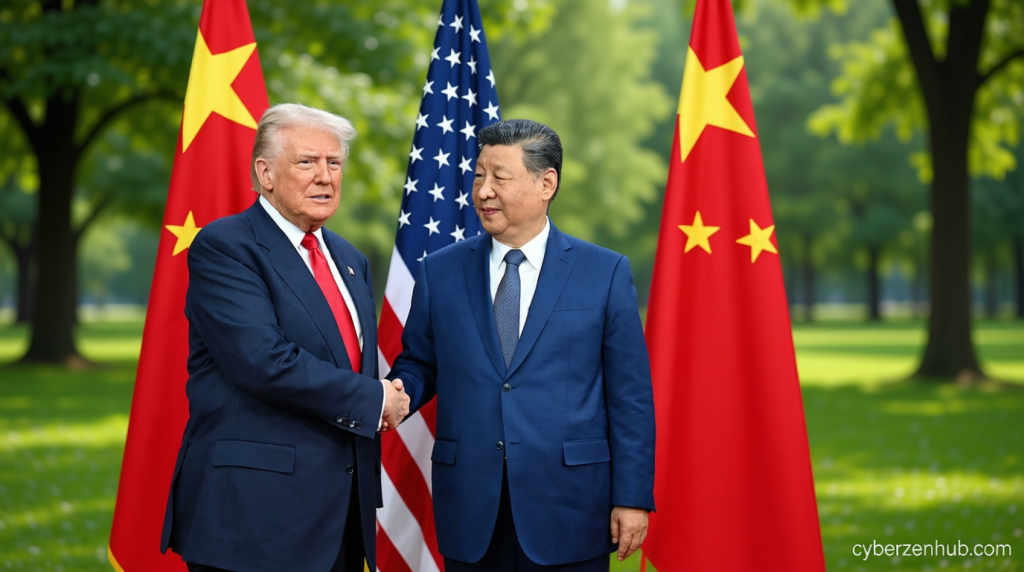
What to watch for in high – President Donald Trump’s upcoming visit to Beijing marks his first trip to the country in almost a decade, a significant milestone as he steps into a new geopolitical landscape. The last U.S. president to make such a journey was Trump himself in 2017. This current itinerary, however, unfolds under entirely different circumstances, primarily due to the ongoing Iran conflict. Originally planned for earlier this spring, the trip was delayed as the Iran war escalated. Trump had anticipated a brief engagement, estimating the conflict would last between four to six weeks. Yet, the prolonged standoff, with the Strait of Hormuz remaining closed and U.S. gas prices climbing, has shifted the balance of power in favor of China.
The Changing Dynamics of Power
According to experts analyzing the region, the prolonged conflict has altered the leverage dynamic, presenting a unique opportunity for Beijing. The war has created a scenario where the United States is preoccupied with multiple crises, both domestically and internationally, making it less likely to escalate tensions with China. Beijing, on the other hand, has already demonstrated its capacity to retaliate, as seen through tariffs and rare earth export controls, actions that forced the Trump administration to retreat. Analysts suggest that Xi Jinping now holds a strategic advantage, with Trump’s domestic and global challenges limiting his ability to pursue aggressive policies toward China.
“China has emerged as a relative bright spot in Trump’s foreign policy,” said Jon Czin, a former China director at the National Security Council. “This shift has given Xi a strategic advantage as Trump navigates multiple crises both domestically and internationally.”
The war’s impact extends beyond immediate military confrontations. It has created a ripple effect on global energy markets, with Beijing’s export-dependent economy bearing the brunt of disruptions. Experts note that the energy crisis and the resulting decline in global demand are substantial challenges for China, which had hoped the conflict would remain a regional issue. However, the prolonged state of war has allowed Xi to consolidate influence, positioning China as a key player in negotiations. As the White House seeks to leverage Beijing’s role, the shift in power dynamics becomes increasingly evident.
Strategic Moves in the Indo-Pacific
The U.S. military posture in the Indo-Pacific has been significantly affected by the Iran war. With resources diverted to the Middle East, the American presence in the region has diminished, raising concerns about China’s ability to project power. Daniel Shapiro, a former deputy assistant secretary of defense for the Middle East, highlights how this shift has long-term consequences for deterring China and safeguarding Taiwan. “Trump’s position and leverage at the summit are considerably weaker if he arrives in Beijing with the war still unresolved or even with renewed tensions,” Shapiro noted in an X post. “The Iranians know this, so they are pushing to reduce the conflict’s terms to something more manageable than what Trump originally envisioned.”
Beijing’s response to the U.S. sanctions on Chinese oil refiners and shipping firms has been equally decisive. The Treasury Department recently targeted these entities to cut off funding for Iranian crude, a move that has heightened the pressure on the administration. In an unprecedented move, Beijing invoked a “blocking rule” for the first time, directing Chinese companies to ignore the sanctions. This strategic maneuver underscores Beijing’s determination to protect its economic interests while maintaining diplomatic flexibility. The blocking rule not only shields Chinese firms from U.S. pressure but also signals a readiness to counter any attempts to isolate China globally.
Trump’s Priorities and Beijing’s Calculations
As Trump prepares to meet with Xi, his administration is focused on securing Beijing’s support in resolving the Iran conflict. Secretary of State Marco Rubio has explicitly urged China to use its diplomatic leverage to pressure Tehran into reopening the Strait of Hormuz. During a press conference in Washington, DC, Rubio emphasized, “I hope the Chinese will convey to Tehran the necessity of reopening the Strait of Hormuz, as their current actions are leading to global isolation, making them the perceived villains in this situation.” This statement reflects the White House’s belief that China’s influence over Iran could be a critical tool in reducing the conflict’s impact.
Beyond the Iran issue, Trump is also seeking to capitalize on trade and investment opportunities. Experts suggest that the administration is pushing for Chinese commitments to purchase Boeing planes and U.S. agricultural goods, as well as an extension of the trade truce reached during the last Trump-Xi meeting in South Korea last year. U.S. Trade Representative Jamieson Greer has proposed a “Board of Trade” to oversee economic ties between the two nations, aiming to streamline negotiations and foster mutual cooperation. Analysts believe that these efforts could help mitigate the economic pressures caused by the ongoing war, providing a tangible win for the administration.
The Gap Between Public Narrative and Analyst Insights
While the U.S. government frames the meeting as an opportunity to secure Beijing’s support on Iran, analysts close to China’s policies suggest a different storyline. Beijing’s primary objective appears to be minimizing its involvement in the conflict, focusing instead on economic and strategic gains. Following the meeting with the Iranian Foreign Ministry, Beijing’s response indicated a calculated approach, prioritizing its own interests over immediate resolution of the dispute. This divergence between public statements and private assessments highlights the complexity of the negotiations.
Beijing’s strategy also includes maintaining its economic leverage. The administration’s recent actions, such as sanctions on Chinese oil refiners, have not deterred the country from advancing its interests. Instead, the blocking rule has enabled Beijing to neutralize these measures, demonstrating its resilience. This dynamic suggests that the U.S. may need to adjust its expectations, as China remains steadfast in its position. The meeting, therefore, becomes a test of whether the U.S. can shift the balance of power or if Beijing will continue to assert its influence.
Looking Ahead: A Crucial Test of Diplomacy
With the Iran war lingering and domestic pressures mounting, the Trump-Xi meeting represents a pivotal moment in U.S.-China relations. The administration’s hopes for progress on trade and investment are intertwined with its ability to secure Beijing’s cooperation on the Iran issue. However, the stakes are high, and the outcome will depend on how both sides navigate their competing priorities. For Trump, the visit is an opportunity to reaffirm his position as a deal-maker, while for Xi, it is a chance to strengthen China’s economic and geopolitical standing. As the leaders prepare to engage, the world watches closely to see how this summit shapes the future of their relationship.
The meeting’s success will hinge on the willingness of both parties to compromise. If Beijing can convince Trump to prioritize economic cooperation over military escalation, the outcome could be favorable. Conversely, if the U.S. insists on resolving the Iran conflict first, the negotiations may face hurdles. With the global economy and energy markets in flux, the stakes have never been higher. The Trump-Xi meeting is not just about immediate concerns but also about setting the tone for future interactions, making it a critical event in the broader geopolitical chessboard.