Appeals court rejects Biden bid to block: D.C. Circuit Court Denies Presidential Request to Halt Publication of Memoir Interview Tapes A Divided Panel Finds
D.C. Circuit Court Denies Presidential Request to Halt Publication of Memoir Interview Tapes
A Divided Panel Finds Public Interest Outweighs Privacy Concerns
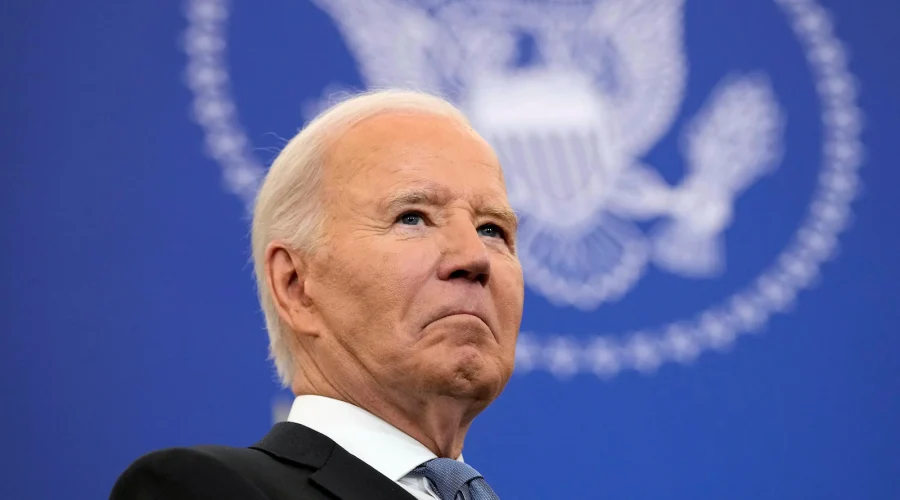
Cyberzenhub.com – A federal appellate court in Washington has declined to grant former President Joe Biden’s request to prevent the publication of audio recordings and written transcripts from interviews conducted with a memoir ghostwriter prior to his election to the presidency. The three-judge panel of the U.S. Court of Appeals for the District of Columbia Circuit issued its decision late Monday in a closely watched case that has drawn attention from legal scholars and political observers alike.
The court’s majority opinion, delivered in a 2-1 vote, determined that there exists a “substantial” public interest in making the materials available to the public. While acknowledging that some privacy protections remain important, the judges concluded that redactions applied to the recordings would adequately safeguard Biden’s personal interests. The ruling emphasized that the balance tips in favor of transparency.
“We conclude that any remaining incursion on personal privacy from disclosure of the now-redacted materials likely does not outweigh the public interest in disclosure,” the ruling states.
The panel suspended its decision until August 3 to provide additional time for Biden’s legal team to evaluate whether to pursue another level of appeal. This brief pause allows the former president’s attorneys to assess the implications of the ruling before making their next strategic move.
Judicial Composition Reflects Diverse Appointments
The three-judge panel that heard the appeal includes members appointed by presidents from both major political parties. Chief Judge Sri Srinivasan, who was nominated by Democratic President Barack Obama, served alongside Judge Gregory Katsas, a Trump appointee. Judge Florence Pan, also nominated by Biden, authored the dissenting opinion.
Pan’s disagreement with the majority highlights the nuanced nature of the privacy debate. In her dissent, she argued that Biden has demonstrated a “substantial privacy interest” in maintaining the confidentiality of the interview recordings. She emphasized the intimate setting in which the conversations occurred.
“The conversations at issue took place in Biden’s home, and the recordings of them were obtained by the government in the course of a criminal investigation that did not lead to an indictment,” she wrote in her dissenting opinion.
Background of the Controversial Recordings
The recordings in question were captured during interviews conducted by Mark Zwonitzer, who collaborated with Biden on two separate memoir projects. Zwonitzer worked on the 2007 publication “Promises to Keep” and the 2017 book “Promise Me, Dad.” The interviews took place at Biden’s residence in 2016 and 2017, when he was serving as vice president under Obama.
Special counsel Robert Hur obtained the recordings while investigating Biden’s handling of classified documents during his tenure as a Delaware senator and as vice president. Although Hur ultimately declined to file criminal charges against the former president, Republican members of Congress pressed for the release of the interview materials.
Biden’s legal team characterized the conversations as candid and personal, arguing they were intended to remain private. The former president filed a lawsuit seeking an injunction to prevent the Justice Department from releasing the recordings to Congress and the conservative Heritage Foundation.
Legal Proceedings and Future Implications
The Department of Justice had previously maintained that the recordings qualified for exemption under public records law. However, U.S. District Judge Dabney Friedrich, another Trump nominee, ruled in June that the public’s interest in the material surpassed Biden’s privacy rights.
Pan pointed out in her dissent that the majority’s decision effectively requires immediate disclosure of the materials by denying Biden’s request for an injunction pending appeal. She noted that this outcome would resolve the current legal dispute.
“That, of course, will moot this case,” she wrote.
The case represents an intersection of presidential privilege, public records transparency, and the evolving legal landscape surrounding classified document investigations. As the August 3 deadline approaches, Biden’s legal team must decide whether to seek further review from a higher court or accept the appellate panel’s determination that the public deserves access to these historical recordings.
Related SEO Topics
- Home
- Artikel terkait Appeals court rejects Biden bid to block
- State officials preparing if the federal government tries interfering with how they run elections
- Iran live updates: Trump says Iran ‘desperately’ wants to meet for ceasefire talks amid new strikes
- Troy Jackson emerges as potential frontrunner to replace Graham Platner in Maine’s Senate race
- Democratic senators want answers about Hegseth’s military testosterone plan
Frequently Asked Questions
What is Appeals court rejects Biden bid to block?
Appeals court rejects Biden bid to block is the main topic covered in this article, with practical context to help readers understand the subject clearly.
Why does Appeals court rejects Biden bid to block matter?
Appeals court rejects Biden bid to block matters because it helps readers compare options, avoid common mistakes, and make a more informed decision.
How should readers use this Appeals court rejects Biden bid to block guide?
Use the key points, examples, and related links in this page as a starting point, then review the latest details before making a final decision.