Federal Election Interference Cyberzenhub.com – State officials preparing if the federal government attempts to interfere with election operations are
State Officials Preparing for Federal Election Interference
Cyberzenhub.com – State officials preparing if the federal government attempts to interfere with election operations are developing comprehensive contingency plans. Election administrators nationwide are building strategies to address potential federal intervention in November’s voting processes. During a recent gathering in Rapid City, South Dakota, bipartisan leaders shared their readiness to handle scenarios that could impact electoral procedures.
Extending Emergency Preparedness Frameworks
Minnesota Secretary of State Steve Simon explained that his state is expanding traditional emergency protocols to include federal-related possibilities. “Just as we always plan for things like a weather event or a bomb threat or a gas leak or a power outage — this time, we’re adding to that list of hazards: we’re adding the possibility that the federal government might do something that directly or indirectly affects the election in a negative way,” Simon told ABC News at the National Association of Secretaries of State summer conference last week.
It’s not a prediction, but it is a precaution we’re taking.
Simon noted that Minnesota has been actively developing alternative approaches to services and partnerships typically provided by federal agencies. The state is “actively gaming out” potential scenarios of how “there might be some level of interference coming from the federal government,” he said.
Context Behind Growing Concerns
State officials have pointed to several developments as indicators of potential federal overreach. These include the government’s pursuit of personal voter data and ongoing rhetoric surrounding mail-in voting procedures. Meanwhile, the White House has expressed its desire to collaborate with states to address vulnerabilities and remove ineligible voters from election rolls.
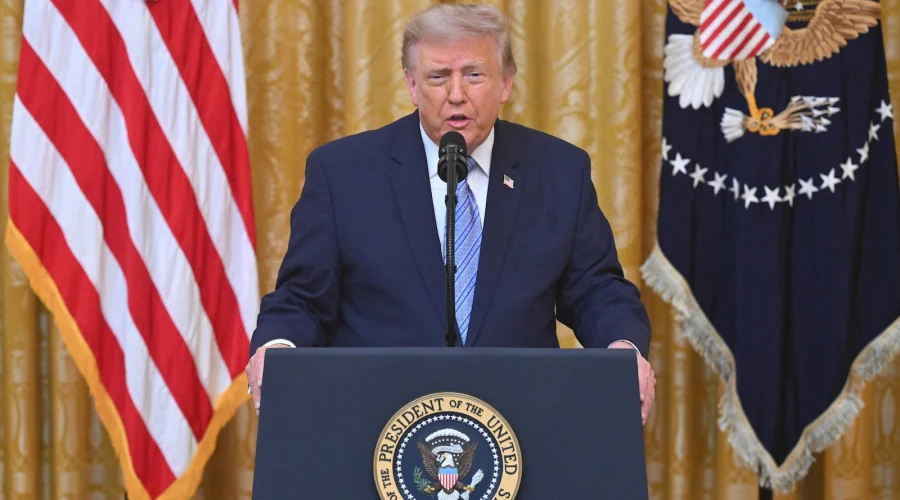
The constitutional framework places primary responsibility for conducting elections with individual states. This division of authority became particularly relevant during the conference, which coincidentally aligned with President Donald Trump’s Thursday address. During that speech, Trump announced the declassification of numerous documents that he claimed exposed weaknesses in American electoral systems, despite widespread consensus that state-level elections remain secure.
Declassified Documents and Political Context
The heavily redacted materials released by the White House have not substantiated many of Trump’s assertions. These claims have circulated since his 2020 presidential defeat, which occurred by approximately 7 million votes. Notably, Trump has never presented concrete evidence demonstrating that election results were altered through fraud.
Additionally, Trump’s remarks followed the White House’s decision to remove three remaining members of the bipartisan Election Assistance Commission. This commission assists election administrators in improving electoral administration. Several state officials characterized this action as introducing unnecessary instability into election operations.
Contingency Planning in Action
West Virginia Secretary of State Kris Warner, a Republican, has previously voiced concerns about the Trump administration’s pursuit of private voter information. The Department of Justice maintains that this data is necessary to verify that noncitizens are not casting ballots.
I don’t know that there are going to be changes in these last couple of months going into the election. But if all of a sudden our ballot marking devices would be decertified, for example, we’re prepared to go with a paper ballot that would then be read by a scanner.
Warner emphasized that West Virginia has developed multiple backup strategies. “If it’s determined that we can’t use a tabulator, for example, we’re prepared to get those ballots counted by hand. All the while remembering that it’s all about confidence in elections, and when we have confidence in elections, there’s better participation. But I don’t think there’s anything that can be thrown our way that we’re not ready to handle, that we don’t have a plan B or a plan C to carry out.”
Looking Ahead
Election officials who spoke with ABC News before Trump’s remarks noted that the conference had largely concluded when the president’s speech was delivered. The timing highlighted the ongoing dialogue between state and federal authorities regarding electoral integrity.
The Trump White House has consistently stated its intention to work cooperatively with states on election-related matters. As November approaches, state administrators continue refining their strategies to ensure smooth electoral operations regardless of potential federal actions.
Both Democratic and Republican officials have demonstrated a unified commitment to maintaining public trust in the electoral process through careful preparation and transparent communication.
Related SEO Topics
- Home
- Artikel terkait State officials preparing if the federal
- Northeast braces for flash flooding threat
- Cyclosporiasis cases in Michigan surpass 2,600, health officials say
- A new ICE facility could speed up deportations for families and kids
- Cruise ship killing: Judge orders stepbrother be taken into US Marshals’ custody
Frequently Asked Questions
What is State officials preparing if the federal?
State officials preparing if the federal is the main topic covered in this article, with practical context to help readers understand the subject clearly.
Why does State officials preparing if the federal matter?
State officials preparing if the federal matters because it helps readers compare options, avoid common mistakes, and make a more informed decision.
How should readers use this State officials preparing if the federal guide?
Use the key points, examples, and related links in this page as a starting point, then review the latest details before making a final decision.