
Clarence Thomas becomes the second longest-serving justice in Supreme Court history
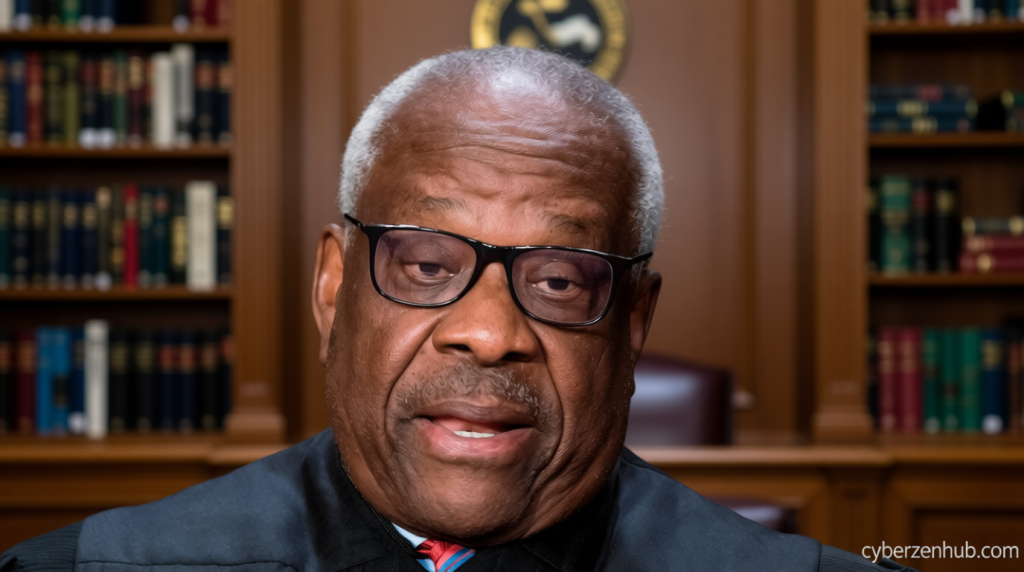
Clarence Thomas Surpasses Historical Milestone as Second Longest-Serving Supreme Court Justice
Clarence Thomas becomes the second longest – On Thursday, the first member of the baby boomer generation to join the Supreme Court marked a significant milestone. Justice Clarence Thomas, who was confirmed to the bench in 1991, now holds the distinction of being the second-longest-serving justice in the court’s history. His tenure, which has exceeded 34 years, is set to surpass that of the late William O. Douglas, the longest-serving justice before him. With no indication of retirement, Thomas’s influence on the judiciary has only grown, positioning him as a pivotal figure in shaping the nation’s legal landscape over the past decade.
A Shifting Landscape on the Bench
Thomas, once considered an outsider, has become a cornerstone of the conservative legal movement. His recent contributions to landmark decisions—particularly those overturning abortion rights, reshaping voting regulations, and expanding Second Amendment protections—have solidified his role in a transformative era for the Supreme Court. This shift is notable given the court’s current composition, which includes three justices appointed by Republican President Donald Trump, forming a supermajority that has driven sweeping changes in constitutional interpretation.
Thomas’s journey from near-silence to assertive participation is emblematic of his evolving presence. Earlier in his career, he was often a quiet voice in debates, but today, he actively engages in discussions, frequently posing critical questions and authoring pivotal rulings. His 2022 decision affirming the right to public gun carriage stands as one of his most impactful opinions, reflecting a consistent judicial philosophy that emphasizes limited government and individual liberties.
Legacy Beyond the Court
Thomas’s influence extends far beyond the courtroom, largely through his extensive network of former clerks. These individuals, many of whom have taken prominent roles in the Trump administration and federal judiciary, are increasingly shaping legal decisions across the country. Sarah Konsky, director of the Supreme Court and Appellate Clinic at the University of Chicago Law School, highlighted this legacy, stating, “That is an important legacy that he will leave. Even as justices’ own time on the court winds down, significant influence lives on through their clerks.”
Thomas’s tenure has also been marked by a blend of historical context and modern scrutiny. He is the second Black justice to serve on the court, a role he assumed in 1991, and his career has been shaped by pivotal moments, such as the 1991 confirmation hearings that included allegations of sexual harassment by Anita Hill. While he fiercely denied those accusations, the process left a lasting impression on his public image. More recently, his acceptance of luxury trips from a GOP megadonor and his wife’s political activism have drawn criticism, yet he continues to assert his position as a leader among the conservative bloc.
Consistency in Jurisprudence and Emerging Challenges
Despite the changing political climate, Thomas’s judicial approach has remained steadfast. Scott Gerber, author of *First Principles: The Jurisprudence of Clarence Thomas*, noted that the justice’s legal philosophy has evolved little over the years. “He’s incredibly consistent,” Gerber remarked, adding that while Thomas has transitioned from solo dissents to majority opinions, his core principles remain unchanged.
Thomas’s role in recent years has been both celebrated and debated. While his majority opinions in cases like the 2022 gun rights ruling have been widely cited, his dissents continue to spark discussion. John Yoo, a law professor at the University of California, Berkeley, observed that Thomas’s energy has only increased since his early days on the court. “I think he’s more energized and excited now than when I first met him,” Yoo said, reflecting on Thomas’s growing impact as the conservative movement gains momentum.
Historical Context and Future Prospects
Thomas’s long tenure places him in a rare category of justices who have seen the court undergo major transformations. He now holds a position of seniority that allows him to play a decisive role in shaping the direction of rulings, particularly when he leads a majority without Chief Justice John Roberts. This dynamic has been critical in recent decisions, including the overturning of Roe v. Wade and the narrowing of the Voting Rights Act’s protections.
His historical significance is underscored by comparisons to other justices. While Douglas remains the longest-serving, Thomas is on track to surpass him in 2028, assuming he stays on the bench. This achievement highlights the durability of his judicial career and the enduring relevance of his legal ideology. Thomas’s service, which began during the height of the civil rights movement and continues into an era of ideological polarization, reflects a unique trajectory in Supreme Court history.
Controversies and Public Perception
Thomas’s journey has not been without controversy. The 1991 confirmation hearings, which centered on sexual harassment allegations, were a defining moment in his career. Although he maintained his innocence, the proceedings brought national attention to his role in the conservative movement. More recently, his acceptance of lavish, undisclosed trips from a GOP donor and his wife’s involvement in election-related claims have raised ethical concerns, yet he remains a symbol of the court’s rightward shift.
In a recent speech, Thomas tied the nation’s highest ideals to a conservative vision of governance, criticizing progressivism as overly expansive. The address, delivered at the University of Texas, was met with enthusiastic applause, signaling both support and admiration for his stance. However, critics argue that his approach, while consistent, has sometimes been seen as ideologically rigid. Nonetheless, his ability to navigate the court’s evolving landscape while maintaining his principles underscores his enduring presence in American jurisprudence.
As the Supreme Court continues to reflect the ideological divide, Thomas’s tenure remains a testament to his resilience and influence. His work, from landmark rulings to shaping the judiciary’s future, has left an indelible mark on the legal system. While his time on the bench is far from over, the legacy of his contributions—both on and off the court—will be scrutinized for decades to come.
“The court has radically moved in his direction over the course of his time on the court,” said Stanford University law professor Pamela Karlan. Thomas’s seniority not only amplifies his individual impact but also reinforces the collective influence of the conservative majority, a trend that has reshaped the interpretation of constitutional rights in recent years.
Thomas’s story is one of adaptation and perseverance. From his early days as a clerk for Justice Antonin Scalia to his current role as the court’s most senior conservative, he has navigated challenges with a steady hand. His consistent adherence to originalist principles, even as the court’s composition has changed, highlights his ability to remain a driving force in a rapidly evolving legal environment.
As the nation watches the Supreme Court’s decisions, Thomas’s long tenure serves as a reminder of the enduring power of judicial influence. Whether through his rulings, his network of former clerks, or his unyielding commitment to limited government, his legacy is intertwined with the modern conservative movement’s triumphs. For now, he remains a central figure in the court’s history, with no signs of stepping down anytime soon.
Follow the AP’s coverage of the U.S. Supreme Court for ongoing developments and analyses of its impact on American law and society.