
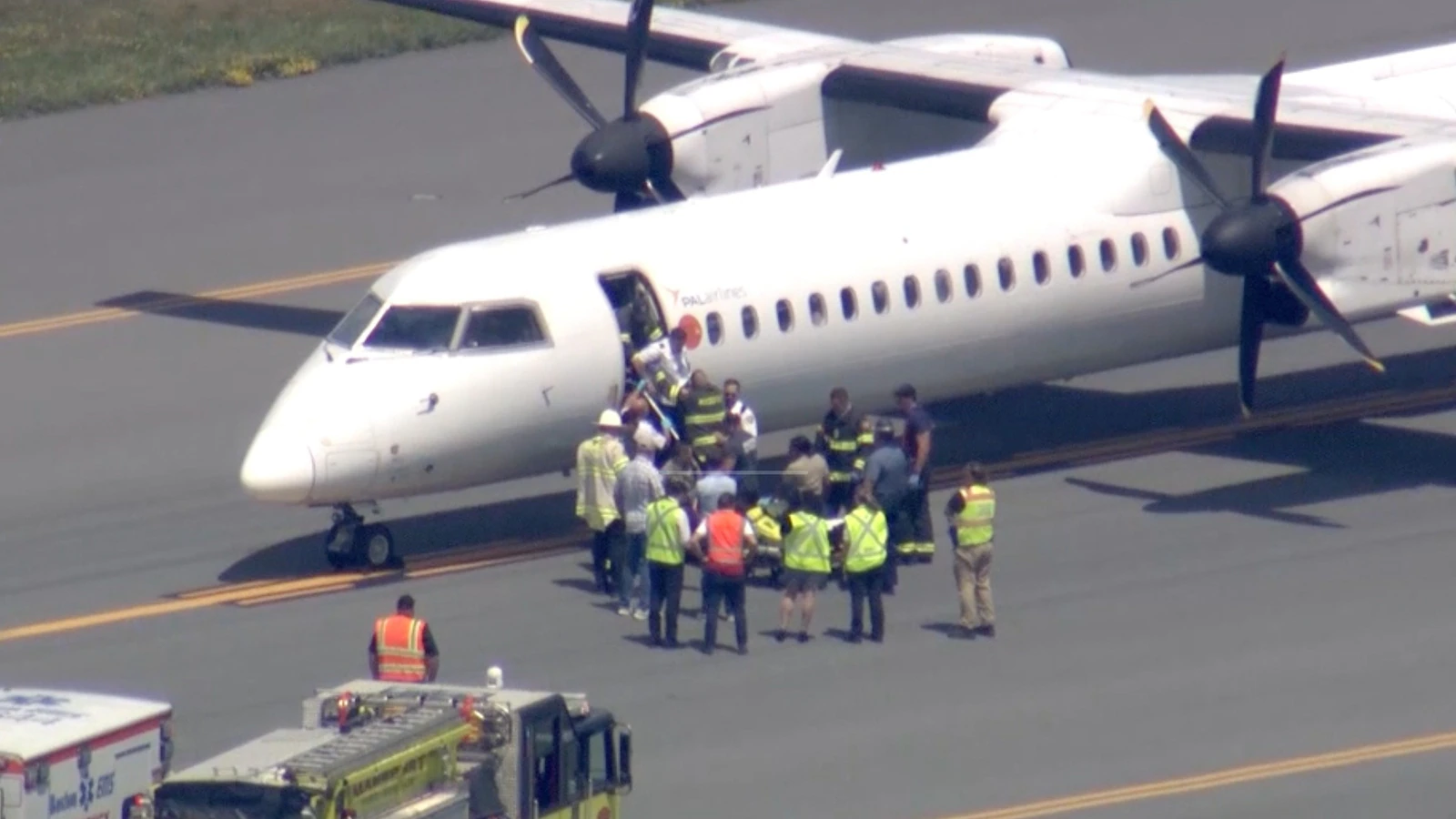
Passengers Restrain Pilot During Medical Emergency on Flight
Cyberzenhub.com – Passengers on a flight operated by Air Canada took decisive action to stabilize a pilot who was experiencing a medical emergency, as revealed by a firsthand account shared with ABC News. The incident occurred midair on AC7664, a De Havilland Q400 en route from Newark, New Jersey, to Halifax, Nova Scotia. The pilot’s sudden loss of control led to a chaotic situation in the cabin, with passengers and crew working together to ensure the safety of everyone on board. Rodney McDonald, one of the passengers, described the event as “terrifying” and emphasized how the passengers restrained the pilot during the apparent medical emergency to prevent further movement of the aircraft.
Flight Diverted to Boston Amid Uncontrolled Movement
After the pilot’s condition worsened, the aircraft was diverted to Boston Logan Airport. The first officer took over command, guiding the plane to a safe landing despite the turbulence caused by the pilot’s seizures. Upon arrival, emergency responders were on standby to assist the pilot, who was then transported to a hospital for evaluation. The flight carried 61 passengers, and Air Canada confirmed efforts to provide alternative travel options for those affected by the diversion.
McDonald recounted the moment the plane swerved, noting it was not turbulence but a sudden, uncontrolled movement. “It was like someone had jolted the controls,” he said, his voice steady yet filled with concern. “The pilot was losing coordination, and we had to act quickly to prevent the plane from veering further.” He highlighted the passengers’ role in restraining the pilot during the apparent medical emergency, using seatbelts and physical support to keep him from moving around the cockpit. The co-pilot managed the aircraft with precision, ensuring the safety of all onboard throughout the 40-minute ordeal.
Passengers and Crew Collaborate to Manage Crisis
As the pilot’s seizures intensified, a flight attendant entered the cockpit and helped pull him into the aisle. McDonald described the scene as a coordinated effort, with passengers and crew working in unison to manage the emergency. “We had to keep him down, using every seatbelt we could find,” he explained. The pilot, who seemed to be losing consciousness, was restrained by multiple passengers during the apparent medical emergency. A registered nurse on board provided critical guidance, ensuring the crew followed best practices to avoid injury while maintaining control of the situation.
Passengers restrain pilot during apparent medical emergency on flight as a collective action to prevent the aircraft from destabilizing further. McDonald praised the nurse’s role in directing the effort, stating that the medical advice helped passengers stay calm and act effectively. The crew remained composed, with the co-pilot executing emergency procedures with precision. This teamwork between passengers and crew was instrumental in ensuring the plane landed safely, despite the chaos and fear that gripped the cabin.
Medical Advice for Seizure Episodes
During the incident, passengers followed CDC guidelines for managing a medical emergency. The advice emphasized keeping the person safe by clearing the area of hazards and positioning them on their side to maintain an open airway. McDonald noted that the passengers restrained the pilot during the apparent medical emergency with care, avoiding any forceful restraint that could cause harm. The nurse played a key role in explaining these steps, ensuring all actions were both effective and protective of the pilot’s well-being.
While the situation was intense, McDonald described how the passengers and crew remained focused on the task at hand. “Every thought goes through your mind during a medical emergency,” he reflected. “You’re thinking about your family, wondering if anyone will be hurt.” His wife and two sons were in the rear of the plane, experiencing the sudden lurch firsthand. Despite the fear, the combined efforts of passengers restraining the pilot during the apparent medical emergency and the crew’s calm response likely saved the day, allowing for a safe landing and swift medical attention.
Passenger’s Personal Experience and Reflections
McDonald’s account provides a vivid glimpse into the passengers’ actions during the apparent medical emergency. “It was a surreal moment, watching the pilot lose control while the plane was still in the air,” he said. He described the pilot’s movements as physical rather than violent, indicating the situation was more about coordination loss than intentional harm. The passengers’ restraint during the emergency was a testament to their quick thinking and collective response, which kept the plane on course until it reached Boston.
The experience left McDonald and the other passengers shaken, but they were relieved when the aircraft landed safely and the pilot received prompt medical care. “My boys were the first to start praying, which helped us stay focused,” he shared. The event underscored the importance of passenger involvement in emergencies, as the combined effort of passengers restraining the pilot during the apparent medical emergency proved critical to the flight’s successful diversion. Air Canada has since confirmed the pilot is recovering well, with no major injuries reported.