
Senate rejects attempt to end Trump’s blockade of Cuba
Senate rejects attempt to end Trump’s blockade of Cuba
Senate Vote on Cuba Blockade
Senate rejects attempt to end Trump – WASHINGTON — On Tuesday, Senate Republicans blocked Democratic efforts to pass a bill that would have compelled President Donald Trump to lift the U.S. energy embargo on Cuba, provided Congress approved the move. The resolution, which aimed to invoke war powers, failed with a 51-47 vote, marking another setback for lawmakers seeking to curtail the executive’s unilateral authority in global affairs. The legislation targeted Trump’s continued enforcement of economic sanctions against Cuba, a policy that has kept the nation under a strict trade restriction for decades. The resolution’s defeat highlighted the political divide between the two major parties, as Republicans stood firmly behind the president’s strategy in maintaining pressure on Havana.
The vote was part of a broader pattern of Democratic attempts to limit the president’s ability to deploy military force in international conflicts, such as Venezuela, Iran, and Cuba. These efforts often draw criticism from Republicans, who argue that such measures encroach on executive power. This particular resolution, however, focused specifically on Cuba, a country that has long been a strategic ally of the United States despite its political tensions. By failing to pass the legislation, the Senate allowed Trump to retain control over the embargo, which has been a cornerstone of U.S. policy since the Cold War.
Impact of Blockade on Cuban Society
The Caribbean nation continues to grapple with severe hardships as a result of the U.S. sanctions. Power outages and water shortages plague daily life, while the disruption of oil shipments from Venezuela has exacerbated Cuba’s energy crisis. These challenges have forced Cubans to endure prolonged periods without reliable electricity and clean water, straining both infrastructure and public health. The economic blockade, critics argue, has also contributed to rising food prices and limited access to essential medical supplies, deepening the island’s reliance on imports and stifling local industries.
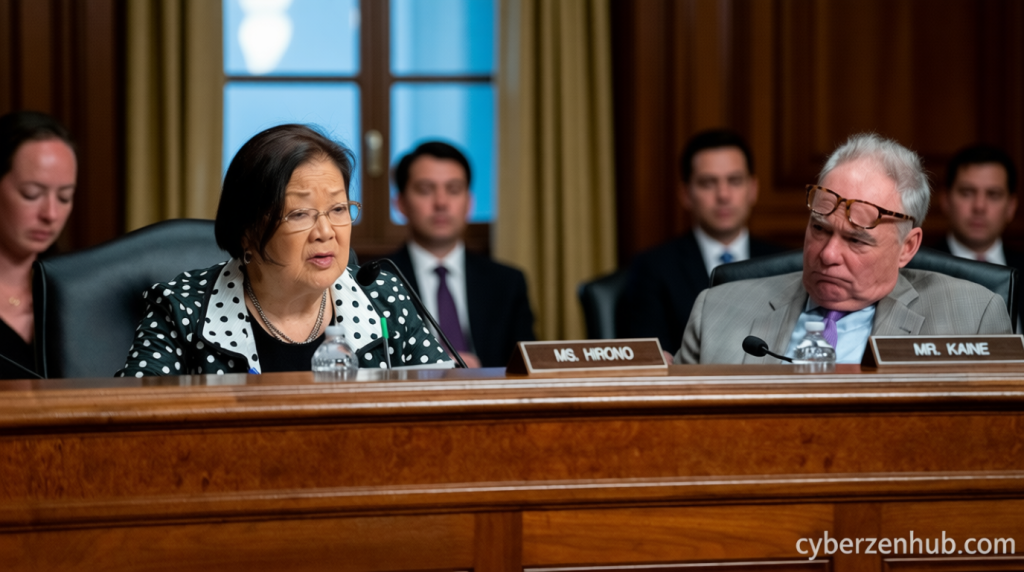
Despite these struggles, the Trump administration has maintained its stance, pressuring Cuban leaders to end political repression and release detained activists. The administration’s focus on economic liberalization has been framed as a path to greater freedom, yet the blockade remains a symbol of U.S. influence over Havana. Sen. Tim Kaine, a Virginia Democrat who spearheaded the resolution, emphasized the humanitarian toll of the policy. “The blockade has caused humanitarian crises across Cuba,” he stated, noting its effects on healthcare, food affordability, and access to clean water. Kaine argued that the use of American assets, including the Coast Guard, to enforce the embargo constituted an act of hostilities, even if it was not direct military action.
Democrats’ Arguments and Political Strategy
Democrats have consistently used the War Powers Act of 1973 as a tool to challenge the president’s use of military force abroad. This legal framework was designed to ensure Congress plays a key role in authorizing conflicts, but its application has often been a point of contention. The latest resolution was the first to address Cuba under this act, aiming to prevent Trump from unilaterally initiating military campaigns against the island. The Democrats’ rationale was rooted in the belief that the blockade, though economic, represented a form of sustained aggression that required congressional oversight.
Sen. Peter Welch, a Vermont Democrat, echoed this sentiment, stating, “The United States and Cuba need to find a way to peacefully coexist.” His remarks underscored the Democrats’ desire to foster diplomatic engagement rather than escalate tensions. However, the resolution’s failure suggests that Republicans are more inclined to support Trump’s aggressive policies, even when they target close allies. The debate also revealed the broader ideological clash over the balance of power between the executive and legislative branches, with Democrats framing the vote as a necessary check on presidential authority.
Republican Opposition and Support
During the debate, Republicans defended the decision to dismiss the resolution, citing the absence of direct military conflict with Cuba. Sen. John Fetterman of Pennsylvania was the sole Democrat to support the motion, aligning with the GOP on this issue despite his party’s usual opposition to Trump’s policies. Conversely, two Republicans, Sen. Susan Collins of Maine and Sen. Rand Paul of Kentucky, voted to end the blockade, signaling a rare moment of bipartisan agreement on the matter. Their support reflected a belief that the U.S. should not automatically assume the role of aggressor in every international dispute, even when economic pressure is a key component of the strategy.
Sen. Rick Scott of Florida, a Republican, accused Democrats of overlooking Cuba’s human rights record. “President Trump is doing everything he can to bring back freedom and democracy across Latin America,” Scott argued, urging continued support for the administration’s approach. This framing of the issue as a fight for liberty against Cuban repression contrasted with the Democrats’ emphasis on humanitarian concerns. The debate also highlighted the strategic importance of Cuba in U.S. foreign policy, with Trump positioning the country as a priority for his “new dawn” vision for the region.
Historical Context and Future Implications
The Cuba embargo, which has been in place since the 1960s, has evolved over time but remains a central element of U.S. engagement with the island. While it was initially imposed to pressure the Cuban government into ending its alliance with the Soviet Union, it has since been used as a tool to impose economic sanctions and support political change. The resolution’s failure to pass reinforces Trump’s ability to sustain this policy, potentially extending its reach into new areas such as energy and financial sectors. The Democratic push for congressional oversight, though unsuccessful this time, reflects a long-standing effort to counteract the president’s unilateral decisions, particularly in Latin America.
Trump’s recent speech at a Turning Points USA event had hinted at a renewed focus on Cuba, following his escalation of tensions with Iran. His pledge of “a new dawn for Cuba” was met with mixed reactions, with some viewing it as a genuine commitment to reform and others as a political maneuver to justify ongoing sanctions. The Senate’s rejection of the resolution may embolden the administration to continue its approach, potentially deepening the impact on Cuba’s economy and society. Meanwhile, Democrats remain determined to use the War Powers Act as a means to assert their influence, even in the face of Republican resistance.