
How does James Comey’s ‘threat’ against Trump compare to other defendants charged by DOJ?
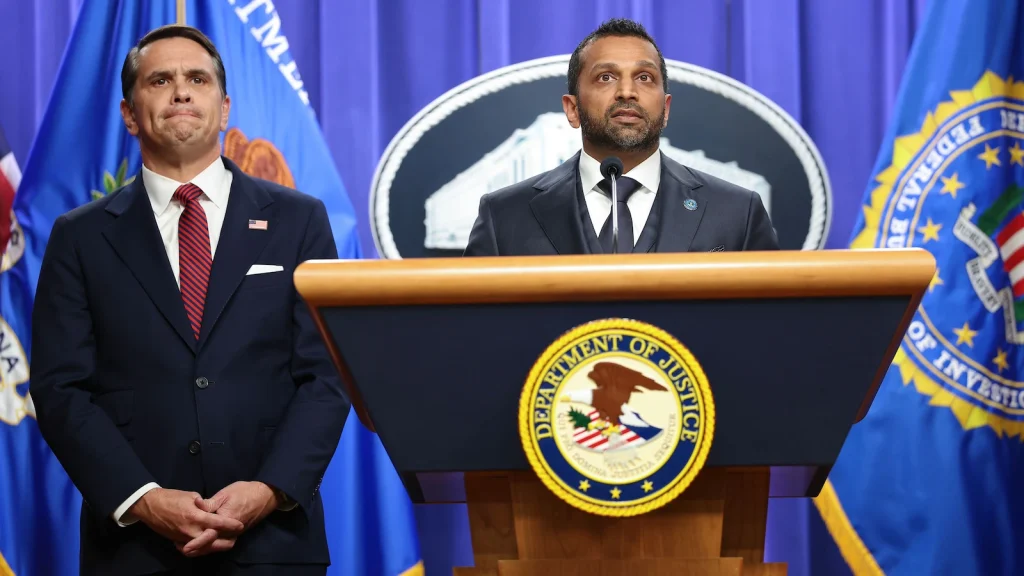
James Comey’s Threat to Trump Compared to DOJ Charges
How does James Comey s threat – James Comey’s threat to Trump has become a focal point in discussions about the Department of Justice’s (DOJ) approach to prosecuting alleged threats against public officials. The recent indictment of the former FBI director for sending a coded message via social media has prompted comparisons with other cases, raising questions about the severity and context of his actions. Critics argue that Comey’s claim to have “threatened” Trump might not hold the same weight as more direct expressions of violence, while supporters emphasize that the DOJ’s decision reflects a consistent standard in addressing potential risks to leaders.
Context and Symbolism in Comey’s Case
At the heart of Comey’s indictment is a single Instagram post featuring seashells arranged to form the numbers “86 47.” This symbolic gesture, interpreted as a message to remove Trump from office, sparked debate over whether such a post qualifies as a formal threat. Comey himself clarified that he was unaware of the numerical significance and denied any intent to incite violence, though the DOJ maintained that the message conveyed a clear threat. The comparison with other defendants hinges on the degree of immediacy and intent, which varies across cases.
“Comey’s alleged conduct aligns with how we handle threats against public officials,” stated Acting Attorney General Todd Blanche, who highlighted the similarity between the case and other DOJ prosecutions. However, the symbolic nature of his post contrasts with more explicit threats, such as those made by individuals targeting specific individuals with direct plans of harm.
Examples of More Direct Threats
Several cases in recent years demonstrate how the DOJ has taken legal action against defendants who expressed immediate intentions to harm political figures. In Florida, Diego Villavicencio pleaded guilty to sending threats that explicitly stated his plan to kill then-president Joe Biden and his family. His messages, including “I’ll kill you and your family,” were paired with a trip to Trump’s Mar-a-Lago estate, which prosecutors argued demonstrated a tangible threat. This case underscores the DOJ’s focus on actionable intent, a factor that differentiates it from Comey’s more metaphorical post.
Similarly, in North Carolina, Michael James Ferr was charged for threatening to kill then-president Joe Biden and his children. His actions escalated when he confronted a Secret Service agent, adding a personal dimension to his threats. Ferr’s case, which led to a prison sentence of 27 months, illustrates how the DOJ applies stricter criteria to defendants who blend ideological motivations with physical targeting. These examples provide a clearer benchmark for evaluating Comey’s alleged threat.
Massachusetts’ Case: Threats with Visual Impact
Another notable case in Massachusetts involved a 45-year-old man who posted eight threatening messages on Facebook, including a declaration to “burn Mar-a-Lago to the f—— ground.” His arrest highlighted the DOJ’s willingness to prosecute threats that combine verbal aggression with visual symbolism, much like Comey’s seashell post. While the charges were identical, the man’s display of a sword during the arrest added a physical element to his statements, making his intent more explicit.
This case, like others, shows how the DOJ treats both verbal and visual threats as potential criminal acts. However, the symbolic nature of Comey’s post, coupled with his swift removal of the image and denial of intent, has led some to question whether the standard for prosecution is being applied consistently. The comparison between these cases emphasizes the evolving nature of threat-related charges in the digital age.
Key Differences in DOJ Prosecution
The DOJ’s charging decisions in these cases reveal a spectrum of severity, influenced by factors like the clarity of intent, the platform used, and the presence of physical evidence. Comey’s threat, while controversial, was based on a metaphorical message, whereas others involved direct language and action. This distinction is crucial in understanding how the department balances symbolic expressions of dissent with concrete threats to leadership.
Despite these differences, the DOJ’s approach to threat charges has been framed as uniform, with Blanche asserting that Comey’s case fits within the same framework. This argument, however, has been scrutinized for its reliance on contextual interpretation. By examining the nuances of each case, the broader implications of the DOJ’s legal strategies become more apparent, offering insight into how public officials are perceived as targets in modern criminal investigations.