
Another Russian oil facility burns after Zelenskyy touts Ukraine’s drone reach
Another Russian Oil Facility Burns Amid Ukraine’s Drone Strikes
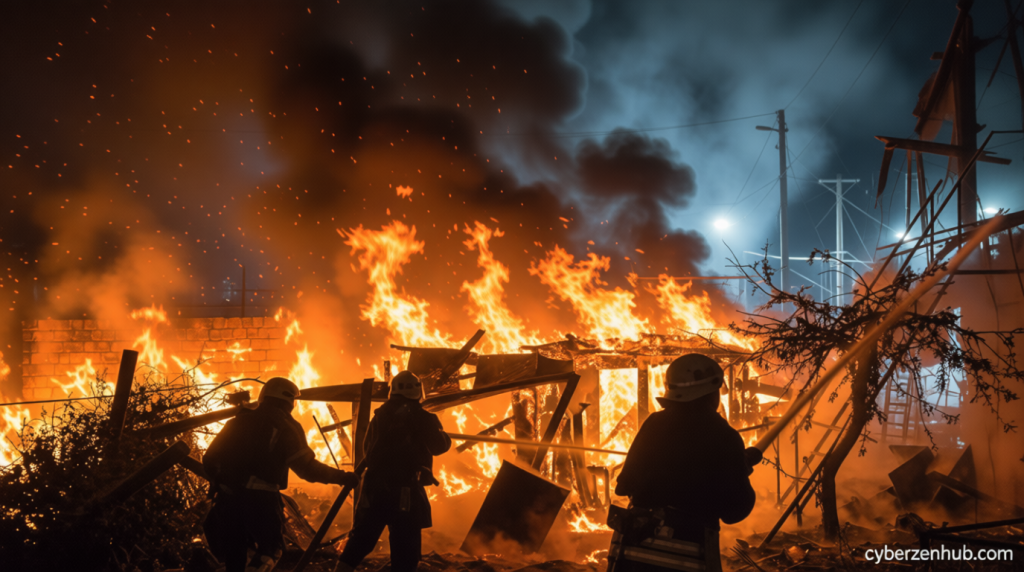
Another Russian oil facility burns after – On Wednesday, a Russian oil facility in the Perm region, situated within the Ural mountains, reportedly caught fire following an alleged attack by Ukrainian long-range drones. The incident, highlighted by President Volodymyr Zelenskyy, marks the latest in a series of strikes targeting the country’s energy infrastructure. While the Ukrainian president claimed the attack was part of a broader strategy to weaken Russia’s wartime capabilities, Russian officials have remained cautious about confirming the details.
Strategic Impact of Drone Campaigns
The facility, owned by Transneft, Russia’s state-controlled pipeline operator, is a critical node in the nation’s oil transportation network. Ukraine’s Security Service (SBU) asserted that the strike damaged a pumping station near the city of Perm, though the exact extent of the damage could not be independently verified. Russian media echoed the report, but local authorities in Perm, led by Governor Dmitry Makhonin, described the event as a drone hitting an unspecified industrial site, resulting in a fire.
“The straight-line distance is more than 1,500 kilometers. We will continue to increase these ranges,” Zelenskyy stated in a Telegram message, showcasing footage of black smoke rising from the countryside near a populated area.
Zelenskyy emphasized that the attack exemplifies Ukraine’s growing reach in its long-distance strikes, aiming to disrupt Russia’s access to vital oil revenues. This strategy is part of a broader effort to limit Moscow’s ability to sustain its war efforts, particularly as global supply chain restrictions and U.S. sanctions waivers create financial pressure on the Russian economy.
Expanding Drone Technology and International Partnerships
The attack comes as Ukraine intensifies its use of domestically developed drones, which have become a cornerstone of its military operations. Analysts note that the country’s ability to conduct such strikes reflects advancements in its defense technology and a shift from relying on foreign aid to leveraging indigenous capabilities. Zelenskyy revealed that Kyiv is producing a surplus of up to 50% in some weapon types, with deals already underway to export this expertise to partners in the Middle East, Gulf, Europe, and the Caucasus.
According to Zelenskyy, the collaboration involves not only drones and missiles but also software and technology for air, land, and sea operations. A proposal for U.S. cooperation on drones and defense systems was also shared, signaling Ukraine’s intent to strengthen its technological edge. The Institute for the Study of War, a Washington-based think tank, confirmed that the Tuapse oil refinery on the Black Sea was targeted for the third time in under two weeks, causing evacuations and threatening environmental damage.
Russian Defenses and Escalating Conflict
The Russian Defense Ministry responded by stating that its air defenses intercepted 98 Ukrainian drones overnight across multiple regions and Crimea. Despite these efforts, the attacks on oil infrastructure continue, underscoring the challenges Russia faces in defending its rear areas. Regional officials reported that the Tuapse fire had been contained by Wednesday, but the broader campaign against Russian energy assets remains active.
Meanwhile, Russia has not slowed its own attacks on Ukrainian civilian zones, with the northeastern Kharkiv region suffering overnight strikes that injured eight people. Sumy, another regional area, was also targeted, highlighting the ongoing pressure on both military and civilian infrastructure. The escalation underscores the evolving nature of the conflict, where drones play a pivotal role in targeting critical resources and weakening the adversary’s logistical support.
Long-Range Strikes as a New Phase in the War
Zelenskyy’s remarks on Wednesday framed the drone attacks as a “new phase” in the war, emphasizing their role in denying Russia access to oil revenue. This approach is designed to cut off financial benefits from exports, which have been crucial for sustaining the invasion. The SBU’s claim that most storage tanks at the Perm facility were damaged aligns with this strategy, though independent verification remains elusive.
The think tank’s analysis highlighted Ukraine’s ability to exploit Russia’s vast territory and stretched defenses. By launching frequent strikes deep into Russian-controlled areas, Kyiv aims to create strategic uncertainty and pressure Moscow’s economic resilience. The U.S. waiver on sanctions has further incentivized this tactic, as global supply restrictions from the Iran war limit Russia’s ability to offset losses through oil sales.
Implications for the Future of the Conflict
With Ukraine demonstrating increased accuracy in its drone strikes, the focus of the war is shifting toward disrupting Russia’s energy supply. This has forced Moscow to divert resources to protect its infrastructure, creating vulnerabilities in other areas. The success of such operations has also emboldened Kyiv to seek partnerships, with the goal of exporting its drone technology and strengthening international alliances.
As the conflict progresses, the use of drones by both sides is reshaping the battlefield. Russia’s air defenses, while effective in intercepting some attacks, are struggling to counter the sheer volume and precision of Ukrainian strikes. This dynamic is expected to continue, with Ukraine’s military strategy evolving to incorporate more long-range capabilities. The recent incidents in Perm and Tuapse underscore the growing importance of energy targets in the broader conflict.
The strategic implications of these strikes are significant. By targeting oil facilities, Ukraine is not only reducing Russia’s financial resources but also creating a psychological impact on both the military and civilian populations. The government’s response to these attacks has been mixed, with officials in Perm acknowledging the damage while avoiding specific details about the strike’s origin. This ambiguity reflects the complexity of attributing such attacks in a conflict where both sides use advanced technology and information warfare.
As the war enters its fifth year, the battle for control over energy resources has become a critical front. Ukraine’s ability to strike deep within Russia’s territory, combined with its growing drone production, signals a shift in the conflict’s dynamics. Analysts suggest that this trend will persist, with Kyiv aiming to maintain pressure on Moscow through sustained attacks and international partnerships. The Perm incident, though one of many, highlights the effectiveness of this strategy and its potential to alter the war’s trajectory in the coming months.