
Ted Turner, cable television pioneer and CNN founder, dies at 87
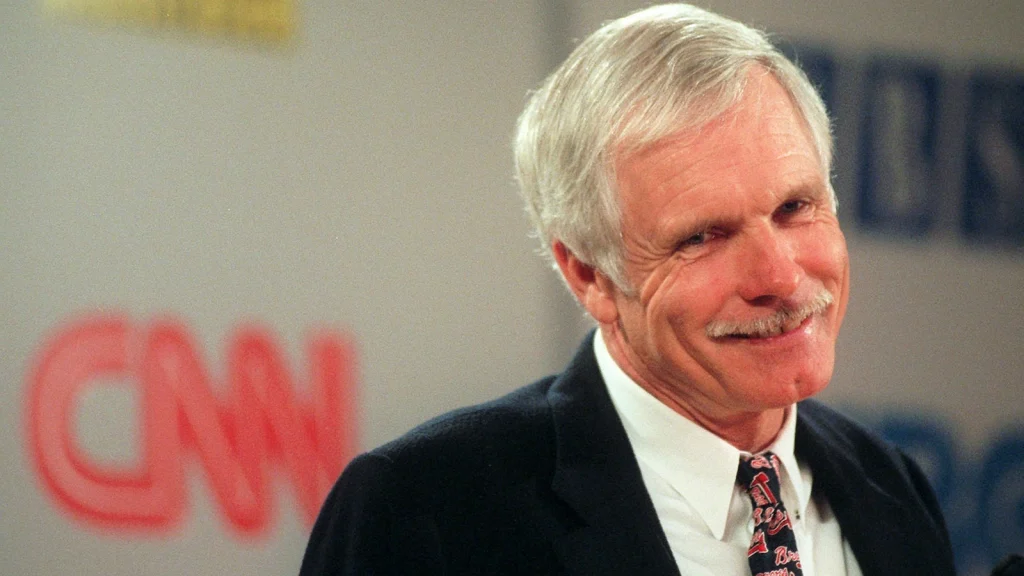
Ted Turner, cable television pioneer and CNN founder, dies at 87
Ted Turner cable television pioneer and CNN – Ted Turner, a media magnate who revolutionized the television landscape by launching the first 24-hour news network, CNN, and built an empire of entertainment and broadcasting ventures, has passed away at the age of 87. The news was confirmed by the network, which honored his legacy as a visionary leader. Mark Thompson, chairman and CEO of CNN Worldwide, praised Turner’s enduring influence, stating, “
He was an intensely involved and committed leader, intrepid, fearless, and always willing to back a hunch and trust his own judgment.
” Thompson emphasized that Turner remained the “presiding spirit of CNN,” a role that defined his impact on global media and society.
Early Life and Career Foundations
Robert Edward Turner III, born in Cincinnati, Ohio, was raised in Savannah, Georgia, where he developed an early interest in media and business. After briefly attending Brown University, he left to join the U.S. Coastal Guard Reserve during the Vietnam War. This experience shaped his understanding of organization and discipline, which later translated into his business acumen. Turner began his career in advertising, working at his father’s firm, Turner Advertising Company, before taking over as president and CEO following his father’s death. Under his leadership, the company expanded into a worldwide advertising powerhouse, setting the stage for his future innovations in television.
His journey into broadcasting began in the 1970s when he acquired an Atlanta-based UHF station, WJRJ, and rebranded it as WTCG. This station pioneered the “superstation” model, which transmitted content via satellite to cable systems across the country. The concept allowed for broader reach and marked the beginning of Turner’s influence on modern cable television. The station eventually evolved into TBS, a foundational cable network that established the blueprint for today’s basic cable offerings.
The Birth of a 24-Hour News Revolution
On June 1, 1980, Turner Broadcasting System introduced CNN, a groundbreaking 24-hour cable news network. The launch speech at Atlanta’s headquarters, delivered by Turner, envisioned a world where “the people of this nation and this world” could unite through shared news. This ambition quickly became reality as CNN covered pivotal moments, such as the 1982 Lebanon War and the 1986 Challenger explosion, in real time. The network’s ability to deliver immediate, unfiltered news transformed television from a passive medium into a dynamic platform for global communication.
Turner’s vision extended beyond news. He later developed a suite of television brands, including CNN International, Cartoon Network, TNT, and Turner Classic Movies. These properties not only diversified his media holdings but also redefined audience engagement. The acquisition of film studios like Castle Rock Entertainment and New Line Cinema further solidified his influence, enabling the production of iconic films and content. His ventures into sports, beginning with the Atlanta Braves in the late 1970s, showcased his ability to blend entertainment with business, as the Braves won the 1995 World Series under his ownership.
From Wrestling to Global Mergers
Turner’s entrepreneurial spirit led him to enter the professional wrestling arena in 1988 when he purchased Jim Crockett Promotions and rebranded it as World Championship Wrestling (WCW). This move positioned WCW as a major rival to Vince McMahon’s World Wrestling Federation (WWF), creating a decade-long battle for dominance in the industry. The wrestling company eventually merged with McMahon’s empire in 2001, a testament to Turner’s willingness to take risks and adapt to market shifts.
His business acumen also played a role in the creation of one of the largest media conglomerates in history. In 1996, Turner Broadcasting merged with Time Warner Inc., combining forces to form a media giant that reshaped entertainment and news. This union was later expanded in 2001 when Time Warner merged with AOL, creating AOL Time Warner. These strategic moves underscored Turner’s ability to anticipate industry trends and build empires through bold decisions.
Philanthropy and Lasting Legacy
Beyond his business ventures, Turner was recognized for his philanthropy. In 1990, he established the Turner Foundation, which focused on environmental initiatives, including air and water quality improvements, climate protection programs, and wildlife conservation. The foundation has since contributed over $380 million to various organizations, demonstrating his commitment to sustainability and social responsibility.
In 1997, Turner made a historic commitment by pledging up to $1 billion to the United Nations. This donation led to the creation of the United Nations Foundation (UNF) in 1998, an entity dedicated to advancing the UN’s mission of global peace and prosperity. The organization has supported initiatives ranging from humanitarian aid to climate research, reflecting Turner’s belief in the power of media to drive societal change. His philanthropy extended to cultural events, such as the 2013 United Nations Foundation Global Leadership Dinner, where he joined forces with celebrities like Jane Fonda to promote international cooperation.
Turner’s impact was not limited to the business world. His unique approach to media and entertainment left a lasting imprint on how news is consumed and how storytelling is crafted. From the launch of CNN to the development of Cartoon Network, his ventures introduced new formats and audiences, proving that innovation could thrive even in established industries. His ability to blend business with creativity ensured that his legacy would be felt across multiple sectors.
A Life Shaped by Vision and Resilience
Turner’s journey was marked by both triumphs and challenges. In 2018, he publicly disclosed his battle with Lewy body dementia, a progressive brain disorder that affected his memory and cognitive functions. Despite this, his influence continued to shape media and entertainment, as his companies remained at the forefront of technological and content advancements. His early days as an Atlanta Braves owner included memorable moments, such as throwing the ceremonial first pitch at Turner Field in 1997, a symbol of his connection to the community and his passion for sports.
The story of Ted Turner is one of relentless ambition and adaptability. From his days in the Coastal Guard to his rise as a media tycoon, he consistently defied conventions. His leadership at CNN, for instance, was characterized by a fearless commitment to breaking news, even when it meant operating outside traditional broadcast schedules. This philosophy resonated with audiences and set a standard for real-time reporting that endures today. His work with the Atlanta Hawks, where the team earned three division titles, and his role in popularizing the Braves as a baseball powerhouse further illustrate his ability to build and sustain success in diverse fields.
As his companies evolved, Turner’s legacy became a blueprint for future generations of media leaders. The integration of CNN into the broader Turner Broadcasting System demonstrated his strategic foresight, while the expansion into wrestling and philanthropy revealed his willingness to explore new frontiers. His death at 87 marks the end of an era, yet the networks, brands, and initiatives he founded continue to influence the world. Mark Thompson’s words, “Ted is the giant on whose shoulders we stand,” capture the essence of Turner’s impact, reminding us that his vision remains a cornerstone of modern media and global communication.
From the first broadcast of CNN to the philanthropic efforts of the Turner Foundation, his career was a testament to the power of innovation. Even as he faced personal challenges with his health, Turner’s contributions to television and beyond ensured that his name would be etched into history. The next generation of media moguls now stands on the shoulders of this pioneer, inspired by a life dedicated to breaking boundaries and connecting people through the stories he helped shape.