
US Supreme Court denies Virginia Democrats’ request to override state court on redistricting plan
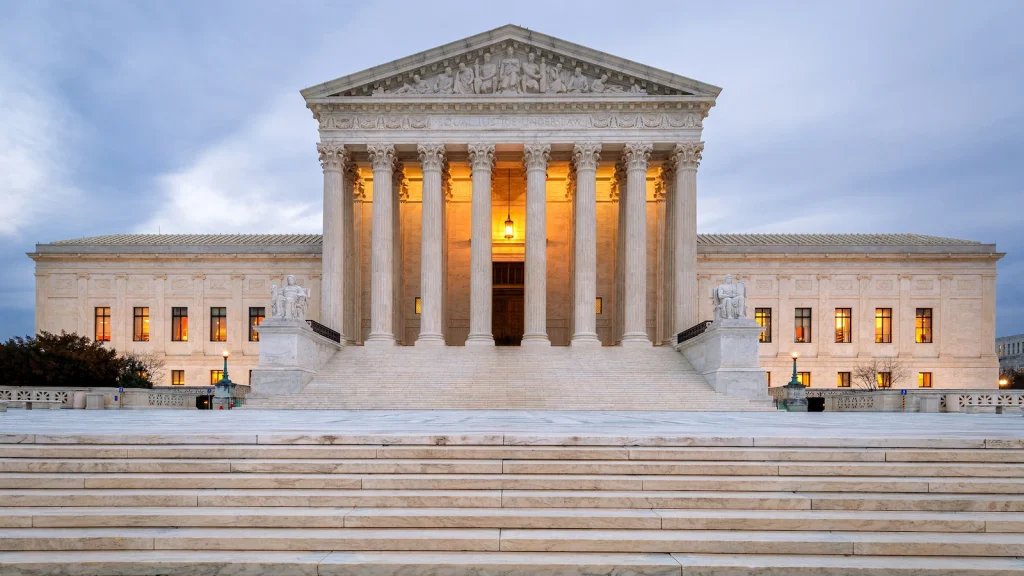
US Supreme Court Denies Virginia Redistricting Override Request
A Major Legal Decision and Its Implications
US Supreme Court denies Virginia Democrats – The U.S. Supreme Court has denied Virginia Democrats’ attempt to overturn a state court ruling that invalidated a recent redistricting plan. This decision concludes a high-stakes legal dispute, with the federal justices upholding the authority of the state judiciary in the matter. By refusing to intervene, the court has allowed the state Supreme Court’s constitutional interpretation to stand, potentially reshaping the electoral landscape for the upcoming elections.
Virginia’s redistricting plan, which had been enacted by the legislature and approved by voters, faced challenges from the state’s high court. The ruling found the map to be discriminatory, highlighting concerns about partisan gerrymandering and its effect on fair representation. Democrats argued that the state court’s decision would override the democratic will, but the U.S. Supreme Court dismissed their appeal, emphasizing that state-level judicial rulings should not be overturned without a clear federal justification.
Legal Experts’ Predictions and the Path Forward
Legal analysts anticipated the U.S. Supreme Court’s limited role in this case, as it centered on state constitutional law rather than federal statutes. The state court’s authority to review legislative redistricting plans is well-established, and the federal justices’ decision to not intervene aligns with this principle. The lack of detailed reasoning from the U.S. Supreme Court has sparked debate about whether the justices prioritized procedural efficiency or were influenced by the absence of a strong federal argument.
Experts noted that the U.S. Supreme Court’s refusal to take the case was strategic. “This decision reinforces the idea that state courts are the primary arbiters of redistricting disputes,” said a constitutional law scholar. “Unless there’s a clear violation of federal law, the federal judiciary tends to defer to state interpretations.” This trend could signal a broader shift in how redistricting challenges are handled, with state courts playing a more central role in determining electoral fairness.
The Ruling’s Impact on Virginia Politics
The U.S. Supreme Court’s denial of the override request has significant consequences for Virginia’s political structure. By upholding the state court’s decision, the ruling ensures that the redrawn districts will be used in the next election cycle, affecting the distribution of power in state legislative races. The Democratic Party, which had hoped to benefit from the new map, now faces the reality of a potentially less favorable electoral layout.
Partisan gerrymandering remains a critical issue, and this case underscores its contentious nature. The state Supreme Court’s intervention highlights the role of judicial oversight in ensuring that redistricting reflects the voters’ intent rather than political advantage. While the U.S. Supreme Court’s decision may be seen as a victory for state autonomy, it also raises questions about the federal judiciary’s role in protecting democratic processes at the state level.
With the override request denied, Virginia Democrats must now adjust their strategies. The state’s redistricting plan, which was designed to boost Democratic representation, will proceed as finalized, altering the competitive balance in upcoming races. This outcome could influence voter turnout and engagement, as citizens may perceive the map as either a fair reflection of their preferences or a tool for partisan control.
Broader Context and Future Considerations
This decision fits into a larger pattern where state courts increasingly shape redistricting outcomes. In recent years, similar cases have seen state judiciaries acting as guardians of electoral fairness, often in response to accusations of gerrymandering. The U.S. Supreme Court’s reluctance to intervene in this instance may encourage other states to rely on their own courts for redistricting disputes, further decentralizing the process.
As the redistricting plan moves forward, the focus will shift to its implementation. The U.S. Supreme Court’s denial allows Virginia to proceed with the new map, but the long-term effects on voter representation and political power dynamics remain uncertain. Future elections will provide a clearer indication of how the state’s judicial and legislative branches balance their influence in shaping electoral boundaries. The decision also sets a precedent for how similar cases may be resolved in other states, reinforcing the state court’s role in this evolving legal landscape.