
Fed chair nominee Kevin Warsh advances to Senate confirmation vote
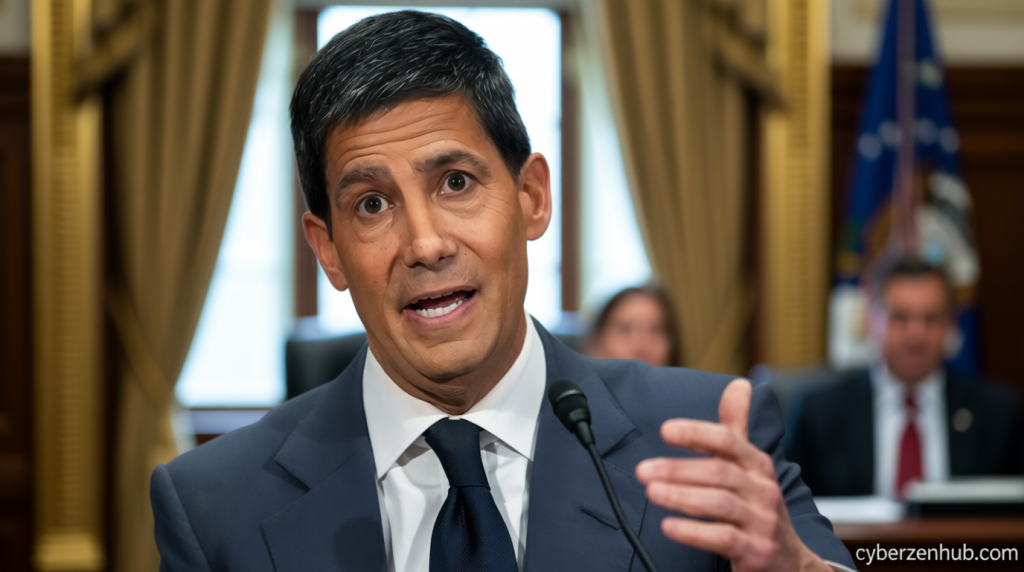
Fed Chair Nominee Kevin Warsh Advances to Senate Confirmation Vote
Fed chair nominee Kevin Warsh advances – On Wednesday, the Senate Banking Committee took a pivotal step in the confirmation process of Kevin Warsh, the Republican nominee for the Federal Reserve Chair. The 13-11 vote, cast along party lines, cleared a major obstacle in his journey to succeed Jerome Powell, whose term is set to expire on May 15. With this approval, Warsh’s nomination now progresses to a full Senate confirmation vote, marking a critical phase in the transition of leadership at the nation’s central bank.
Political Shifts and Judicial Influence
The committee’s decision followed the Department of Justice’s recent decision to halt its criminal investigation into Jerome Powell. This move, which occurred mere days prior, alleviated a significant concern for Senate Republicans, who had previously resisted Warsh’s nomination due to the probe. Democrats, however, maintained their opposition, arguing that the investigation was a strategic attempt to undermine the Fed’s independence and steer its monetary policy toward political interests.
Sen. Thom Tillis, R-N.C., who had earlier vowed to block Warsh’s nomination, became a key figure in the shift. Tillis cited the DOJ’s decision to set aside the investigation as the catalyst for his change of stance, emphasizing that the probe had been a major hurdle. His support for the nomination on Wednesday highlighted the internal realignment within the Senate, where partisan divisions over the investigation had previously stalled progress.
Testimony and Policy Alignment
Kevin Warsh’s confirmation hearing, held in April 2026, provided a platform for him to articulate his vision for the Federal Reserve. During his testimony before the Senate Banking Committee, he underscored the importance of maintaining the Fed’s independence, a theme he reiterated in his opening remarks. “Monetary policy independence is essential. Monetary policymakers must act in the nation’s interest,” Warsh asserted, emphasizing the central bank’s role in adjusting benchmark borrowing costs to stabilize the economy.
“Central bankers must be strong enough to listen to a diversity of views from all corners,” Warsh said, defending the Fed’s ability to balance public input with its core mandate. He argued that elected officials, including the president, have the right to express opinions on interest-rate policy without compromising the institution’s autonomy.
Sen. Elizabeth Warren, D-Mass., the committee’s top Democrat, challenged this perspective. She contended that the DOJ’s probe into Powell was not merely a critique of policy but a broader effort to exert pressure on the Fed. “You said it’s perfectly fine for elected officials to state their views on interest rates. But that’s not what Donald Trump is doing,” Warren remarked, drawing a direct link between the investigation and the influence of political figures on the central bank’s decisions.
Warsh’s Background and Economic Philosophy
Warsh, a former Federal Reserve governor, has long been associated with a steadfast approach to monetary policy. During his tenure in the late 2000s and early 2010s, he earned a reputation as a “hawk,” advocating for higher interest rates to curb inflation and maintain economic stability. This ideological stance contrasted sharply with his more recent advocacy for lower rates, a position he has taken in the wake of rising tariffs and economic uncertainty.
Currently, Warsh serves as a fellow at the Hoover Institution, a conservative think tank affiliated with Stanford University. His academic and policy work has often aligned with free-market principles, which resonate with his supporters in the Trump administration. However, his stance on interest rates has evolved, reflecting a pragmatic approach to current economic conditions. In recent months, he has supported rate cuts, arguing that the Fed should prioritize growth over inflationary concerns, particularly in light of new tariffs that may disrupt global markets.
The Senate committee’s vote coincided with the Federal Reserve’s impending decision on interest rates. Hours before the confirmation hearing, the Fed was preparing to announce its latest policy move, which would set the stage for Warsh’s potential appointment. This timing underscored the urgency of the confirmation process, as the central bank’s decisions could directly impact the economy during a period of transition.
Reactions from Senate Republicans
Republican senators, including the committee’s chairman, Sen. Tim Scott, R-S.C., praised Warsh’s nomination, highlighting his commitment to economic stewardship. Scott criticized the Fed’s shift under President Joe Biden, which he claimed had diverted attention from traditional monetary policy goals to issues like climate change. “An independent Federal Reserve is essential to achieving its mission. That independence must be protected,” Scott emphasized, framing Warsh as a candidate who would restore the central bank’s focus on price stability and employment.
Warsh’s potential confirmation also brought attention to his policy priorities. During the hearing, he outlined a strategy that balances inflation control with growth-oriented measures, a philosophy that aligns with the economic challenges facing the U.S. today. His ability to articulate this vision, despite the Democrats’ skepticism, has bolstered his case for Senate approval.
Broader Implications for the Fed
The confirmation vote reflects the growing influence of political considerations in the Fed’s leadership. While the central bank is designed to operate independently, the investigation into Powell has exposed vulnerabilities in that framework. For Democrats, the probe represents an attempt to politicize monetary policy, whereas Republicans view it as a necessary step to ensure accountability and alignment with the administration’s economic agenda.
Warsh’s nomination also highlights the interplay between the executive branch and the legislative branch in shaping monetary policy. His close ties to the Trump administration have drawn scrutiny, but his track record as a Fed official and his ability to navigate partisan challenges have positioned him as a viable candidate. As the Senate moves toward a final vote, the focus will remain on whether Warsh can secure the support needed to take the helm of the Fed.
With the confirmation process underway, the broader economic context becomes increasingly relevant. The Fed’s decisions on interest rates will play a crucial role in addressing inflation, supporting employment, and managing the nation’s financial health. Warsh’s approval by the Senate Banking Committee signals a shift in priorities, as his candidacy gains momentum in the face of political and judicial developments.