
James Comey indicted again, this time over seashell Instagram post
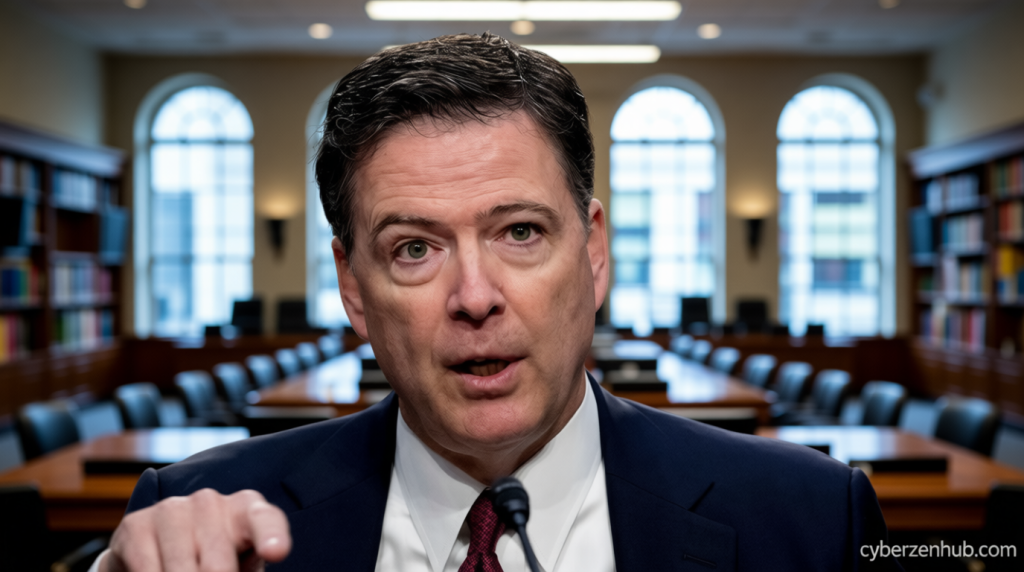
James Comey Indicted Again for Controversial Instagram Post
James Comey indicted again this time – A federal grand jury in North Carolina has issued a new indictment against former FBI Director James Comey, this time linking his social media activity to allegations of threatening the presidency. The case follows a previous attempt to charge Comey on unrelated grounds, which was dismissed by a judge last year. This latest move marks a renewed push by prosecutors to hold Comey accountable for a post that has sparked significant debate among political figures and the public.
Indictment Details
The indictment focuses on a post Comey made in May 2025, which featured a photo of numbers “86 47” inscribed on seashells during a beach walk. The caption, “Cool shell formation on my beach walk,” was later deleted, adding to the controversy. Critics, including members of President Donald Trump’s administration, argue the post symbolically represented a threat against Trump, who is the 47th president. The charges include one count of threatening the president and successors, and another of transmitting a threat through interstate commerce.
According to the three-page document, prosecutors assert that the message would be interpreted as a serious intent to cause harm to the U.S. leader by those familiar with the context. The case hinges on the interpretation of “86,” a slang term often used to mean “nix” or “eliminate,” paired with “47” to reference Trump’s presidential number. While Comey’s post was lighthearted, his political allies view it as a calculated jab at the administration.
Responses from Comey and Prosecutors
Following the indictment, Comey took to social media to address the charges. “Nothing has changed with me,” he wrote, reiterating his belief in his innocence. “I’m still not afraid and I still trust the independent federal judiciary. Let’s go.” He added that the situation reflects a broader issue with the justice system, urging supporters to “keep the faith” in its integrity.
“Nothing has changed with me,” Comey posted online in response to the indictment, echoing what he said after the previous indictment was thrown out last year. “I’m still innocent, I’m still not afraid and I still believe in the independent federal judiciary so let’s go.”
Acting Attorney General Todd Blanche defended the decision, stating that the post crossed the boundary between protected speech and actionable threats. “It’s not a very difficult line to look at,” Blanche said during a press conference. “We cannot, you are not allowed to threaten the President of the United States of America. That’s not my decision. That’s Congress’s decision, and a statute that they passed that we charge multiple times a year.”
Blanche emphasized that intent is a key component of the case, claiming the government had conducted extensive investigations. “How do you prove intent? In any case, you prove intent with witnesses, with documents, and with the defendant himself,” he explained. “And that’s how we’ll prove intent in this case.” Despite his confidence, Blanche admitted the evidence beyond the Instagram post itself remains unspecified, leaving room for interpretation.
Broader Context and Political References
The use of the “86 47” sequence has become a recurring symbol in political discourse. Other figures have adopted similar numerals to make statements. For instance, Democratic Michigan Governor Gretchen Whitmer displayed a small figurine of “86 45” during a 2020 interview, subtly referencing then-President Donald Trump’s presidency. Conservative commentator Jack Posobiec also used “86 46” during Joe Biden’s term, later appearing at the Conservative Political Action Conference alongside Blanche.
These instances highlight how the phrase has transcended its literal meaning to serve as a political metaphor. The current case could set a precedent for prosecuting individuals for symbolic threats, depending on how the courts interpret the evidence. Legal experts note that proving a “true threat” requires demonstrating that the speaker knew their words would be understood as menacing, a standard the Supreme Court clarified in 2023.
Legal Challenges and Implications
While the indictment aims to hold Comey accountable, it faces significant legal hurdles. The Supreme Court’s 2023 ruling established that a true threat must show the speaker’s awareness of the message’s threatening nature. Prosecutors will need to establish this clarity, which may depend on additional evidence beyond the social media post itself.
Some legal analysts argue the case could have far-reaching consequences for free speech, particularly if the courts accept that symbolic gestures qualify as threats. The potential for such a ruling may influence future prosecutions of political figures, especially during periods of heightened tension. For Comey, the case represents a second chance to face charges that his adversaries believe underscore his opposition to Trump’s policies.
The decision to indict Comey has drawn mixed reactions. Supporters of the former director view it as a political maneuver to target a high-profile critic, while others see it as a necessary step to uphold the rule of law. As the legal battle unfolds, the focus will remain on whether the post’s content and context justify the charges, and how the courts balance symbolic expression against potential harm to the presidency.
CNN was the first to report the new indictment, which was announced at a press conference held at the Justice Department in Washington on April 28, 2026. The event underscored the administration’s commitment to enforcing federal laws, even against those in prominent positions. Blanche reiterated the government’s stance, stating it would “never tolerate” violations of the law, regardless of the individual’s status.
As the case progresses, it may serve as a test case for how symbolic speech is evaluated in the context of political threats. The outcome could shape the legal landscape for future controversies involving social media and public figures, potentially redefining the boundaries of free expression in the digital age.