
Raul Castro charged with murder for Cuba’s shootdown of humanitarian planes
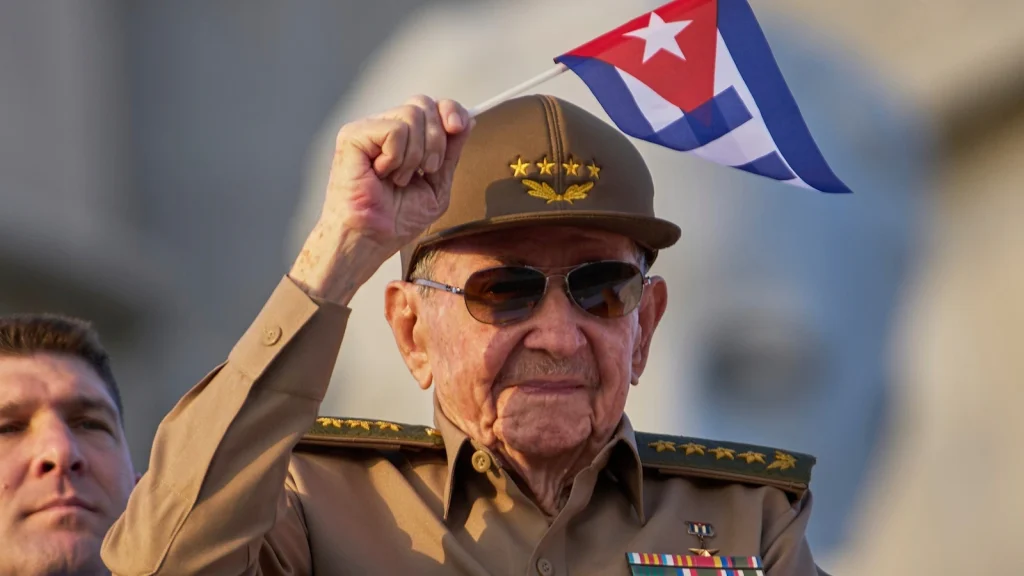
Justice Department Expected to Announce Charges Against Raul Castro for Cuba’s Shootdown of Humanitarian Planes
Raul Castro charged with murder for Cuba – On Wednesday, the U.S. Justice Department unveiled charges against former Cuban President Raul Castro, accusing him of murder in connection with the 1996 shootdown of two aircraft carrying humanitarian aid. The charges, based on a newly unsealed court docket, allege Castro’s involvement in the incident that killed four American citizens. This development signifies a pivotal moment in the United States’ efforts to exert pressure on Cuba’s Communist government, though it remains uncertain whether the 94-year-old leader will appear in a U.S. courtroom.
The indictment, returned by a grand jury on April 23, includes seven counts. These charges target Castro for conspiracy to kill U.S. nationals, destruction of aircraft, and four counts of murder for each of the four passengers aboard the planes. The victims were members of Brothers to the Rescue, a Miami-based organization that operated humanitarian flights to assist Cuban exiles fleeing the island. The U.S. government claims that Cuban intelligence agents, starting in the early 1990s, infiltrated the group and shared operational details with Havana, enabling the Feb. 24, 1996, attack.
Castro’s indictment marks a significant escalation in the ongoing U.S. strategy to challenge Cuba’s regime. While the charges do not immediately confirm a trial, they underscore the administration’s resolve to hold Cuban leaders accountable for acts of violence against American citizens. Acting Attorney General Todd Blanche emphasized the gravity of the move during a press conference in Miami, stating that senior Cuban officials have now been formally accused in the U.S. for the first time in nearly seven decades.
“For the first time in nearly 70 years, senior leadership of the Cuban regime has been charged in this country, in the United States of America, for acts of violence resulting in the deaths of American citizens,” Blanche said. “Nations and their leaders cannot be permitted to target Americans, kill them, and not face accountability. President Trump is committed to restoring a very simple but important principle: if you kill Americans … we will pursue you no matter who you are, no matter what title you hold, and in this case, no matter how much time has passed.”
Blanche further noted, “The United States government has not forgotten these innocent men who were shot out of the sky.” The attack on the humanitarian planes, which were en route to rescue Cuban migrants in distress, is seen as a deliberate act of aggression. U.S. officials assert that the Cuban military used the information provided by intelligence agents to target the flights, aiming to deter Cuban exiles from seeking asylum in the U.S. The planes, operated by Brothers to the Rescue, flew missions across the Florida Straits to retrieve migrants stranded at sea. This operation, however, became a catalyst for international scrutiny.
The Justice Department’s legal action against Castro comes amid heightened tensions between the U.S. and Cuba. The 1996 incident, which occurred during a period of political friction, has been cited as a key event in the U.S. campaign to pressure Havana into reforms. The charges not only highlight the human cost of the attack but also frame it as a symbolic moment in the broader struggle for regime change. Brothers to the Rescue, founded in 1992, had previously faced accusations of provoking Cuban military responses, but this indictment ties the group’s activities directly to Castro’s alleged responsibility.
The operation on Feb. 24, 1996, saw two U.S.-registered aircraft, the Amelia Earhart and the Captain Eduardo, shot down by Cuban missile batteries. The victims included Carlos Costa, Armando Alejandre Jr., Mario de la Peña, and Pablo Morales. Three of these individuals were U.S. citizens, while the fourth, Morales, was a Cuban national who had fled the island and sought refuge in Miami. The attack sparked widespread condemnation and led to diplomatic repercussions, including a U.S. embargo on Cuban goods and travel restrictions.
Castro, who has long been a symbol of Cuban resilience, now faces legal consequences for actions he is accused of orchestrating nearly three decades ago. The timing of the charges, released during a period of renewed U.S. focus on Cuba, suggests an intent to leverage the case for political gain. While the Cuban government has not yet responded publicly, the indictment is likely to intensify debates about historical accountability and the legacy of Castro’s leadership.
The U.S. government’s decision to pursue charges against Castro reflects a broader effort to address past grievances and reinforce the principle of holding foreign leaders accountable for violent acts. Critics argue that the charges are part of a larger narrative to justify ongoing economic sanctions and political pressure. Supporters of the move, however, see it as a necessary step to ensure that Cuban officials cannot act with impunity. As the legal process unfolds, the case will undoubtedly serve as a focal point in the evolving relationship between the two nations.
The Humanitarian Mission and Its Impact
Brothers to the Rescue’s missions were designed to provide aid to Cubans in need, particularly those who had risked their lives to reach the shores of Florida. The organization’s flights often encountered hostile fire from Cuban military forces, which were accused of using anti-aircraft weapons to intercept the planes. The 1996 incident, however, was particularly severe, as it resulted in the loss of life and drew international attention to Cuba’s actions. The U.S. Justice Department’s case hinges on the assertion that Castro’s regime systematically targeted these flights to suppress dissent and assert control over Cuban exiles.
While the legal proceedings focus on Castro, the case also implicates Cuban military commanders and intelligence operatives who executed the attack. The indictment details how the Cuban government coordinated the operation, using intelligence gathered from within the Brothers to the Rescue network. This collaboration between Cuban forces and the infiltrated group is central to the charges, as it allegedly enabled the precise targeting of the humanitarian