
2 officers who defended Capitol on Jan. 6 sue to stop Trump’s Anti-Weaponization Fund
2 Capitol Officers Sue to Stop Trump’s Anti-Weaponization Fund
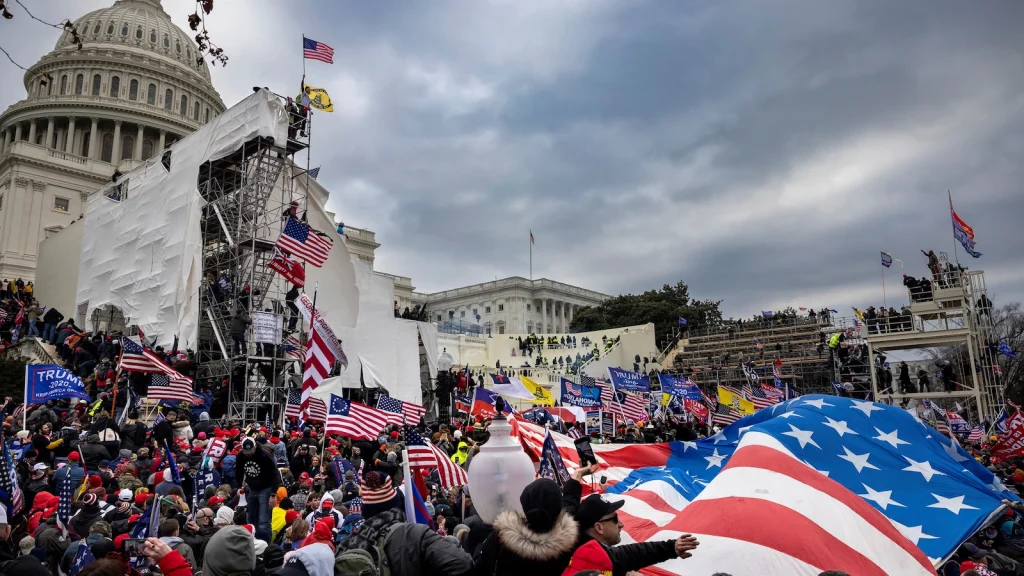
2 officers who defended Capitol on Jan – Two officers who defended the U.S. Capitol during the January 6th attack are taking legal action to block the establishment of President Donald Trump’s $1.7 billion “Anti-Weaponization Fund.” The lawsuit, filed in a Washington, D.C. federal court, argues the initiative represents a direct effort to financially support those involved in the Capitol riot. Harry Dunn, a former Capitol Police Officer, and Daniel Hodges, a Metropolitan Police Department officer, claim the fund undermines constitutional protections by legitimizing the actions of individuals who sought to overturn the 2020 election results. Their legal challenge aims to halt the program, which the Justice Department introduced as part of a settlement in Trump’s $10 billion lawsuit against the IRS.
Legal Arguments and Constitutional Violations
According to the lawsuit, the Anti-Weaponization Fund’s creation violates the Administrative Procedures Act due to its lack of clear justification and procedural oversight. The officers assert that the fund constitutes a corrupt mechanism, enabling the government to subsidize activities that challenged democratic institutions. They argue it rewards political activism, even when such actions involve violence, and threatens to erode public trust in constitutional safeguards. “This fund represents the most brazen act of presidential corruption this century,” the legal filing states, emphasizing its role in financing the very forces that attacked the Capitol.
Dunn and Hodges are among the law enforcement personnel who braved the chaos on January 6th, 2021. Hodges, for example, was physically assaulted by rioters while trying to contain the breach, and Dunn was inside the building, directly engaging attackers during the storming. The lawsuit highlights how the fund, tied to the IRS settlement, could be seen as a backdoor method for the Trump administration to support insurrectionist efforts. This raises concerns about the executive branch’s ability to use legal frameworks to justify financial backing for politically motivated actions.
Caputo’s Role and the Fund’s Purpose
Michael Caputo, a former Trump administration official, has publicly endorsed the fund, framing it as a corrective measure for individuals subjected to political investigations. In a letter shared on X, he praised the initiative for addressing alleged injustices, stating, “As survivors of the illegal Russiagate investigations, our family was encouraged by news of the Anti-Weaponization Fund.” However, Dunn and Hodges counter that the fund’s primary goal is to financially empower those who destabilized the Capitol, rather than rectify past grievances. They argue it creates a dangerous precedent by linking government funds to the overturning of election results.
The officers’ case underscores the tension between political accountability and financial incentives. By leveraging the IRS settlement, the Trump administration has established a mechanism to reward those who participated in the Capitol attack, according to the lawsuit. This has sparked debates about the separation of powers and the potential for executive overreach. The fund’s existence could be interpreted as a means to consolidate support for former President Trump’s agenda, even as it rewards actions that directly challenged the legitimacy of the 2020 election. Legal experts are watching closely to see how the court addresses these concerns.
Broader Implications of the Fund
The lawsuit’s focus on the fund’s role in financing insurrectionist activities has broader implications for how government funds are allocated in times of political conflict. Critics argue that the program could set a precedent where public financing is used to bolster movements that seek to subvert democratic processes. The two officers who defended the Capitol on January 6th contend that the initiative not only legitimizes the rioters’ actions but also incentivizes future attacks by offering financial compensation. This has raised questions about the integrity of federal funding and its impact on national security.
As the legal battle unfolds, the case will be closely scrutinized for its potential to influence how future administrations handle similar initiatives. The officers’ arguments highlight a critical issue: the ability of the executive branch to redirect funds toward political goals, even if they contradict the principles of constitutional governance. Their challenge serves as a reminder of the importance of maintaining transparency in the allocation of public resources, particularly in high-stakes political contexts. The outcome of this lawsuit may shape the discourse around government funding and its role in supporting actions that test the stability of democratic institutions.