
Republican Sen. Graham questions Pakistan’s role in Iran negotiations
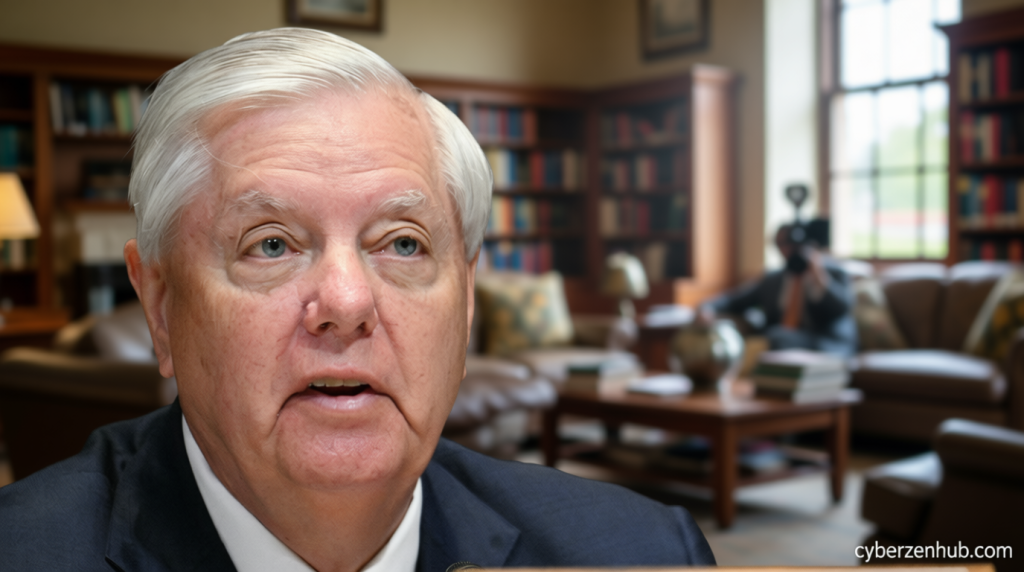
Republican Sen. Graham Expresses Doubt About Pakistan’s Role in Iran Negotiations
Republican Sen Graham questions Pakistan s role – On Tuesday, Republican Senator Lindsey Graham voiced skepticism about Pakistan’s involvement in ongoing U.S.-Iran discussions, raising concerns over the nation’s credibility as a mediator. During a Senate Appropriations subcommittee hearing, Graham confronted Defense Secretary Pete Hegseth and Joint Chiefs Chairman Gen. Dan Caine, emphasizing his wariness of Islamabad’s commitments. The session, held on Capitol Hill in Washington, D.C., on May 12, 2026, focused on the 2027 budget for the Department of Defense, but Graham’s remarks shifted the spotlight to regional dynamics and strategic alliances.
Report Suggests Pakistan and Iran Collaborate Closely
Recent intelligence reports, shared with CBS News, highlighted Pakistan’s potential role in aiding Iran’s military operations. According to U.S. officials, the country has permitted Iranian aircraft to be stationed at its airfields, possibly reducing their exposure to American airstrikes. This development has sparked debate about Pakistan’s dual allegiance, with Graham questioning whether its support for Iran undermines the U.S. efforts to reach a diplomatic resolution.
“I don’t trust Pakistan as far as I can throw them,” Graham stated, his tone underscoring the gravity of the situation. “If they actually do have Iranian aircraft parked in their bases to protect Iranian military assets, that tells me we should be looking for someone else to mediate.”
The senator’s remarks came amid heightened scrutiny of Pakistan’s actions following a ceasefire agreement between the U.S. and Iran announced by President Donald Trump in early April. Days after the deal, Iranian military aircraft reportedly arrived at Pakistan’s airbase, Nur Khan, according to sources. Graham pressed Caine and Hegseth on whether this move aligned with Pakistan’s role as a neutral intermediary, but both officials hesitated to confirm, citing classified intelligence.
Trump’s Praise Contrasts with Graham’s Skepticism
Leaving the White House on Tuesday for a visit to China, Trump expressed confidence in Pakistan’s support, calling them “great” and praising the field marshal and prime minister. His remarks, however, contrasted sharply with Graham’s skepticism. “The Pakistanis have been great,” Trump said, “but if their actions are hiding Iran’s military presence, that’s a different story.”
Graham, known for his hardline stance on national security, pressed the Joint Chiefs chairman during the hearing. He asked whether Pakistan’s decision to host Iranian aircraft could be inconsistent with its role as a mediator. Caine, however, deferred to the classified nature of the intelligence, stating, “I wouldn’t want to comment on that based on the ongoing negotiations’ impact and Pakistan’s role.” Hegseth echoed this sentiment, adding, “Again, I wouldn’t want to get in the middle of these negotiations.”
“Then why are you in the middle of them?” Graham retorted, his frustration evident. “No wonder this damn thing is going nowhere,” he added, summarizing his broader criticism of the stalled talks.
The senator’s frustration stems from a belief that Pakistan’s cooperation with Iran could compromise the U.S. position. He argued that the nation’s ability to shield Iranian assets from American strikes suggests a strategic partnership rather than impartial mediation. This accusation has reignited discussions about Pakistan’s geopolitical priorities and its balancing act between U.S. and Iranian interests.
Pakistani Ministry Defends Its Role
In response to the CBS report, the Pakistani Ministry of Foreign Affairs issued a statement categorically rejecting the allegations. The ministry clarified that Iranian aircraft stationed in Pakistan were part of the ceasefire period and were not linked to any military contingency or preservation arrangement. “Assertions suggesting otherwise are speculative, misleading, and entirely detached from the factual context,” the statement said.
The report noted that during the initial rounds of the Islamabad Talks, both U.S. and Iranian aircraft were based in Pakistan to support diplomatic and administrative operations. “Some aircraft and support personnel remained temporarily in Pakistan in anticipation of subsequent rounds of engagement,” the ministry added. This temporary presence, they argued, was a logistical necessity rather than a sign of military collaboration.
“The aircraft within our borders arrived during the ceasefire period and bear no linkage whatsoever to any military contingency or preservation arrangement,” the statement emphasized. “Our stance as a facilitator has been impartial, constructive, and responsible in support of dialogue and de-escalation.”
The ministry’s defense highlights Pakistan’s position as a key player in the region, attempting to reconcile its relationships with both superpowers. While the U.S. has accused Pakistan of providing Iran with a strategic advantage, Islamabad insists its actions align with broader diplomatic goals. This back-and-forth underscores the complexity of the negotiations, where trust and transparency remain critical challenges.
Broader Implications for U.S.-Iran Talks
The controversy over Pakistan’s role has raised questions about the viability of the ceasefire agreement and the potential for U.S.-Iran tensions to resurface. With the Iran war reportedly costing the U.S. at least $29 billion, Pentagon officials have warned that any perceived betrayal by Pakistan could erode confidence in the talks. The ministry’s denial, while firm, has not fully quelled skepticism, especially as Graham’s criticism highlights a perceived gap between Pakistan’s rhetoric and actions.
Graham’s concerns are not isolated. His repeated emphasis on Pakistan’s lack of trust has drawn attention to the country’s historical ties with Iran and its strategic importance as a regional power. While Pakistan has long served as a bridge between the U.S. and Iran, its recent actions have sparked fears of shifting allegiances. This situation has added a layer of complexity to the negotiations, forcing U.S. officials to navigate both geopolitical rivalries and domestic political pressures.
Context and Future Outlook
The ongoing discussions have become a test of patience and diplomacy, with Graham’s criticisms reflecting a broader strategy to hold Pakistan accountable. As the 2027 budget debate continues, the senator’s focus on the nation’s role in the Iran talks may influence funding decisions for defense programs. The controversy also underscores the importance of intelligence sharing and the need for clear communication between allies and adversaries.
Despite the disputes, Pakistan’s government remains committed to its mediation efforts. The ministry’s statement reinforces its claim of neutrality, though the U.S. officials’ concerns persist. The outcome of this diplomatic tug-of-war will likely shape the trajectory of the U.S.-Iran negotiations, determining whether the ceasefire holds or if new challenges emerge. For now, the debate over Pakistan’s role continues, with Graham’s skepticism serving as a reminder of the delicate balance required to achieve lasting peace in the region.
ABC News’ Habi Khan contributed to this report.