
SCOTUS ruling allows lawsuits over property seized by Cuban government
SCOTUS ruling allows lawsuits over property seized by Cuban government
Supreme Court decision reopens legal avenues for U.S. claims against Cuban assets
SCOTUS ruling allows lawsuits over property – The U.S. Supreme Court delivered a landmark ruling on Thursday, determining that major cruise operators can be held accountable for utilizing a port in Havana, Cuba, which was nationalized by the communist regime in 1960. This decision, rendered in an 8-1 split, grants the Havana Docks Corporation—the American entity that constructed, managed, and briefly owned part of the port before the Cuban Revolution—the authority to pursue legal action against cruise companies for their commercial use of the facility between 2016 and 2019.
At the heart of the case is the Cuban Liberty and Democratic Solidarity Act of 1996, a legislative measure enacted after Cuban fighter jets downed two unarmed Cessna aircraft operated by the Brothers to the Rescue group. The law aims to prevent the Cuban government from benefiting economically from property seized during the revolution, thereby deterring the exploitation of U.S. assets. Justice Clarence Thomas, writing for the majority, emphasized that the Act holds individuals or organizations using property “tainted” by past confiscation responsible for compensating U.S. nationals who retain a claim to it.
Trump administration’s enforcement of the law
The ruling comes amid the Trump administration’s intensified efforts to pressure Cuba economically. Alongside the oil embargo, the administration has pursued legal actions against Cuban officials, including the unsealing of a criminal indictment against former leader Raul Castro earlier this week. This decision could exacerbate tensions in U.S.-Cuba relations, potentially deterring foreign businesses from engaging with the island nation.
Under the Trump administration, the Act’s provisions were revived for the first time since its passage. President Donald Trump became the first leader to enforce a clause allowing U.S. entities to sue parties using property confiscated by the Cuban government. This move followed the Obama administration’s diplomatic shift, which had previously eased restrictions on commercial ties with Cuba. In 2016, cruise lines resumed operations from Florida to Havana, marking the first such trips in over five decades. The service continued until 2019, during which time Havana Docks Corporation initiated legal claims against four major cruise companies.
Legal battle over property rights
The case hinged on whether Havana Docks retained a valid claim to the piers despite the expiration of their original agreement with the Cuban government in 2004. A federal district court initially ruled in favor of the company, awarding it over $400 million in damages. However, the 11th U.S. Circuit Court of Appeals overturned this decision, arguing that the company’s rights to the property had lapsed by 2004, rendering the cruise lines’ use of the docks legally permissible.
Justice Thomas, in his majority opinion, contested this conclusion. He asserted that the Act’s intent is to hold users of confiscated property accountable regardless of whether their actions directly interfered with the original rights of the U.S. entity. “Confiscated property is, as it were, tainted—off limits—such that anyone who uses the property can be liable to those who had an interest in the tainted property,” Thomas wrote, highlighting the broader implications for entities engaging with Cuban assets.
“The Act generally makes those who use property tainted by a past confiscation liable to any U.S. national who owns a claim to that property,” Justice Clarence Thomas stated in his majority opinion. “It then provides a right to compensation based on the plaintiff’s former property interest from those who later traffic in the property and thereby help to support the Communist Cuban Government.”
Justice Sonia Sotomayor, joined by Justice Brett Kavanaugh, issued a concurring opinion to challenge the majority’s interpretation of the law. They argued that the statute’s “limitless” reading could enable claimants to seek billions from any party benefiting from the use of confiscated property, which may not align with Congress’s original intent. “It is unlikely that Congress intended for someone who suffered a finite loss to reap infinite recoveries,” Sotomayor noted, stressing that “confiscated” property must have been seized “without the property having been returned or adequate and effective compensation provided.”
Implications for U.S. businesses and international relations
The decision could have far-reaching consequences for U.S. companies operating in Cuba. By allowing legal claims against entities using the port, the ruling sets a precedent for similar lawsuits targeting other commercial ventures. This may discourage foreign investment and complicate trade relationships, particularly as the Trump administration continues to prioritize economic sanctions against the Cuban government.
Havana Docks Corporation’s claim is rooted in the historical context of the 1960 nationalization of the port. The company’s legal team contended that the ongoing commercial use of the facility by cruise lines effectively sustained the Cuban government’s financial support, thereby violating the terms of the 1996 law. The Supreme Court’s majority agreed, emphasizing that the mere use of the property—even without direct interference—constitutes liability.
“It recognizes that the effect of the Cuban Government’s expropriation was the destruction of the plaintiff’s interest in the property,” Thomas wrote. “It then provides a right to compensation based on the plaintiff’s former property interest from those who later traffic in the property and thereby help to support the Communist Cuban Government.”
Justice Elena Kagan dissented, arguing that the original agreement between Havana Docks and the Cuban government expired in 2004, thereby terminating the company’s rights to the piers. She maintained that the Act’s provisions should not apply indefinitely, stating that the company’s claim to the property had been “fully extinguished” by that time. Kagan’s dissent underscores the debate over whether the law should be interpreted as a perpetual mechanism for recovery or a temporary measure to address past confiscations.
As the ruling takes effect, it may embolden other U.S. entities to pursue similar claims against Cuban assets. This could include companies involved in tourism, agriculture, or energy projects, potentially reshaping the economic landscape between the two nations. The decision also reinforces the Trump administration’s strategy of leveraging legal tools to pressure Cuba, aligning with its broader policy of reinstating economic sanctions and promoting a more adversarial stance toward the island.
Historical context and ongoing legal battles
The Cuban government’s seizure of the port in 1960 marked a significant shift in U.S.-Cuba relations, symbolizing the country’s move toward socialist governance. The 1996 Act was designed to address this legacy, ensuring that the U.S. could recoup losses from property confiscated during the revolution. However, the interpretation of “confiscated” property has remained contentious, with legal battles persisting over the duration and scope of claims.
The case has drawn attention to the complex interplay between historical claims and contemporary business practices. While the Supreme Court’s majority focused on the immediate liability of current users, the concurrence and dissent highlight the need for clarity on whether such claims should be perpetual or time-bound. This debate reflects broader tensions in international law, where the rights of original owners versus the interests of present users often collide.
With the ruling, the legal framework for U.S. claims against Cuban assets has been expanded, providing a renewed tool for the administration to challenge the island’s economic policies. The decision also serves as a reminder of the enduring impact of the Cold War-era expropriations on modern trade relations. As businesses navigate this legal terrain, the case underscores the importance of understanding the historical context of property rights in international commerce.
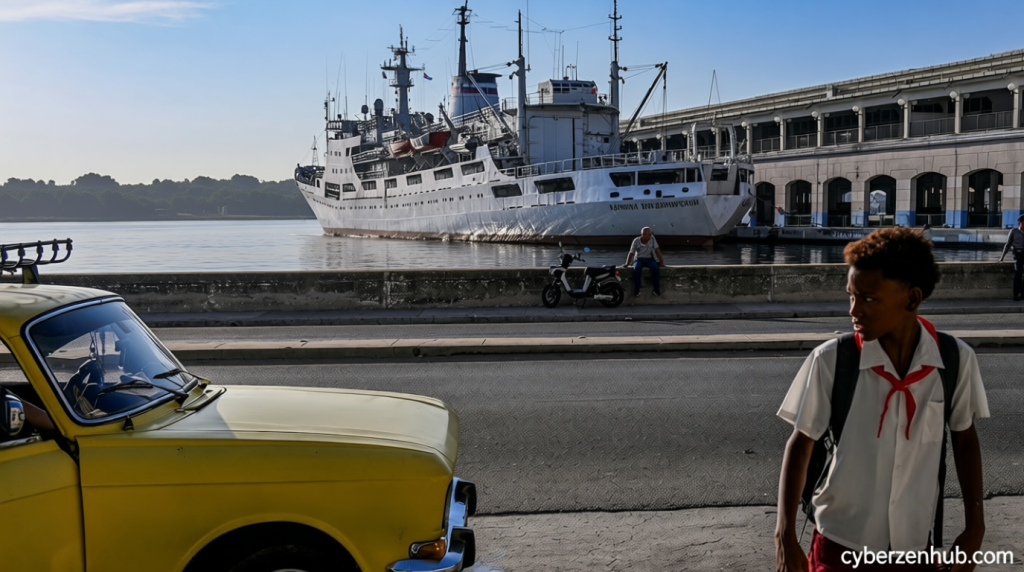
Amid these developments, the Cuban government continues to assert its control over nationalized assets. The Russian scientific vessel Admiral Vladimirsky, which has been stationed at the Port of Havana since 2025, stands as a testament to the ongoing strategic significance of the port. The Supreme Court’s decision may further complicate efforts to establish stable commercial ties between the U.S. and Cuba, particularly as the Trump administration seeks to maintain its economic pressure tactics.